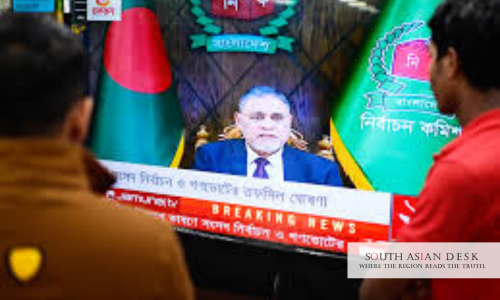
Dhaka: Bangladesh Dual citizenship has emerged as a major flashpoint in the country ahead of the 12 February parliamentary elections. The Bangladesh Election Commission reviewed objections against 25 candidates accused of holding foreign passports. It upheld nominations for 23 while cancelling two. This decision has sparked protests and claims of unequal treatment among political parties.
The dual citizenship controversy Bangladesh highlights deeper divisions in the nation’s politics. With elections approaching, questions over constitutional compliance could undermine trust in the electoral process across South Asia, where similar issues of allegiance and eligibility often influence democratic stability.
Bangladesh Elections 2026: Legal Framework
Bangladesh dual citizenship rules stem from the Constitution and related laws. Article 66(2)(c) disqualifies anyone who acquires foreign citizenship or affirms allegiance to another state from parliamentary membership. The Citizenship Act 1951 reinforces this by stating dual citizenship is not permitted, except in specific cases.
Candidates must be Bangladeshi citizens by birth or naturalisation without foreign ties at nomination time. However, the Bangladesh Election Commission accepted affidavits or renunciation applications from some, allowing them to proceed. Critics argue this violates strict renunciation requirements.
In Bangladesh elections 2026, the commission processed appeals over nine days ending 18 January. It cleared candidates after reviewing documents showing intent to renounce foreign citizenship. Chief Election Commissioner AMM Nasir Uddin stated: “We want an election with participation from all sides. We have not delivered any judgement with bias.”
Dual Citizenship Controversy Bangladesh Intensifies
The dual citizenship controversy Bangladesh escalated with protests outside the Election Commission headquarters. Student activists from the Bangladesh Nationalist Party’s Jatiyatabadi Chhatra Dal demanded leniency for dual citizens. Police and border guards monitored the demonstrations.
Of the 23 approved candidatures, 10 belonged to the Bangladesh Nationalist Party, four to Jamaat-e-Islami, one to the National Citizen Party, one to Khelafat Majlis, and seven to smaller parties or independents. The National Citizen Party withdrew its candidate, citing lack of disclosure.
National Citizen Party leader Nahid Islam questioned the process: “There are candidates with dual citizenship in the BNP, and there are candidates with dual citizenship in Jamaat. Which party they belong to is not the issue. The issue is whether the law is being applied equally to everyone.” He added: “If the Election Commission cannot maintain neutrality, how can we expect a fair election?”
Jamaat-e-Islami deputy chief Syed Abdullah Muhammad Taher urged: “We want to state clearly that the Election Commission must not bow to any pressure whoever the party may be, even if it is Jamaat-e-Islami.”
Political analyst Mohiuddin Ahmad criticised the approvals as unconstitutional and ethically problematic. He noted: “If the commission knowingly overlooks constitutional requirements, it undermines its mandate and risks invalidating the election itself.”
Another analyst, Dilara Choudhury, warned: “If the Election Commission’s image as neutral is damaged, how can it deliver a credible election? If the election becomes questionable and citizens lose trust, it will be a futile exercise and the government formed through it will also face questions of legitimacy.”
BNP Dual Citizenship Cases Under Scrutiny
BNP dual citizenship issues dominated the hearings. The party benefited most from the rulings, with 10 candidates cleared. However, the commission cancelled nominations for two BNP aspirants: Md Abdul Gafur Bhuiyan from Cumilla-10 and another from Cumilla-3.
BNP leaders alleged selective enforcement. In a press conference, BNP adviser Mahdi Amin raised concerns over inconsistencies in handling dual citizenship. He claimed some cancellations ignored submitted renunciation documents.
The dual citizenship controversy Bangladesh ties into broader accusations. National Citizen Party spokesperson Asif Mahmud Sajib Bhuiyan accused the commission of favouring BNP: “Requiring candidates to prove they have renounced foreign citizenship while accepting only future commitments constitutes selective and unconstitutional treatment.”
BNP countered by pointing to past cases. In January 2024, the commission cancelled Awami League nominee Shammi Ahmed’s candidacy over dual citizenship, a decision upheld by the Supreme Court.
Background
Bangladesh allows dual citizenship with 103 countries under the Bangladesh Citizenship (Temporary Provisions) Order 1972. Applicants must submit forms to the Ministry of Home Affairs, which forwards them to the Special Branch for verification. Required documents include passports and foreign citizenship certificates.
The current interim government, led by Muhammad Yunus since August 2024 after Sheikh Hasina’s ouster amid protests, oversees the transition. The National Citizen Party emerged from those protests, forming alliances with Jamaat-e-Islami and Khelafat Majlis.
Historical precedents include a 2002 High Court ruling disqualifying candidates for foreign citizenship acquisition. The Fifteenth Amendment in 2011 clarified that renouncing foreign citizenship removes disqualification.
In Bangladesh elections 2026, expatriate voting introduces new complexities. Postal ballots have sparked claims of manipulation, with BNP alleging its symbol placement disadvantages it.
What’s Next
As Bangladesh dual citizenship debates continue, parties may challenge rulings in court. National Citizen Party leaders indicated potential legal action if perceived biases persist. The controversy could delay preparations or erode voter confidence ahead of the 12 February vote.
Bangladesh dual citizenship remains central to ensuring fair representation. Resolution will shape the legitimacy of the new parliament.
Published in SouthAsianDesk, January 21st, 2026
Follow SouthAsianDesk on X, Instagram and Facebook for insights on business and current affairs from across South Asia.