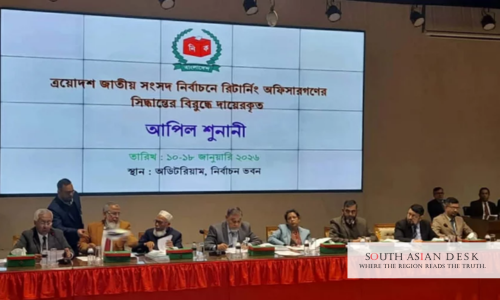
Dhaka, 11 January 2026 – Bangladesh EC hearings have restored candidacies for 51 aspirants out of 67 petitioners on the first day, as the commission addresses nomination appeals for the 13th parliamentary election Bangladesh scheduled for 12 February.
The process, presided over by Chief Election Commissioner AMM Nasir Uddin, continues to resolve discrepancies in nomination papers.
This development underscores the importance of electoral integrity in Bangladesh, influencing political participation across South Asia where similar appeal mechanisms shape democratic processes in nations like Pakistan and India.
Bangladesh EC Hearings: Day One Outcomes
The Election Commission heard 70 appeals on 10 January, accepting 52, rejecting 15, and postponing three due to information discrepancies. Senior Secretary Md Akhter Ahmed confirmed one postponed appeal for hearing at 5 PM on 11 January, with two others deferred to 16 January for returning officers to resolve.
The commission overturned one nomination previously accepted by a returning officer. Hearings ran from 10 AM to 5 PM at the EC auditorium in Agargaon.
Among reinstated candidates were independent Tasnim Jara for Dhaka-9 and Jamaat-e-Islami’s AHM Hamidur Rahman Azad for Cox’s Bazar-2.
Bangladesh Candidacy Restoration: Second Day Progress
On 11 January, Bangladesh EC hearings continued with 35 petitions by 1 PM, restoring 27 candidacies, rejecting seven, and keeping three pending. The commission planned to address about 70 petitions that day.
Restored candidacies included Jamaat-e-Islami’s Mujibur Rahman Azadi for Jamalpur-3 and Jatiya Party’s Shariful Islam Zinnah for Bogura-2.
The lenient approach targeted minor errors in documents and affidavits. Total appeals filed reached 645 by the 9 January deadline, challenging decisions from 69 returning officers across districts.
Bangladesh Nomination Appeals: Process Details
Bangladesh nomination appeals stem from scrutiny of 2568 nomination papers submitted by 29 December for 300 constituencies. Returning officers validated 1842 and invalidated 723 between 30 December and 4 January.
The EC acts as the appellate tribunal, with hearings set to conclude by 18 January. Remaining schedules include appeals 71 to 140 on 11 January, 141 to 210 on 12 January, and 211 to 280 on 13 January.
EC Director Ruhul Amin Mallik noted the commission accepts appeals with proper documents but rejects those failing criteria.
Background
Bangladesh’s electoral framework, governed by the Representation of the People Order 1972, mandates rigorous nomination scrutiny to ensure candidate eligibility. The 13th parliamentary election Bangladesh follows political shifts, including the passing of BNP chairperson Begum Khaleda Zia, which excluded her three nominations.
The polls coincide with a referendum on the July National Charter Implementation Order for constitutional reforms. The interim government under Chief Adviser Muhammad Yunus announced the schedule on 11 December 2025.
Historically, Bangladesh EC hearings have resolved similar disputes, as in the 2018 elections where over 500 appeals were filed. This year’s volume reflects heightened participation post-2024 unrest.
South Asian contexts mirror this, with India’s Election Commission handling thousands of nominations annually and Pakistan’s facing judicial reviews. Bangladesh’s process promotes transparency, vital for regional stability amid economic challenges like inflation and remittances.
Data from the EC shows troop-contributing nations like Bangladesh leverage peacekeeping experience, but here focus remains domestic. Voter turnout in past elections averaged 80 percent, with 100 million registered voters expected this time.
The commission’s decisions impact party strategies. Jamaat-e-Islami, deregistered in 2013 but allowed participation under new rules, benefits from Bangladesh candidacy restoration. Jatiya Party, a key opposition, strengthens its position in northern seats.
Economic stakes include BDT 5000 crore allocated for election logistics, per budget estimates. Security involves 700000 personnel deployed nationwide.
What’s Next
The EC will announce schedules for remaining appeals beyond serial 280. Candidature withdrawal deadline falls on 20 January, with campaigns starting 22 January until 7:30 AM on 10 February.
Observers anticipate further Bangladesh nomination appeals resolutions, potentially altering constituency dynamics. International monitors from the UN and Commonwealth may oversee the 12 February voting.
In conclusion, Bangladesh EC hearings mark a pivotal phase in ensuring fair contestation for the 13th parliamentary election Bangladesh.
Published in SouthAsianDesk, January 11th, 2026
Follow SouthAsianDesk on X, Instagram and Facebook for insights on business and current affairs from across South Asia.