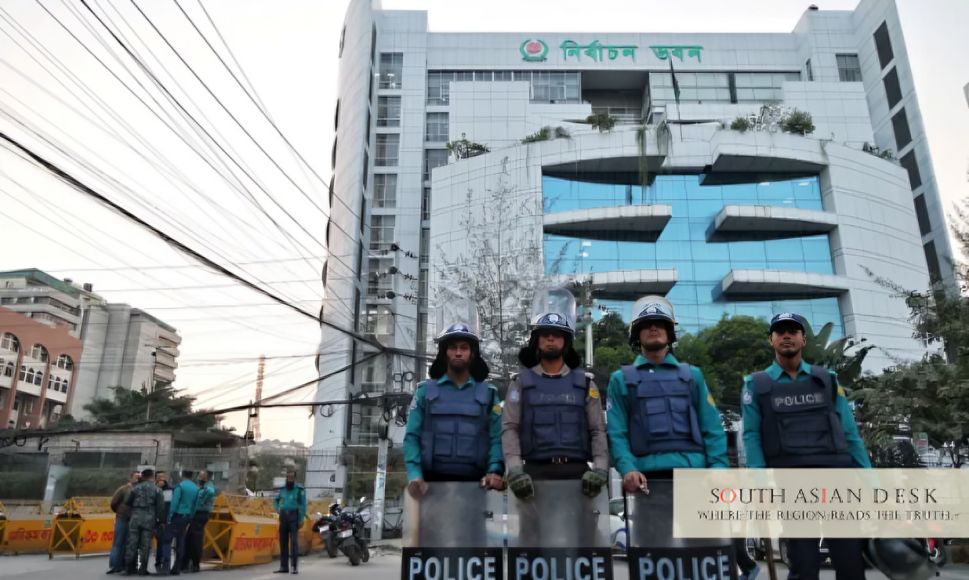
Bangladesh’s Election Commission has scheduled the parliamentary election 2026 for February 12, the first national vote since the 2024 mass uprising ousted Prime Minister Sheikh Hasina. Chief Election Commissioner AMM Nasir Uddin announced the date in a televised address on December 11, confirming polls for 300 seats with 128 million eligible voters across 42,000 stations. A simultaneous referendum on constitutional reforms will test the interim government’s push for democratic renewal.
This development caps a turbulent year of transition in Bangladesh, where student-led protests forced Hasina’s exile to India in August 2024. The vote arrives as Nobel laureate Muhammad Yunus, heading the interim administration, navigates demands from opposition parties for swift polls. In South Asia, the outcome could reshape alliances, ease border tensions with neighbours and signal whether the region’s youngest democracy can rebound from authoritarian drift. Success here might inspire reform movements in Pakistan and Sri Lanka, while failure risks renewed instability that spills across porous frontiers.
February 2026 Bangladesh Election: Key Announcement Details
AMM Nasir Uddin, chief election commissioner, outlined the timetable during his national broadcast. “The nation stands ready to showcase free and fair voting to the world,” he stated, emphasising preparations for the 13th Jatiya Sangsad elections. The schedule includes candidate nominations by late December 2025 and campaigning through January 2026.
The announcement follows months of speculation. Yunus, appointed chief adviser on August 8, 2024, initially targeted April 2026 for polls but advanced the date amid pressure from the Bangladesh Nationalist Party (BNP) and international observers. On December 10, Yunus described the process as a “historic opportunity to build a new Bangladesh”, vowing a “memorable” vote free from past fraud.
Official data from the Election Commission projects high participation, with voter rolls updated to include 127.8 million adults. Polling stations will operate from 8am to 4pm, with electronic verification at select sites to curb irregularities.
Post-Hasina Bangladesh Election: Context of Upheaval and Exclusion
The Bangladesh election 2026 emerges from the ashes of Hasina’s 15-year rule, marked by allegations of vote-rigging and suppression. The 2024 uprising, sparked by job quota protests, claimed over 1,000 lives and led to Hasina’s flight. Her Awami League faces a ban on activities, barring it from the ballot – a move the party decries as “illegal” in a December 11 statement.
Interim leaders have prioritised accountability. Yunus’s government arrested hundreds of former officials on corruption charges and lifted a 2013 ban on Jamaat-e-Islami, allowing its return to contests. President Mohammed Shahabuddin, who endorsed the uprising, plans to resign post-vote, citing “humiliation” from reform delays in remarks to Reuters.
This post-Hasina landscape favours opposition forces. The BNP, led by exiled chairperson Khaleda Zia, positions itself as the primary alternative. BNP acting chairman Tarique Rahman met Yunus in June 2025, urging December polls, though February emerged as a compromise. Jamaat-e-Islami and the new National Citizen Party, born from student activists, add diversity to the field.
Reforms underpin the process. The July Charter, drafted after the uprising, proposes curbing executive power, bolstering judicial independence and shielding elections from political interference. Voters will approve or reject it alongside parliamentary choices, blending legislative and constitutional stakes.
Voter Demographics and Security Measures
Bangladesh’s electorate skews young, with 60% under 35, per Commission data. Urban centres like Dhaka and Chittagong host 40% of stations, while rural areas receive mobile units. Security forces, reformed under Yunus, will deploy 500,000 personnel to prevent violence – a sharp rise from 2024’s 300,000 amid quota clashes.
International monitors, including from the EU and Commonwealth, have pledged oversight. Yunus welcomed this on August 5, 2025, stating: “We will step into the final phase of transferring power to an elected government.” Early indicators show BNP leading informal polls at 45% support, per a December survey by local analysts, though Jamaat trails at 15%.
BNP Bangladesh Election Strategy: Opposition’s Moment
The BNP eyes dominance in the Bangladesh election 2026, leveraging anti-Hasina sentiment. Secretary General Mirza Fakhrul Islam Alamgir hailed the schedule as “a victory for the people” in a party release, pledging campaigns on economic revival and anti-corruption. With Zia under house arrest since 2018, Rahman directs from London, focusing on youth outreach via social media.
BNP alliances could prove decisive. Talks with Jamaat-e-Islami aim at seat-sharing in 150 constituencies, potentially netting 200 seats combined. Analysts note BNP’s rural strongholds, where Hasina’s exclusion weakens rivals. Yet challenges persist: internal rifts and funding curbs imposed post-uprising.
Yunus’s neutrality draws scrutiny. On Human Rights Day, December 10, he reaffirmed: “This election must strengthen democracy and human rights.” Critics, including Awami League remnants, demand prisoner releases, but the interim panel insists on judicial processes.
Economic Stakes in the Polls
Bangladesh’s economy, hit by 2024 unrest with GDP growth dipping to 4.5%, hangs on stability. The Bangladesh election 2026 could unlock USD 2 billion in stalled IMF aid, tied to fair voting. Garment exports, employing 4 million, face disruptions if protests flare.
Background: From Uprising to Interim Rule
The path to February 2026 Bangladesh election traces to July 2024, when student quotas ignited nationwide fury. Hasina’s security forces killed protesters, eroding her legitimacy. By August 5, the military backed the movement, installing Yunus – once sued by Hasina for graft – as adviser.
Reform commissions formed swiftly: one on constitution, another on elections. The July Charter, unveiled in September 2025, embodies these efforts, slashing prime ministerial powers and mandating caretaker governments for future polls.
Hasina’s legacy lingers. Exiled in India, she accuses Yunus of “fascism” via proxies. Border skirmishes rose 20% in 2025, per South Asian think tanks, underscoring regional ripple effects.
What’s Next: Campaign Trail and Referendum Risks
Parties launch nominations December 20, igniting a 45-day sprint. Yunus vows to exit by March 2026, barring delays. The referendum poses risks: rejection could stall reforms, prolonging interim rule.
Stakeholders watch closely. India urges inclusivity to avert refugee flows; Pakistan eyes BNP ties for trade revival. As Bangladesh hurtles toward the vote, the Bangladesh election 2026 tests if uprising gains endure or fracture under partisan strain.
The February 2026 Bangladesh election stands as Bangladesh’s democratic litmus test, with 128 million voices poised to redefine a nation reborn from revolt.
Published in SouthAsianDesk, December 12th, 2025
Follow SouthAsianDesk on X, Instagram, and Facebook for insights on business and current affairs from across South Asia.