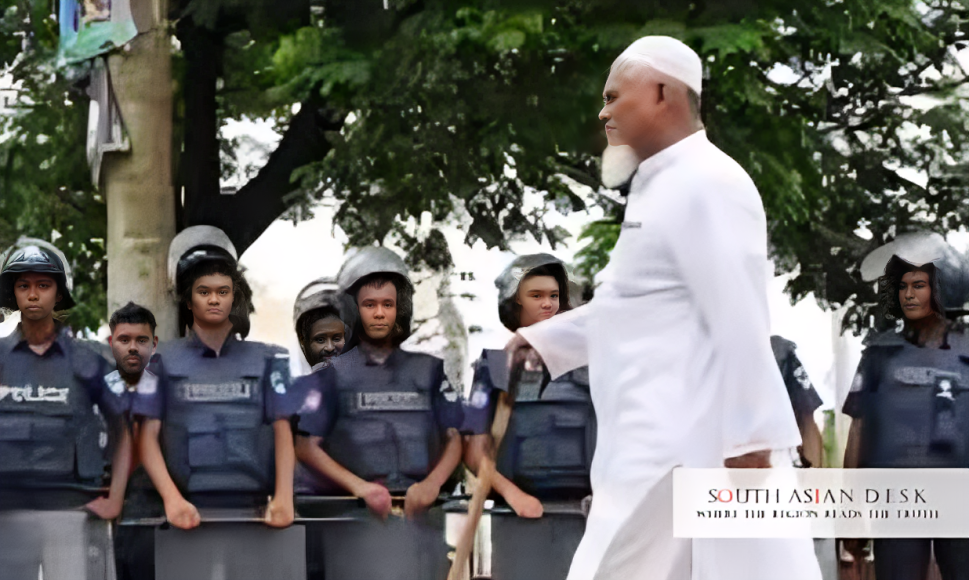
Heavy security measures mark preparations for Bangladesh’s 13th parliamentary election on 12 February, with officials vowing strict action against disruptions.
Dhaka: Authorities have deployed over 943,000 security personnel nationwide ahead of the Bangladesh election 2026, set for 12 February, as concerns over potential violence escalate. The 13th parliamentary election Bangladesh, combined with a national referendum, prompts this massive mobilisation involving army, police and other forces to safeguard polling stations. Home Affairs Adviser Lt Gen (retd) Md Jahangir Alam Chowdhury stated no laxity would be tolerated in maintaining order.
This deployment underscores the interim government’s commitment to a peaceful vote in a politically charged atmosphere. In South Asia, where elections often influence regional stability, the Bangladesh election 2026 could set precedents for handling transitional polls amid unrest, affecting neighbourly relations and investor confidence.
Bangladesh Election Security: Forces and Technology in Focus
Security arrangements for the Bangladesh election 2026 include 150,000 police officers, over 100,000 army personnel, 576,000 Ansar and Village Defence Party members, 37,000 Border Guard Bangladesh troops, plus navy, air force, coast guard and Rapid Action Battalion units. The International Foundation for Electoral Systems reports approximately 901,000 law enforcement members tasked with maintaining order, while The Business Standard cites a total of 943,050 personnel.
Polling stations, numbering 42,779, fall under risk categories: 8,780 highly important, 16,548 important and 17,433 general. High-risk centres receive intensified patrols and reserve units. Technology bolsters Bangladesh election security with 46,000 body-worn cameras for officers, CCTV at all stations, 418 drones, including 200 from the army and 100 from Border Guard Bangladesh and dog squads. The Election Security App 2026 enables real-time monitoring and rapid response.
Home Affairs Adviser Chowdhury, speaking at a Khulna meeting on 5 February, assured law enforcement would stay deployed for seven days: four before polling, on the day and two after. He warned returning officers, assistants and presiding officers face punishment for irregularities like ballot snatching. A central coordination cell at the home ministry, linked to the app, handles complaints instantly.
Bangladesh Election Violence: Lingering Concerns and Preparations
Fears of Bangladesh election violence stem from campaign clashes, with at least 25 incidents reported since 22 January, mainly between rival groups. Political rallies have seen muscle power displays, raising risks of unrest, ballot rigging or voter obstruction. The US Embassy in Dhaka issued a security alert on 30 January, noting potential political violence targeting rallies and polling stations during the Bangladesh election 2026.
Army Chief General Waker-Uz-Zaman, addressing a Gazipur meeting on 3 February, declared strict dealings with attempts to snatch ballots or hinder voters. Inspector General of Police Baharul Alam emphasised coordination among agencies, with field officers empowered for swift decisions to prevent escalation. Dhaka Metropolitan Police Commissioner Sheikh Md Sajjat Ali highlighted mental preparedness training for personnel under prolonged duty.
The interim government briefed US Ambassador Brent Christensen on 4 February about these measures, including risk assessments per centre. Chief Adviser Muhammad Yunus stated on 26 January that all activities would be monitored from control rooms for immediate action.
Remote and high-risk areas see special surveillance, with forces like Rapid Action Battalion on standby. Despite preparations, field-level questions persist on response times to sudden violence.
Background: Transitional Context for 13th Parliamentary Election Bangladesh
The 13th parliamentary election Bangladesh follows the July 2024 uprising that ousted former Prime Minister Sheikh Hasina, leading to an interim government under Yunus. This vote, the first under the new administration, combines parliamentary polls with a referendum, testing democratic resilience. Over 120 million voters are expected at stations nationwide.
Campaigning has intensified tensions, with rights groups noting increased political killings and illegal firearms use. The Election Commission imposed vehicle restrictions: motorcycles banned from midnight 10 February to midnight 13 February; taxis, pickups, microbuses and trucks restricted from midnight 11 February to midnight 13 February.
Minority leaders, like Neem Chandra Bhowmik of the Bangladesh Hindu Buddhist Christian Unity Council, called for enhanced protection on 29 January, citing communal violence in 2025. The home ministry tightened visa issuances for foreigners during the period to bolster security.
What’s Next: Ensuring a Smooth Bangladesh Election 2026
As polling day nears, authorities focus on transparency and peace. The Bangladesh election 2026 outcome could shape governance reforms and economic recovery. Officials pledge a free, fair process, with Yunus’s administration aiming to counter fears of Bangladesh election violence through vigilant Bangladesh election security.
Voters and observers watch closely, hoping the 13th parliamentary election Bangladesh proceeds without major incidents, reinforcing democratic norms in the region.
Published in SouthAsianDesk, February 5th, 2026
Follow SouthAsianDesk on X, Instagram and Facebook for insights on business and current affairs from across South Asia.