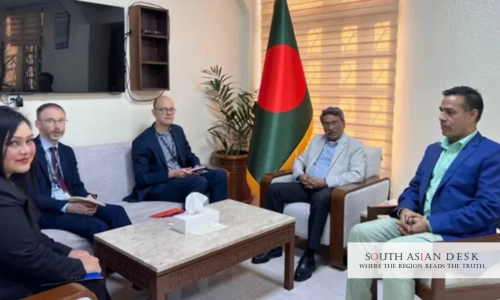
EU EOM Bangladesh deploys nearly 200 observers to monitor the February 12 national polls and referendum, ensuring an impartial assessment of the electoral process amid calls for credible and inclusive voting.
Bangladesh election monitoring intensified with the European Union Election Observation Mission (EU EOM Bangladesh) briefing officials on detailed plans. The mission, invited by the Bangladeshi authorities, arrived in late December 2025 to observe the parliamentary election and concurrent referendum on February 12, 2026. EU observers in Bangladesh will cover the entire cycle, from the campaign to the tabulation of results.
This large-scale international presence underscores South Asia’s commitment to transparent and democratic transitions. As Bangladesh holds its first major polls since the 2024 political changes, EU involvement supports regional stability and public confidence in electoral integrity across neighbouring countries.
EU EOM Bangladesh Deployment Details
The core team of EU EOM Bangladesh, comprising nearly 200 observers and 11 analysts, arrived in Dhaka on December 29, 2025. From January 17, 56 long-term observers will deploy across all 64 districts to monitor electoral preparations and report findings regularly to the core team.
Ahead of election day, 90 short-term observers joined to assess polling stations, vote counting, and result tabulation. Additional short-term observers from EU diplomatic missions and partner countries reinforce the effort. A European Parliament delegation further strengthens the mission.
EU observers in Bangladesh follow an established long-term methodology for evidence-based, comprehensive, and impartial evaluation.
Bangladesh Election Monitoring Objectives
The EU EOM in Bangladesh engages with election administration, political parties, the judiciary, civil society, and the media. The mission analyzes election preparations, the implementation of the legal framework, campaign conduct, and the resolution of electoral disputes.
It assesses political and civic participation space, including for women, youth, and vulnerable groups. Dedicated units monitor media and social media to determine the quality of voter information.
Chief Observer Ivars Ijabs stated that the mission provides an independent assessment and supports democratic aspirations, the rule of law, and human rights. He emphasised peaceful, credible, and transparent conduct, noting that this marks the first complete EU mission in Bangladesh since 2008.
Prof. Ali Riaz, in a meeting with EU representatives, assured full government cooperation for EU observers’ activities in Bangladesh.
Background: Context of Bangladesh Election 2026
The upcoming Bangladesh election will elect the 13th Jatiya Sangsad under an interim government led by Chief Adviser Muhammad Yunus, effective since August 2024. The vote follows student-led reforms and the July National Charter.
A constitutional referendum on February 12 addresses Charter provisions, including institutional changes and enhancements to the democratic system. The Election Commission manages both processes, with training underway for over 800,000 polling staff.
Army deployment aids internal security, with checkpoints nationwide. These arrangements aim for a peaceful transition following recent changes.
EU EOM Bangladesh deployment reflects international interest in credible polls, building on prior missions and global standards.
What’s Next
Long-term observers will begin their district work on January 17. Short-term arrivals precede polling day. The mission issues a preliminary statement and press conference in Dhaka on February 14.
A detailed final report with recommendations is published online upon completion of the process. EU observers in Bangladesh will remain in place until the conclusion of the electoral cycle.
Successful monitoring strengthens trust in the Bangladesh election and sets benchmarks for future democratic exercises in South Asia.
Published in SouthAsianDesk, January 14th, 2026
Follow SouthAsianDesk on X, Instagram and Facebook for insights on business and current affairs from across South Asia.