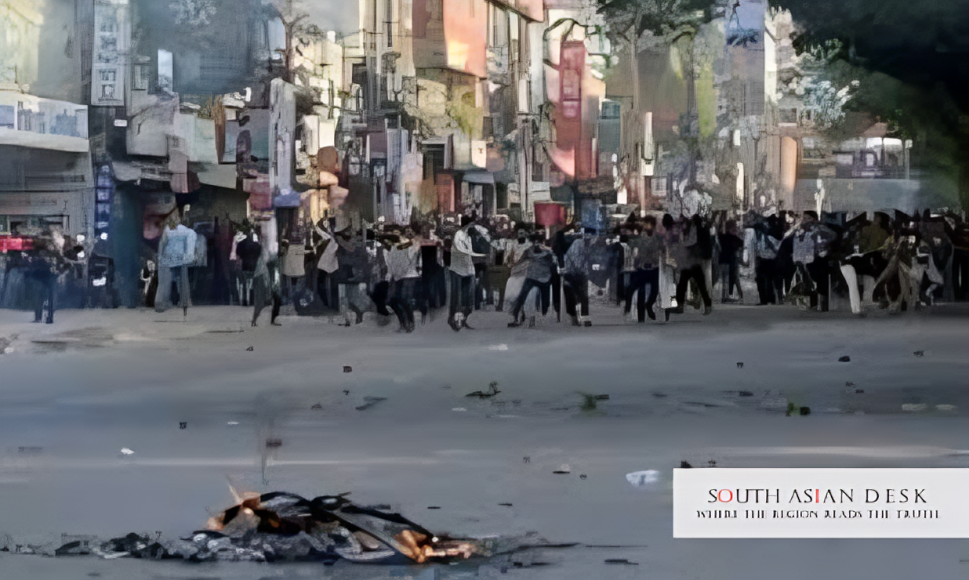
Rising political clashes under the Yunus government cast shadows over Bangladesh’s first post-Hasina vote, with activists fearing a return to past turmoil.
At least 16 political activists have been killed since the Bangladesh Election Commission announced the schedule for the Bangladesh elections 2026 on 11 December 2025. The violence, occurring amid campaigns for the 12 February parliamentary polls under the Yunus government elections, has revived fears of unrest in the South Asian nation of 170 million people.
The killings, mostly involving Bangladesh Nationalist Party (BNP) members, follow the ouster of former Prime Minister Sheikh Hasina in August 2024. Muhammad Yunus, Nobel Laureate, leads the interim administration overseeing the vote alongside a referendum on state reforms.
This surge in Bangladesh election violence threatens the credibility of the process, seen as a test for democracy in South Asia where stable transitions matter for regional security and trade.
Political Violence Bangladesh: Recent Incidents
Political violence Bangladesh has intensified since campaigning began on 22 January. Hasan Mollah, a 42-year-old BNP leader in Keraniganj near Dhaka, was shot on 23 January and died the next day. Police probe the motive, but party members link it to election rivalries.
Earlier, Azizur Rahman Musabbir, another BNP activist, was killed on 7 January. Kazi Shawon Alam, a BNP student wing leader, told reporters: “We don’t want killings or confrontation, but during elections, violence feels inevitable.”
Local media report seven victims shot dead, highlighting illegal firearms. Government data indicate 3,619 weapons looted during the 2024 uprising, with 1,360 unrecovered despite recoveries exceeding 60 percent.
The Human Rights Support Society (HRSS) documented 62 election-related clashes nationwide. BNP accounts for 13 of the 16 deaths, with others including a Jamaat-e-Islami leader and a banned Awami League (AL) affiliate.
In Dhaka’s Mirpur, clashes on 20 January injured a dozen after Jamaat activists visited a BNP leader’s home. Resident Abdullah Al Mamun said: “This is really a frightening situation for ordinary voters like us.”
Yunus Government Elections: Security Measures
Under Yunus government elections, authorities deploy 900,000 personnel, including 108,730 military members, from 8 February to 14 February. More than half of 42,761 polling centres, classified as risky, get extra forces.
AHM Shahadat Hossain, additional inspector general at Bangladesh Police, stated: “The situation is under control. Preventing use of looted weapons in election-related violence is a top priority.”
Home Adviser Lieutenant General (Retd) Md Jahangir Alam Chowdhury reiterated the interim government’s commitment to peaceful polls on 27 January 2026. Chief Election Commissioner A M M Nasir Uddin briefed diplomats on robust measures for impartiality.
Yunus announced the Bangladesh elections 2026 date on 5 August 2025, marking a year since Hasina fled. He confirmed the 12 February poll “no matter who says what” on 14 January 2026.
The referendum on the ‘July Charter’ for reforms, drafted post-2024 protests, runs concurrently. About 120 million voters are eligible.
Bangladesh Election Violence: Historical Context
Bangladesh election violence echoes past polls. The Bangladesh Peace Observatory (BPO) recorded 142 deaths around the 2014 election, boycotted by BNP and Jamaat. In 2018, UN experts noted eight deaths and 560 injuries in four days.
The 2024 uprising ended Hasina’s 15-year rule, accused of crackdowns including mass arrests and disappearances. The AL is banned from contesting, leaving BNP leading a 10-party coalition and Jamaat an 11-party alliance.
Intra-party tensions add risks. Prothom Alo reports 92 BNP rebel candidates in 79 constituencies, prone to clashes. Four districts saw supporter fights on 24 January, injuring over 100.
Analysts note constituencies with rebels face higher violence. BNP’s Saimum Parvez alleged targeted killings to disrupt the vote, accusing Jamaat of disinformation.
Jamaat’s Jubaer Ahmed claimed obstruction and attacks on activists. Police intervene in areas like Kurigram, where rivals clashed post-prayers.
A police officer in Kurigram, on anonymity, said: “Elections feel like a festival again, but confrontation risks have increased.”
Background
Bangladesh gained independence from Pakistan in 1971 amid violence. Elections since have often seen unrest, with 49 deaths in 1991 and 21 in 2008.
Hasina’s ouster followed student-led protests in July 2024, killing hundreds. Yunus took charge on 8 August 2024, pledging reforms.
The Bangladesh elections 2026 are the first competitive vote post-Hasina, with diverse platforms. Islami Andolan Bangladesh and Jatiya Party contest independently.
Sharif Osman Hadi, a 2024 protest leader, was shot on 12 December 2025 and died on 18 December, sparking unrest. His killing, like Anwarullah’s on 20 January, remains unclassified as political.
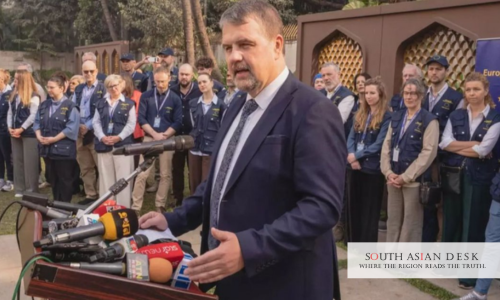
International observers, including Commonwealth led by Nana Akufo-Addo and EU mission, monitor the process.
What’s Next
As Bangladesh elections 2026 approach, tighter security aims to curb Bangladesh election violence. Yunus’s administration vows impartial probes into killings.
Voters hope for peace, but activists warn of escalation. The outcome could shape South Asia’s democratic landscape, influencing neighbours like India and Pakistan.
Political violence Bangladesh must subside for credible Yunus government elections, ensuring voter turnout and acceptance of results.
Published in SouthAsianDesk, January 28th, 2026
Follow SouthAsianDesk on X, Instagram and Facebook for insights on business and current affairs from across South Asia.