Dhaka, 11 January 2026 – Bangladesh has expressed interest in joining the Bangladesh Gaza force, a move conveyed during high-level talks with US officials in Washington. National Security Adviser Khalilur Rahman met US diplomats on 10 January 2026 to discuss the proposal, highlighting Dhaka’s commitment to regional stability.
The initiative aligns with a United Nations Security Council resolution adopted in November 2025, which authorises a temporary international stabilisation force in Gaza. This force aims to support peace efforts following a fragile ceasefire that began in October 2025.
Bangladesh Gaza Force: Diplomatic Outreach
In the meeting, Rahman “expressed Bangladesh’s interest in principle to be part of the international stabilisation force that would be deployed in Gaza,” according to a statement from the Chief Adviser’s Office. The discussions involved US Under-Secretary of State for Political Affairs Allison Hooker and Paul Kapur, a senior official from the US National Security Council.
The statement did not detail the scope of Bangladesh troops Gaza involvement, such as troop numbers or specific roles. US officials responded positively, indicating willingness to collaborate with Bangladesh on the matter. The talks also covered Bangladesh’s upcoming national elections, economic ties, the Rohingya crisis, and broader regional issues.
Bangladesh’s expression of interest comes as the international community seeks contributors to the Bangladesh stabilisation force Gaza. The force is designed to operate under UN auspices, focusing on security and humanitarian access in the conflict-hit area.
UN Mandate for Bangladesh International Force Gaza
The Bangladesh Gaza force draws from UN Security Council Resolution 2803, adopted on 17 November 2025 by a vote of 13 in favour, none against, and 2 abstentions from China and Russia. The resolution authorises member states, in collaboration with a Board of Peace, to establish the temporary International Stabilisation Force (ISF) in Gaza.
According to the resolution text, the ISF’s mandate includes maintaining ceasefire compliance, facilitating humanitarian aid, and supporting governance transitions. It endorses a US-backed comprehensive plan to end the Gaza conflict, which envisions a path to Palestinian statehood while addressing security concerns.
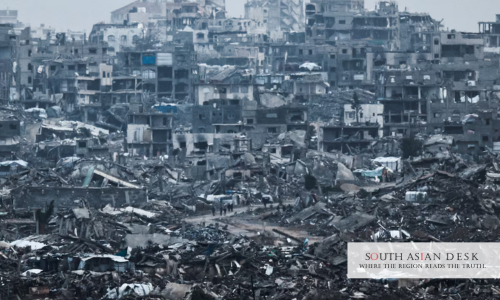
Since the ceasefire’s onset in October 2025, progress has stalled beyond initial phases. Reports indicate over 400 Palestinians and 3 Israeli soldiers killed in subsequent incidents. Gaza’s 2 million residents largely remain in makeshift housing, with significant territory reductions due to prior military actions.
Background
Bangladesh has a longstanding history of contributing to UN peacekeeping operations, with over 160000 personnel deployed since 1988 across 54 missions. As one of the top troop-contributing countries, Dhaka has provided forces to conflict zones in Africa, the Middle East, and Asia. This experience positions Bangladesh well for roles in the Bangladesh Gaza force, potentially involving stabilisation and humanitarian tasks.
The Gaza conflict escalated in late 2023 following a Hamas attack on Israel that killed 1200 people and took over 250 hostages. Israel’s response led to tens of thousands of Palestinian deaths, widespread displacement, and a humanitarian crisis described by UN inquiries as involving elements of genocide, though Israel rejects this characterisation and cites self-defence.
Bangladesh has consistently supported Palestinian rights, condemning civilian casualties and advocating for a two-state solution based on UN resolutions. In October 2023, the Ministry of Foreign Affairs urged international action to allow humanitarian aid into Gaza and halt disproportionate force.
The current interim government under Chief Adviser Muhammad Yunus, in power since August 2024 following political upheaval, has prioritised foreign policy engagement. This includes strengthening ties with the US and participating in global peace initiatives, amid domestic preparations for elections expected in 2026.
South Asia’s stake in the Gaza situation is multifaceted. As a Muslim-majority region, public sentiment often aligns with Palestinian causes, influencing domestic politics in countries like Bangladesh, Pakistan, and India. Bangladesh’s involvement in the Bangladesh stabilisation force Gaza could enhance its diplomatic profile, fostering goodwill with Arab nations and the US while demonstrating leadership in international peacekeeping.
Economic implications also factor in. Bangladesh’s garment exports and remittances from Middle Eastern workers could benefit from stabilised regional relations. However, risks include potential backlash from groups opposing foreign involvement in Gaza, though no such reactions have surfaced yet.
Data from the UN shows that peacekeeping forces like the proposed ISF require diverse contributions, with troop commitments varying from 500 to 5000 per nation in similar missions.
What’s Next
As consultations continue, Bangladesh awaits further details on the Bangladesh international force Gaza deployment timeline and operational framework. UN officials indicate the force could mobilise within months, pending contributor agreements and on-ground assessments.
The move underscores Bangladesh’s proactive stance in global affairs, potentially paving the way for expanded roles in Middle East peace processes. Observers note that successful participation could bolster Dhaka’s bid for greater influence in UN bodies.
In the interim, Bangladesh continues to monitor Gaza developments closely, advocating for humanitarian corridors and ceasefire adherence. The Bangladesh Gaza force represents a critical step towards lasting stability, with Dhaka positioned to contribute meaningfully.
Published in SouthAsianDesk, January 11th, 2026
Follow SouthAsianDesk on X, Instagram and Facebook for insights on business and current affairs from across South Asia.