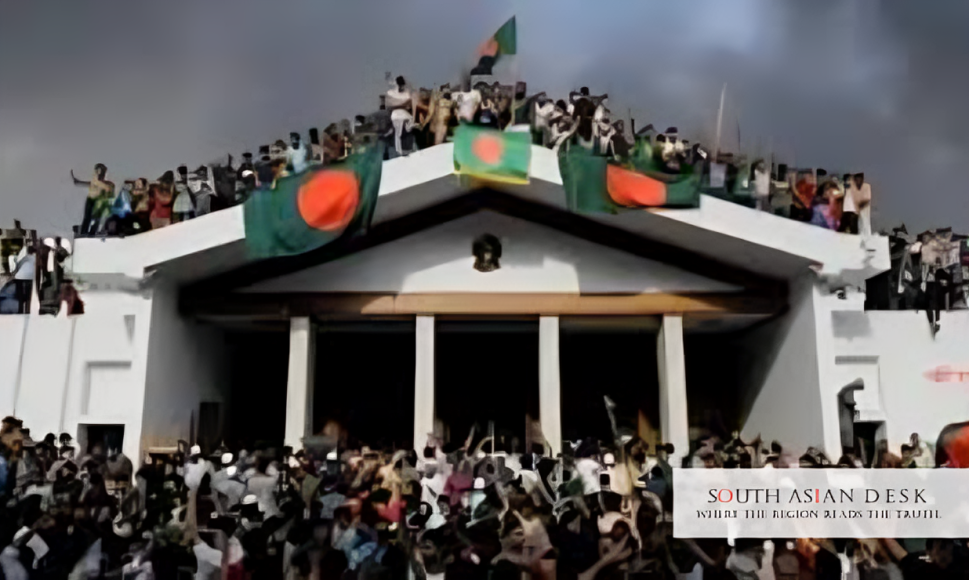
The Bangladesh immunity ordinance, promulgated by President Mohammed Shahabuddin, provides legal protection to those involved in the July Uprising against the former regime.
Dhaka: President Mohammed Shahabuddin promulgated the Bangladesh immunity ordinance on Sunday, 25 January, 2026. The law grants immunity to participants in the July Uprising of 2024. It withdraws all civil and criminal cases against them and bars new legal actions. The ordinance addresses actions taken in self-defence during protests that ousted the previous government.
This development holds significance for South Asia. It sets a precedent for handling post-uprising accountability in nations with recent political transitions. Similar measures have appeared in regional contexts after mass movements.
Details of Ordinance 2026 Bangladesh
The Bangladesh immunity ordinance, titled July Uprising (Protection and Liability Determination) Ordinance, 2026, focuses on July Uprising protection. It recognises the protests in July and August 2024 as efforts to restore democracy and human rights. Participants faced armed attacks from the former regime’s forces. The law deems their responses necessary for self-preservation and public order.
Under Ordinance 2026 Bangladesh, all existing complaints or proceedings must end. Public prosecutors can apply to courts for halts, leading to acquittals. This ensures indemnity for July fighters who acted against arbitrary killings.
Investigations into deaths during the uprising fall to the Human Rights Commission. Officials from involved agencies cannot lead probes. Arrests need commission approval. If actions qualify as political resistance, families may receive government compensation. No cases can follow.
The government retains power to create rules for implementation. This could clarify scopes of July Uprising protection.
Background on the July Uprising
The July Uprising began as student protests against quota systems in July 2024. It grew into a mass movement against the Sheikh Hasina government. Citizens joined to demand democratic reforms. Clashes resulted in deaths and injuries. The uprising ended the regime on 5 August, 2024, leading to an interim government under Muhammad Yunus.
Over 600 deaths occurred, per reports. The movement restored rule of law but left legal issues for participants. Cases filed under the prior administration targeted protesters.
The Bangladesh immunity ordinance addresses these. It provides indemnity for July fighters involved in self-defence. This aligns with calls from uprising coordinators for protections.
Implications for Legal Framework
Ordinance 2026 Bangladesh alters how uprisings are treated legally. It prioritises political context over standard prosecutions. Critics argue it may hinder justice for victims. Supporters see it as essential for national healing.
In South Asia, similar laws followed events like Nepal’s 2006 movement or Sri Lanka’s 2022 protests. The Bangladesh immunity ordinance could influence future regional policies on indemnity for July fighters-style actions.
The Human Rights Commission gains key roles. It must probe killings without bias. This ensures accountability while offering July Uprising protection.
The ordinance covers actions from July to August 2024. It excludes unrelated crimes. Courts will interpret applications case by case.
Reactions and Broader Context
The interim government approved the draft on 15 January, 2026. Law Ministry officials prepared it. The gazette notification formalised promulgation.
This step follows months of demands from student leaders. They sought shields from reprisals. The Bangladesh immunity ordinance meets those needs.
Regionally, it impacts Bangladesh-India ties. The uprising affected cross-border relations. South Asian nations monitor for stability effects.
Human rights groups watch implementation. They urge transparent probes. The commission’s work will test the law’s fairness.
What’s Next
The government may issue rules soon to enforce Ordinance 2026 Bangladesh. Courts will handle withdrawal applications. The Human Rights Commission starts investigations into uprising deaths.
This could lead to compensations for affected families. Ongoing cases may resolve within months. The Bangladesh immunity ordinance aims to close chapters from the July Uprising, fostering reconciliation.
In conclusion, the Bangladesh immunity ordinance marks a key legal shift. It offers indemnity for July fighters while mandating probes. This balances protection with accountability in post-uprising Bangladesh.
Published in SouthAsianDesk, January 27th, 2026
Follow SouthAsianDesk on X, Instagram and Facebook for insights on business and current affairs from across South Asia.