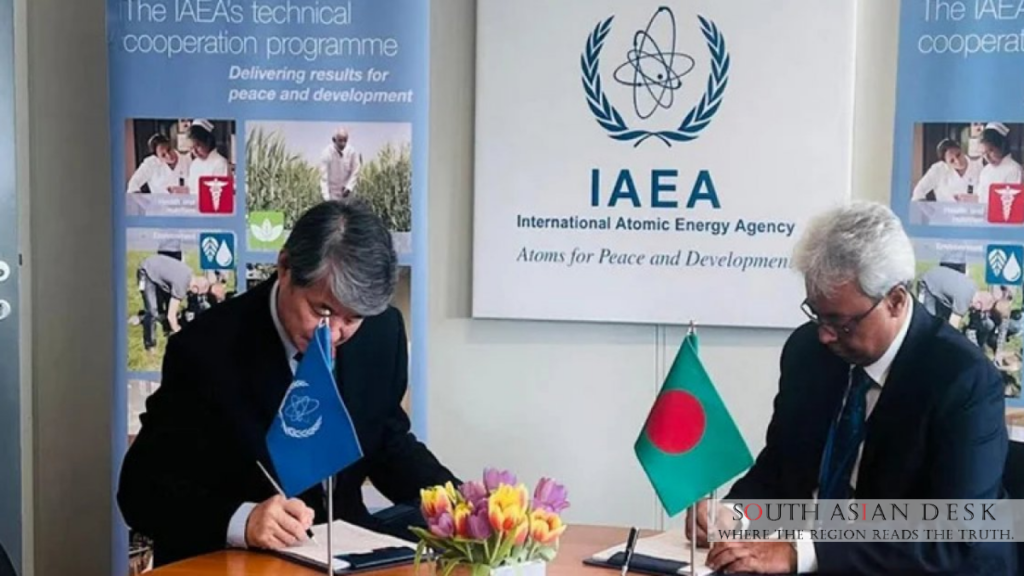
Bangladesh Japan signed an agreement on 3 February 2026 in Dhaka to facilitate the transfer of defence equipment and technology. The deal, signed by Lieutenant General SM Kamrul Hassan of Bangladesh’s Armed Forces Division and Japanese Ambassador Saida Shinichi, establishes a legal framework for such transfers. It entered into force immediately, aiming to enhance Japan Bangladesh military cooperation.
This Dhaka Tokyo security agreement arrives at a time when South Asia faces evolving security challenges, including maritime threats and regional stability concerns. It positions Bangladesh to access advanced Japanese technology, potentially bolstering its defence capabilities while supporting Japan’s export policies under its revised defence guidelines.
Defense Equipment Transfer Framework
The agreement outlines procedures for determining specific transfers of defence equipment. It mandates appropriate control over the items, including rules against unauthorised use or transfer to third parties without consent. Officials from both sides emphasised that the Dhaka Tokyo security agreement will prevent extra-purpose utilisation of the transferred technology.
According to the Japanese Ministry of Foreign Affairs, the deal “establishes a legal framework for the governments of Japan and Bangladesh regarding the handling of defence equipment and technology to be transferred between the two governments in order to implement projects to be jointly determined, including those contributing to international peace and security.”
This framework builds on Japan’s 2014 revisions to its Three Principles on Transfer of Defense Equipment and Technology, which allow exports under strict conditions. For Bangladesh, the agreement aligns with its efforts to modernise armed forces through international partnerships.
The Bangladesh Japan defense deal includes provisions for joint projects that could involve surveillance systems or other non-lethal equipment. However, details on initial transfers remain undisclosed.
Japan Bangladesh Military Cooperation Evolution
Japan Bangladesh military cooperation has grown since the 2023 summit between the two nations’ leaders. In April 2023, a joint statement welcomed the start of negotiations on this very agreement concerning the transfer of defence equipment and technology.
The Dhaka Tokyo security agreement now cements that progress. It is expected to contribute to closer ties in defence technology, helping Bangladesh address border security and maritime domain awareness. Japan, in turn, benefits by maintaining its defence industry bases and advancing its security interests in the Indo-Pacific region.
Bilateral exchanges have included mutual visits by vessels and aircraft, unit-to-unit interactions, and training programmes. The 2023 memorandum between defence authorities laid the groundwork for such activities. This latest Bangladesh Japan defense deal expands that scope to include technology transfers.
Background
Relations between Bangladesh and Japan trace back to 1972, with Japan providing significant economic aid. Security cooperation emerged more prominently in the 2010s amid shared concerns over regional stability.
In 2023, during a summit in Tokyo, leaders elevated ties to a strategic partnership. They highlighted the need for defence collaboration, including the commencement of talks on the defence equipment transfer agreement. This followed Japan’s launch of its Official Security Assistance (OSA) programme in 2023, under which Bangladesh was selected as a recipient.
Under OSA, Japan has committed to providing equipment like coastal radar systems and patrol boats to enhance maritime security. The programme aims to support partner nations’ surveillance capabilities without direct combat involvement. For Bangladesh, this fits into its broader defence modernisation plan, which includes acquisitions from multiple sources.
The signing on 3 February 2026 reflects ongoing diplomatic efforts. Lieutenant General Hassan represented Bangladesh’s Chief Adviser’s Office, underscoring high-level commitment. Ambassador Saida’s involvement highlights Japan’s proactive stance in South Asia.
While the agreement focuses on non-offensive equipment, it signals a shift for Japan, traditionally restrictive on defence exports due to its pacifist constitution. Bangladesh, meanwhile, seeks diversified partnerships to reduce reliance on traditional suppliers.
What’s Next
Future steps under the Bangladesh Japan defense deal may involve negotiations on specific projects. Both sides could explore joint research and local production to build capacity.
Japan’s OSA commitments suggest potential deliveries of radar or communication systems in the coming months. Bangladesh may integrate these into its navy or coast guard operations.
The deal could also pave the way for expanded dialogues on security issues, including countering economic coercion and strengthening supply chains. As regional dynamics evolve, this Dhaka Tokyo security agreement may influence broader Indo-Pacific alliances.
Analysts anticipate that successful implementation will encourage similar pacts with other nations. For now, the focus remains on ensuring compliance with the agreement’s controls.
The Bangladesh Japan defense deal represents a forward step in bilateral relations, promising mutual benefits in security and technology domains.
Published in SouthAsianDesk, February 4th, 2026
Follow SouthAsianDesk on X, Instagram and Facebook for insights on business and current affairs from across South Asia.