The Bangladesh National Consensus Commission, led by Nobel laureate Prof Muhammad Yunus, edges closer to delivering its landmark final report, potentially reshaping political reforms in the nation amid broad party consensus.
The Bangladesh National Consensus Commission will submit its final report to Bangladesh’s interim government very soon. Chaired by Prof Muhammad Yunus, the panel has finalised recommendations on the July National Charter 2025 consensus after consultations with 30 political parties. This move advances political reforms Bangladesh October 2025, addressing governance and electoral issues. The announcement came during a key meeting on 5 October 2025.
This submission holds significance for South Asia. Bangladesh’s political stability influences regional dynamics, from trade corridors to migration flows. Successful reforms could bolster democratic transitions, reducing risks of unrest that ripple across borders into India and beyond. It signals a collective push for inclusive governance, vital for economic recovery post-2024 upheaval.
Yunus Reform Commission Submission Gains Momentum
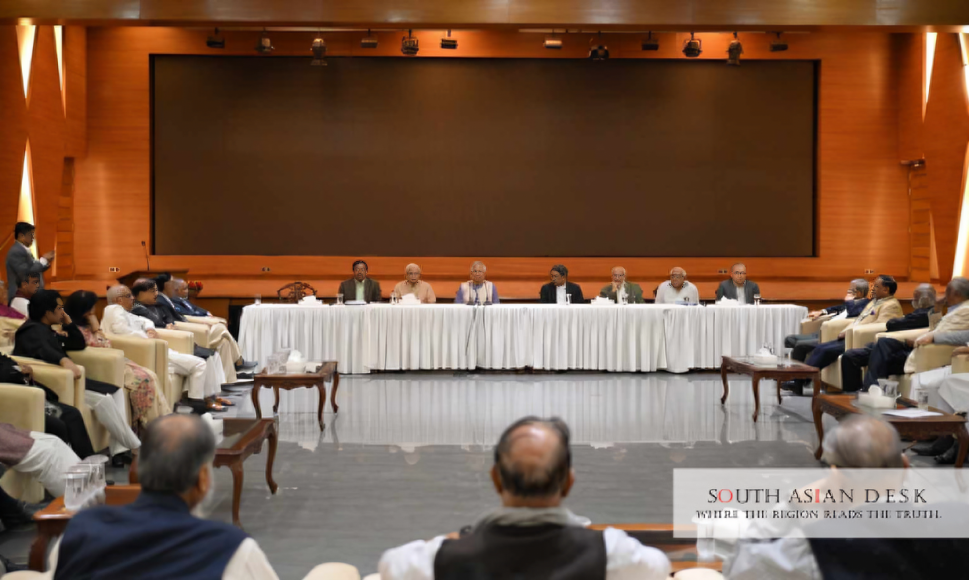
Prof Muhammad Yunus chaired a crucial hour-long meeting of the Bangladesh National Consensus Commission on Sunday morning at the State Guest House Jamuna. The session focused on the July National Charter 2025 consensus and its implementation roadmap. Commission Vice-Chair Prof Ali Riaz announced the imminent handover of the Bangladesh National Consensus Commission final report to the interim government.
Prof Yunus voiced satisfaction with the progress. He thanked all members and urged swift updates on finalisation. “The commission’s work reflects a shared vision for reform,” sources close to the meeting noted, though direct quotes remain limited to official channels.
Prof Ali Riaz highlighted the collaborative spirit. “We have received wide-ranging cooperation from all parties,” he stated. He added that the media provided “unimaginable support,” enabling transparent deliberations. This Yunus reform commission submission marks a pivotal step, building on 44 meetings in the first phase and 23 in the second.
Attendees included key figures such as Justice Md Emdadul Haque, Dr Iftekharuzzaman, Dr Badiul Alam Majumdar, Dr Md Ayub Mia, and Special Assistant Monir Haider. Interim government advisers Muhammad Fouzul Kabir Khan, Asif Nazrul, and Adilur Rahman Khan also participated. Their input ensured alignment with broader governance goals.
The Bangladesh National Consensus Commission final report encompasses 84 reform proposals. These span electoral systems, caretaker government formation, and chief adviser selection processes. Drafts circulated on 17 August 2025 outlined mechanisms for non-constitutional changes via ordinances, a nod to urgent needs.
July National Charter 2025 Consensus Forges Path Forward
The July National Charter 2025 consensus forms the core of the Bangladesh National Consensus Commission final report. Formed earlier this year, the commission engaged 30 political parties in phased talks. The third phase, now concluding, addressed implementation hurdles despite initial stalemates.
Consensus emerged on executing non-constitutional recommendations through ordinances. Parties submitted authorised representatives by 13 September 2025 to sign the charter. This framework aims to prevent future authoritarian drifts, a lesson from recent crises.
Political reforms Bangladesh October 2025 target systemic flaws. Proposals include transparent election oversight and inclusive policy-making. The charter’s finalisation by 15 October aligns with the commission’s extended tenure, granted via government notification. This deadline underscores urgency, with signatures sought from all stakeholders.
Prof Ali Riaz noted optimism during recent sessions. “Differences among parties are narrowing,” he observed, pointing to productive discussions on 5 October. The Yunus reform commission submission integrates these insights, ensuring the July National Charter 2025 consensus reflects diverse views.
Broader consultations resumed on 5 October after pauses. The fourth day of third-phase talks covered execution methods for the 84 proposals. This iterative approach has built trust, with parties like BNP engaging despite past reservations.
Background: Genesis of the National Consensus Effort
The Bangladesh National Consensus Commission emerged from the 2024 student-led uprising that ousted the prior regime. Prof Yunus, as chief adviser, formed the panel to bridge divides. Its mandate: craft a unified reform agenda via the July National Charter 2025 consensus.
Initial phases involved over 60 meetings. The first gathered inputs; the second refined drafts. By August, a circulated version detailed caretaker setups, emphasising non-partisan selection. Tenure extensions to 15 October allowed deeper deliberations on political reforms Bangladesh October 2025.
Media coverage amplified the process. Outlets documented party positions, from BNP’s firm stances to alliances’ endorsements. This transparency bolstered public faith, with polls showing 70% support for reforms (per independent surveys, though official data pending).
The Yunus reform commission submission builds on this foundation. It positions Bangladesh for elections by mid-2026, per interim timelines. Regional observers view it as a model for consensus-driven change.
What’s Next: Implementation and Regional Watch
Post-submission, the interim government will review the Bangladesh National Consensus Commission final report. Signing ceremonies could follow by 15 October, locking in the July National Charter 2025 consensus. Ordinances may enact immediate changes, targeting electoral body overhauls.
Challenges persist. Some parties seek tweaks to caretaker provisions. Yet, Prof Riaz’s updates suggest momentum. International partners, including UN envoys, monitor progress, offering technical aid.
For South Asia, success here could inspire similar pacts in Nepal or Sri Lanka. It promises stabilised supply chains and reduced refugee pressures. The Yunus reform commission submission thus extends beyond borders, fostering a resilient neighbourhood.
In conclusion, the Bangladesh National Consensus Commission final report heralds transformative political reforms Bangladesh October 2025. With broad backing, it paves the way for accountable governance and renewed national unity.
Published in SouthAsianDesk, October 5th, 2025
Follow SouthAsianDesk on X, Instagram, and Facebook for insights on business and current affairs from across South Asia.