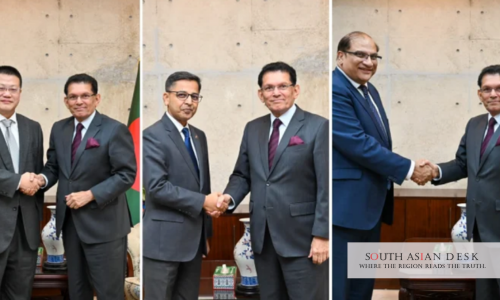
Bangladesh stands at a pivotal moment as the National Consensus Commission prepares to resume Bangladesh reform talks next week, aiming to finalise the July National Charter, a roadmap born from the sacrifices of the July 2024 uprising. The commission, tasked with forging a unified path for the nation’s future, will begin consultations with experts before engaging political parties in a third round of discussions to ensure the charter’s legal enforceability.
The talks, set to recommence in the coming days, follow two rounds of dialogue that achieved consensus on 62 of 165 reform proposals, with partial implementation through ordinances and policies already underway. The second phase saw agreement on 11 of 20 constitutional issues, though nine were adopted with notes of dissent, reflecting the challenges of uniting diverse political voices. The commission, led by Vice-Chairman Professor Ali Riaz, remains hopeful that these discussions will pave the way for a signed charter, a symbol of national unity and accountability.
At a press briefing in Dhaka’s Jatiya Sangsad, Riaz outlined the next steps, emphasising the need for expert input to navigate the charter’s legal framework. A revised draft, incorporating feedback from political parties, will be circulated within days, setting the stage for a potential signing date. The commission’s work carries the weight of public expectation, as citizens who lost loved ones in the uprising look to these reforms to honour their sacrifice and build a fairer democracy.
Judiciary and Bureaucracy, Included in Bangladesh Reform Plan
The July Charter, rooted in the uprising’s call for justice and reform, addresses key issues such as curbing parliamentary influence in local governance, balancing power between the prime minister and president, and strengthening electoral processes. While consensus has been reached on critical reforms like delimiting constituencies and expanding citizens’ rights, dissenting views on matters like term limits and constitutional council powers highlight the complexity of the task.
As Bangladesh navigates this delicate phase, the talks represent more than policy discussions; they embody the nation’s resolve to heal and rebuild. The commission’s efforts, though challenged by differing perspectives, reflect a shared commitment to a democratic future. With the interim government and political parties poised to shape the charter’s implementation, the Bangladesh reform talks next week carry the hopes of a nation yearning for lasting change.
Published in SouthAsianDesk, August 9th, 2025
Follow SouthAsianDesk on X, Instagram, and Facebook for insights on business and current affairs from across South Asia.