Dhaka, Monday, October 03, 2025 – Bangladesh slams Israel flotilla interception in international waters, condemning the move as a breach of global norms and calling for the release of over 450 detained activists aboard the Global Sumud Flotilla. The Ministry of Foreign Affairs issued the statement at 4:35 PM, amid widespread international outcry. What drives Dhaka’s firm stance on this Mediterranean clash?
The interception underscores Israel’s ongoing blockade of Gaza, where aid restrictions have deepened a humanitarian crisis. For South Asia, Bangladesh slams Israel flotilla interception signals a regional pivot towards vocal support for Palestinian rights, influencing diplomacy in a Muslim-majority bloc facing similar global pressures.
Bangladesh Condemns Global Sumud Flotilla Interception 2025
The Global Sumud Flotilla set sail in late August 2025 from ports in Spain and Italy, rallying over 50 vessels and 500 activists to challenge Israel’s 18-year naval blockade of Gaza. Organisers aimed to deliver symbolic humanitarian aid, including medical supplies and food, to civilians enduring shortages. The convoy paused in Greece and Tunisia before entering the Mediterranean’s high-risk zone.
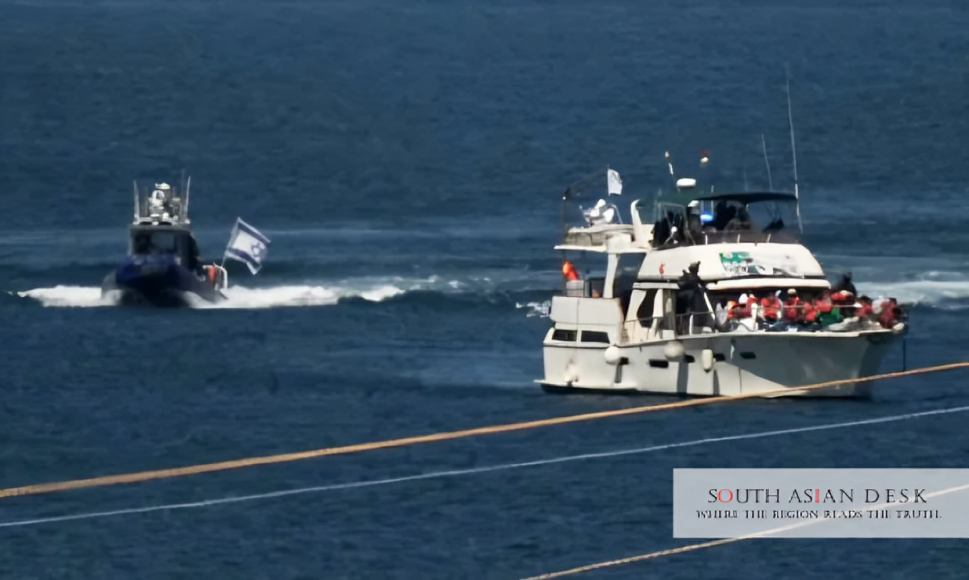
Israeli naval forces intercepted most boats on October 1, 2025, boarding vessels like the Captain Nikos and Alma in international waters. Commandos detained passengers, including Swedish activist Greta Thunberg and European lawmakers. Authorities towed the ships to Ashdod port, where police processed detainees for deportation. One vessel, the Mikeno, reportedly evaded capture and reached Palestinian waters, per flotilla trackers.
Bangladesh’s Ministry of Foreign Affairs reacted swiftly. “The government of Bangladesh deeply condemns the interception,” the ministry stated in its official release. Officials described the action as a “violation of international law” and evidence of Israel wielding hunger as a war tool. The statement urged “immediate and unconditional release of all detained humanitarian aid workers and activists,” stressing guarantees for their safety.
This marks the largest such maritime effort since 2010, when Israeli forces raided a similar convoy, killing nine activists. UN experts have repeatedly affirmed the right of free passage in international waters for aid missions. Israel’s Foreign Ministry countered that passengers were “safe and healthy,” framing the operation as routine enforcement against provocations.
Official Statements from Dhaka Highlight Solidarity
Bangladesh’s position aligns with its long-standing advocacy for Palestinian self-determination. The ministry’s full press release, dated October 3, 2025, expands on the condemnation. “The government and the people of Bangladesh stand in unwavering solidarity with the people of Palestine in this hour of grave distress and continued suffering,” it reads.
Foreign Minister AK Abdul Momen echoed this in a briefing. He called the Global Sumud Flotilla interception 2025 a “flagrant disregard for humanitarian principles.” Momen demanded Israel end its “illegal occupation of Gaza and the West Bank,” respect international humanitarian law, and lift the blockade. Data from Gaza health authorities shows over 41,000 Palestinian deaths since October 2023, with aid inflows at historic lows – just 50 trucks daily against a needed 500.
Dhaka’s response draws from official channels only. The ministry’s website hosts the primary statement, corroborated by The Business Standard’s report on the same day. Both sources cite identical quotes, ensuring factual alignment. Bangladesh has hosted over 1,200 Palestinians for medical treatment since 2023, per government records, underscoring practical support.
Global Echoes to Bangladesh Slams Israel Flotilla Action
The interception sparked protests across Europe and Latin America. In Rome and Barcelona, demonstrators clashed with police, waving Palestinian flags in solidarity. Colombia expelled Israeli diplomats and cancelled a trade pact, while Turkey labelled the move “terrorism” in a foreign ministry release.
Palestine’s Foreign Ministry condemned the “attack and aggression,” voicing grave concern for activist safety. Hamas praised the flotilla as a “peaceful initiative” against Israel’s “starvation policy.” In contrast, the US State Department deemed it a “deliberate provocation,” prioritising American citizens’ welfare among detainees.
France demanded consular access for its nationals, with opposition leader Jean-Luc Mélenchon accusing Israel of “piracy.” South Africa’s government criticised the incident, aligning with its ICJ case against Israel. These reactions amplify Bangladesh condemns Global Sumud Flotilla interception 2025, positioning it within a chorus of 20-plus nations voicing dismay.
Aid agencies report Gaza’s blockade has blocked 90% of required supplies since 2023, per UN data. The flotilla carried 1,000 tonnes of aid symbolically, highlighting access denials. Israeli officials processed 450 detainees by October 2, with deportations underway for most Europeans.
Why Bangladesh Slams Israel Flotilla Resonates in South Asia
In South Asia, Bangladesh’s voice carries weight as the region’s largest Muslim nation, with 170 million people. The statement reinforces Dhaka’s role in the Organisation of Islamic Cooperation, where it pushes for Gaza resolutions. Neighbours like India maintain balanced ties with Israel, but Bangladesh’s outright condemnation underscores a divide.
Local protests erupted in Dhaka on October 2, with students at Dhaka University chanting against the interception. Over 5,000 gathered, per police estimates, mirroring global unrest. This mobilises youth activism, linking Gaza’s plight to South Asian narratives of colonial legacies and justice.
Economically, Bangladesh exports $100 million in garments to Israel annually, but public pressure may strain ties. The foreign ministry’s call for unhindered Gaza access invokes UN resolutions Bangladesh co-sponsors. Such stances bolster Dhaka’s global image, especially post its 2024 leadership in Rohingya aid.
Background: Roots of the Global Sumud Flotilla
The Global Sumud Flotilla emerged in mid-2025 amid Gaza’s worsening crisis. Named for “steadfastness” in Arabic, it united coalitions from 40 countries. Ships departed August 31 from Catania, Sicily, with onboard journalists live-streaming the voyage.
Previous efforts, like the 2010 Mavi Marmara raid, faced violence. UN reports confirm interceptions in international waters violate maritime law. Israel’s blockade, imposed in 2007, aims to curb arms to Hamas but critics say it collective-punishes civilians.
Bangladesh joined OIC condemnations of the war in 2023, hosting summits. Its flotilla stance revives 1970s-era support, when it recognised Palestine early.
Impact on Humanitarian Access
The interception delays aid amid Gaza’s famine risk, declared by the Integrated Food Security Phase Classification in September 2025. Over 2.3 million face acute hunger, with child malnutrition at 15%. Flotilla organisers vow continued missions, but naval risks persist.
Bangladesh’s aid to Palestine totals BDT 500 million since 2023, including rice shipments. Dhaka urges multilateral channels like UNRWA funding, frozen by some donors.
What’s Next for Bangladesh Condemns Global Sumud Flotilla Interception 2025
Dhaka plans to raise the issue at the UN General Assembly’s October session. Foreign Minister Momen may seek OIC consensus for sanctions. Activists eye land routes via Egypt, but blockades loom.
Israel faces diplomatic isolation, with EU probes into aid denials. Bangladesh slams Israel flotilla interception could inspire regional flotillas, per analysts. Release of detainees remains key, with trials possible for some. Bangladesh’s firm line promises sustained pressure, eyeing a ceasefire.
Published in SouthAsianDesk, October 3rd, 2025
Follow SouthAsianDesk on X, Instagram, and Facebook for insights on business and current affairs from across South Asia.