Bangladesh SMEs can cut 14 million tons of emissions: Study
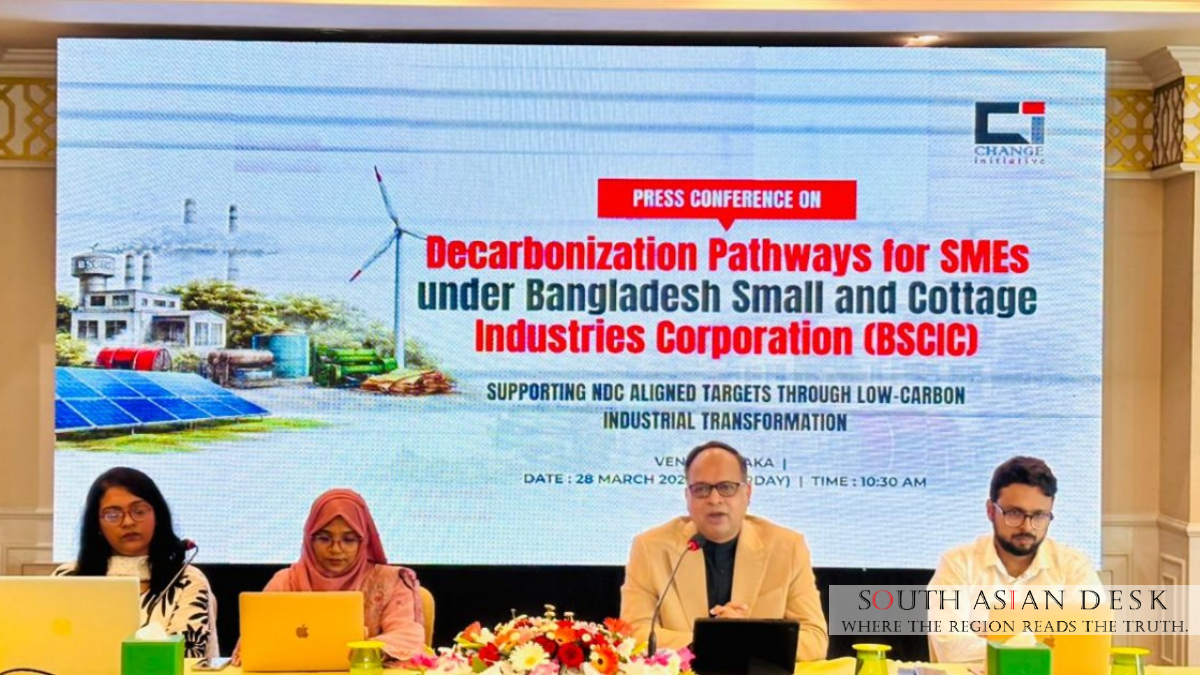
On March 28, 2026, a groundbreaking study by Change Initiative revealed that Bangladesh’s small and medium-sized enterprises (SMEs) have the potential to significantly reduce carbon emissions by over 14 million tons annually through strategic interventions. The findings were presented at a press briefing in Dhaka, highlighting the environmental and economic benefits of adopting decentralized rooftop solar systems for Bangladesh SMEs.
The study indicates that Bangladesh SMEs could generate approximately $0.4 million in annual revenue through carbon credit mechanisms. By drawing lessons from China, India, and Vietnam, the report suggests that adopting rooftop solar could reduce operational costs by 30–50%, enhancing global export competitiveness while maintaining environmental standards.
Currently, more than 90% of Bangladesh’s industrial units are SMEs, employing around 85% of the industrial workforce and contributing 25–30% to the GDP. Despite this, the sector’s reliance on fossil fuel–based electricity exposes it to market volatility. Bangladesh’s NDC 3.0 aims to cut 69.84 million tons of CO₂ emissions from the energy sector by 2035, making industrial energy transition urgent.
The study identifies four high-impact SME clusters—leather, plastic manufacturing, plastic packaging, and light engineering—that are responsible for 46.99 million tons of CO₂ emissions annually. Of this, 14.097 million tons could be mitigated through sector-specific interventions.
The transformative potential of solar energy in industrial parks was underscored, with the possibility of generating 57 MW of solar power by utilizing just 10% of available land in BSCIC industrial zones, cutting 51,440.71 tons of CO₂ emissions. Expanding usage to 20% of land could double these figures.
M Zakir Hossain Khan, Chief Researcher at Change Initiative, emphasized the financial viability of rooftop solar systems. A 20 kW installation could produce 79 units of electricity daily, with a payback period of 4.2 years and a 23% internal rate of return. SMEs can also adopt solar under OPEX models without upfront investment, achieving immediate cost savings.
The research also identifies structural barriers such as limited access to low-interest financing, high upfront costs, and lack of technical knowledge. A cluster-based decarbonization pathway is proposed, framing SME decarbonization as a critical economic priority that reduces production costs, boosts profitability, and supports employment and climate goals.
Published in SouthAsianDesk, March 29, 2026
Follow SouthAsianDesk on X, Instagram and Facebook for insights on business and current affairs from across South Asia.