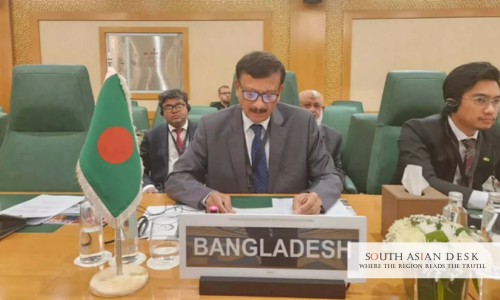
Dhaka, 11 January 2026 – Bangladesh has reaffirmed its commitment to Bangladesh Somalia sovereignty during an extraordinary OIC foreign ministers’ meeting in Jeddah, where Foreign Affairs Adviser Md Touhid Hossain condemned Israel’s recognition of Somaliland as a violation of international law.
The statement came amid rising tensions in the Horn of Africa following recent diplomatic developments.
This reaffirmation highlights South Asia’s role in global Islamic solidarity, as nations like Bangladesh contribute to OIC efforts that influence regional stability, trade routes, and migration patterns affecting the subcontinent.
Bangladesh Somalia Sovereignty: OIC Ministerial Stance
At the 22nd Extraordinary Session of the OIC Council of Foreign Ministers on 10 January 2026, Adviser Hossain urged member states to reject Israel’s actions. He stated Bangladesh aligns fully with OIC’s resolve to uphold international law, respect for sovereignty, and territorial integrity of member states.
The session addressed Israel’s recent recognition of the self-declared Somaliland republic and its foreign minister’s visit there. Participants viewed this as undermining Somalia’s unity.
Hossain emphasised that sovereignty of OIC member states remains non-negotiable. He called for condemnation of illegal negotiations and prioritisation of justice, international law, and multilateralism over unilateralism.
A preparatory senior officials’ meeting earlier that day reinforced OIC’s solidarity with Palestine, linking it to broader Muslim world concerns.
Bangladesh Support Somalia: Diplomatic Context
Bangladesh support Somalia extends to advocating for peaceful resolutions in the Horn of Africa. The interim government under Chief Adviser Muhammad Yunus has prioritised active engagement in OIC forums since assuming power in August 2024.
OIC’s General Secretariat has condemned Israel’s move as a flagrant violation of Somalia’s sovereignty, national unity, and territorial integrity. In a related executive committee meeting on 1 January 2026, OIC affirmed unwavering support for Somalia’s right to preserve its unity.
Somalia’s federal government has protested the developments, warning of regional destabilisation. Over 20 OIC members, including Bangladesh, have issued or endorsed statements supporting Mogadishu.
Bangladesh OIC Somalia: Collective Resolve
Within Bangladesh OIC Somalia framework, Dhaka’s position aligns with the organisation’s principles. OIC, comprising 57 member states, represents over 1.8 billion Muslims globally.
The Jeddah meeting aimed to forge a unified Islamic stance. Resolutions called for diplomatic and legal measures to safeguard Somalia’s interests.
Bangladesh territorial integrity Somalia emphasis echoes its own historical advocacy for self-determination, drawing from its 1971 independence.
Data from OIC indicate similar crises, like the 2024 Ethiopia-Somaliland memorandum of understanding, prompted comparable responses. That deal granted Ethiopia sea access in exchange for recognising Somaliland, sparking Somalia’s ire.
Israel’s 2026 actions build on that, with its foreign minister’s 6 January visit to Hargeisa drawing joint condemnations from Arab and Islamic states.
Background
Somaliland declared independence from Somalia in 1991 after civil war, but lacks international recognition. Somalia maintains it as part of its territory under UN resolutions.
The Horn of Africa’s strategic location affects global shipping via the Red Sea and Gulf of Aden. Conflicts there impact South Asian economies through remittances and trade; Bangladesh receives over BDT 100 billion annually from Middle East workers.
Bangladesh has contributed to UN peacekeeping in Somalia since 1993, deploying over 5000 troops historically. This experience informs its Bangladesh support Somalia policy.
Recent geopolitical shifts, including Israel’s normalisation deals with Arab states, complicate dynamics. OIC’s response tests its unity amid diverse member interests.
In South Asia, Pakistan and India monitor developments, with Islamabad echoing OIC condemnations. Bangladesh’s involvement enhances its diplomatic footprint, fostering ties with African nations.
Economic implications include potential disruptions to Indian Ocean trade routes. Somalia’s instability could exacerbate piracy, affecting shipping costs estimated at USD 7 billion yearly globally.
Bangladesh OIC Somalia participation reflects commitment to multilateralism. As a founding OIC member since 1974, Dhaka has hosted summits and chaired committees.
The interim government’s foreign policy focuses on ethical stances, balancing relations with major powers like the US, China, and Russia.
Bangladesh Territorial Integrity Somalia: Regional Ramifications
Emphasis on Bangladesh territorial integrity Somalia underscores broader concerns. Unilateral recognitions risk precedent-setting, potentially fueling separatist movements elsewhere.
OIC warns of threats to Horn of Africa security, urging dialogue. Somalia has recalled its ambassador from Ethiopia and sought international mediation.
Bangladesh advocates non-interference, aligning with UN Charter principles. Its statement at Jeddah reinforces this.
What’s Next
OIC may pursue UN Security Council action or further diplomatic pressure. Bangladesh will monitor developments, possibly engaging bilaterally with Somalia.
Analysts predict heightened tensions, with potential for mediation talks in coming months.
In conclusion, Bangladesh Somalia sovereignty support strengthens OIC’s collective voice against violations.
Published in SouthAsianDesk, January 11th, 2026
Follow SouthAsianDesk on X, Instagram and Facebook for insights on business and current affairs from across South Asia.