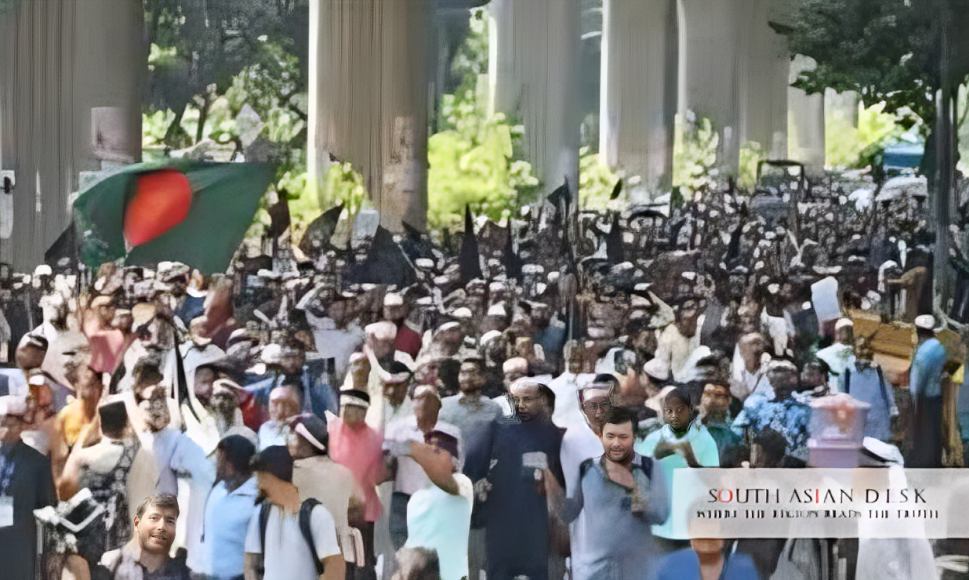
Over 100 primary school teachers suffered injuries during the Bangladesh teachers protest November 9 at Shahbagh in Dhaka. Police deployed batons, sound grenades, tear gas, and water cannons to disperse the crowd. The action followed a sit-in at the Central Shaheed Minar. Assistant teachers cited unmet Bangladesh primary teachers strike demands as the trigger for the indefinite work abstention. The protest targets the Yunus government teachers pay upgrade policies.
This clash underscores deepening rifts between educators and the interim administration in Bangladesh. As South Asia grapples with education access for millions, the standoff risks halting lessons for 10 million primary pupils. It tests the Yunus government’s reform pledges at a time when economic recovery remains fragile. The unrest could ripple across the region, where teacher shortages already strain school systems in neighbouring countries like India and Pakistan.
Bangladesh Primary Teachers Strike Demands Escalate Nationwide
The Bangladesh teachers protest November entered its second day with heightened intensity. Assistant teachers from government primary schools abstained from duties across all districts starting Sunday morning. This indefinite work abstention Bangladesh-wide halts operations in over 80,000 institutions. Protesters rallied under the Primary Teachers’ Demand Implementation Council banner.
Md Shamsuddin Masud, a council leader, addressed the gathering. “The teachers have demanded the advisers’ resignation for misrepresenting our demands on television while police attacked our peaceful program,” he said. His words captured the frustration fuelling the movement. Over 100 participants joined the initial Shahbagh demonstration on Saturday. By Sunday afternoon, the sit-in at Shaheed Minar drew solidarity from third-phase recruitment teachers.
The Bangladesh primary teachers strike demands centre on systemic inequities. Teachers seek elevation to the 10th national pay grade for assistant roles. They also demand a permanent fix for promotion hurdles beyond the 10th grade. A 100% departmental promotion guarantee forms the third pillar. These issues have simmered for years but boiled over after recent police intervention.
Yunus Government Teachers Pay Upgrade Under Scrutiny
The Yunus government teachers pay upgrade initiatives face direct challenge from the ongoing action. Chief Adviser Professor Muhammad Yunus expressed optimism on teacher returns in October. He highlighted a 7.5% house rent allowance hike for Monthly Pay Order (MPO) teachers, effective November 1, 2025. Another 7.5% follows in July 2026. Yunus called the demands reasonable given economic constraints.
Primary and Mass Education Adviser Dr Bidhan Ranjan Roy Poddar echoed commitment. “The government is committed to improving the living standard of teachers,” he stated in late October. Poddar noted the 15% total allowance as a step toward fairness. “As a teacher myself, I feel fortunate to be part of a process that ensures teachers receive house rent allowance at a percentage rate they have long demanded,” he added. The Ministry of Education pursued dialogue amid prior debates.
Critics argue the measures fall short for primary educators. The Bangladesh primary teachers strike demands specify 10th-grade placement, not just allowances. Protesters also call for Poddar’s resignation alongside Home Affairs Adviser Lt Gen (retd) Md Jahangir Alam Chowdhury. They accuse the duo of distorting demands publicly.
Government data from the Ministry shows 364,000 assistant teachers in primary schools. Many earn under the 9th grade, lagging peers in secondary roles. The Yunus administration formed a National Pay Commission in July 2025. It aims to overhaul scales by mid-2026. Yet, the commission’s interim steps have not quelled the unrest.
Assistant Teachers Indefinite Work Abstention Bangladesh Disrupts Classes
The assistant teachers indefinite work abstention Bangladesh began at 9:00 AM Sunday. It affects every government primary school. Reports indicate zero attendance in Dhaka divisions by midday. Rural areas followed suit, with headmasters managing skeleton crews.
This marks the second major escalation in months. In October, MPO teachers protested similar issues. Now, primary staff join the fray. The action could span weeks if demands linger unmet. Education officials estimate 10 million students miss lessons daily. Parents voice concerns over learning gaps. One Dhaka mother said classes ground to a halt, forcing home study.
Police Response Sparks Outrage
Police tactics drew sharp rebuke. Officers charged with batons and fired sound grenades at Shahbagh. Tear gas clouded the air, while water cannons soaked demonstrators. Over 125 teachers required hospital treatment. Five face detention on charges of unlawful assembly.
Injuries included fractures and respiratory issues. Lipi, a protester, receives care for baton wounds. Mahbubur Rahman remains in custody. The Primary Teachers’ Demand Implementation Council condemned the force as excessive. “Peaceful assembly turned violent without provocation,” a spokesperson noted.
Broader Context of Teacher Unrest
Teacher discontent traces to 2016 pay reforms. Assistant roles stagnated at 9th grade despite workloads. The Yunus government inherited these woes post-August 2024 upheaval. Earlier pledges focused on MPO adjustments. Primary demands gained traction after failed talks in early November.
Background
The interim Yunus administration assumed power amid political turmoil. It prioritised economic stabilisation and pay equity. A July 2025 advisory council decision birthed the Pay Commission. Yet, sector-specific gripes persist. Primary education employs 700,000 staff total. Budget allocations rose 12% in 2025-26, but inflation erodes gains.
Prior strikes hit universities and colleges. November’s focus on primaries amplifies stakes. South Asian parallels emerge: Indian teachers rallied for DA hikes in 2024, while Pakistani educators boycotted over salaries.
What’s Next
Dialogue channels reopen Monday. The council sets November 15 as a deadline for adviser resignations. Failure could extend the assistant teachers indefinite work abstention Bangladesh. Yunus officials signal willingness to negotiate. A ministry team plans consultations. Resolution hinges on addressing Bangladesh primary teachers strike demands head-on.
The Bangladesh teachers protest November tests administrative resolve. With schools shuttered, pressure mounts for swift Yunus government teachers pay upgrade action. Educators vow persistence until equity prevails. This chapter in Bangladesh’s reform saga could redefine public sector labour rights.
Published in SouthAsianDesk, November 9th, 2025
Follow SouthAsianDesk on X, Instagram, and Facebook for insights on business and current affairs from across South Asia.