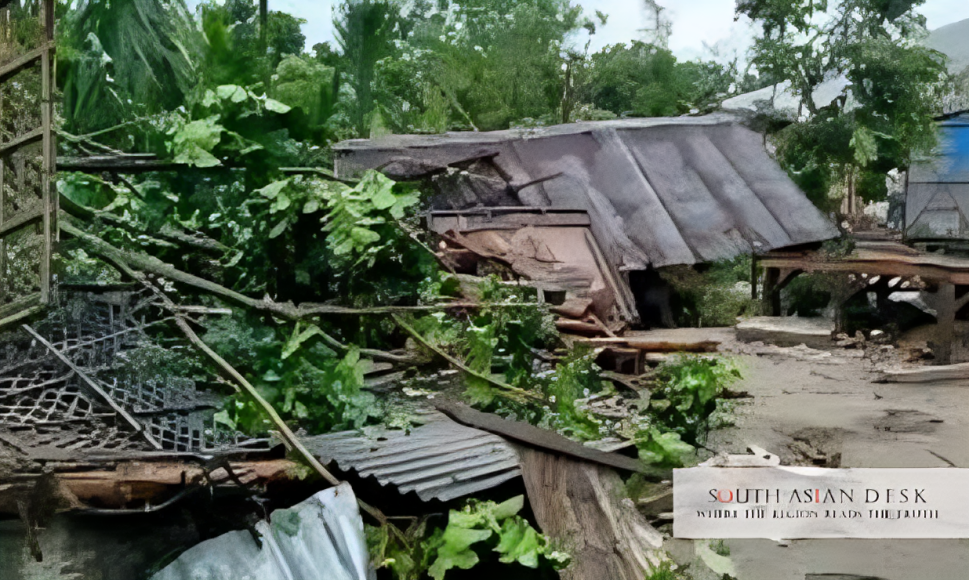
Nilphamari, Bangladesh, A powerful Bangladesh tornado destroyed 500 houses in Nilphamari district on Sunday morning, injuring 30 residents and plunging 11 villages into darkness after snapping power lines. The storm hit Garagram Union in Kishoreganj Upazila at around 7am, uprooting thousands of trees and blocking key roads for hours. Local authorities rushed dry food aid to victims as fire services cleared debris. No human deaths occurred, though four cows perished in collapsing structures.
This Bangladesh October tornado 2025 underscores the growing threat of extreme weather in South Asia’s vulnerable riverine plains. Bangladesh faces frequent cyclones and tornadoes due to its low-lying geography and climate change pressures. Such events displace thousands annually, strain limited resources, and highlight gaps in early warning systems. In Nilphamari and nearby Rangpur, the storms expose poor housing quality among rural poor, amplifying economic fallout in agrarian communities. The incidents demand regional investment in resilient infrastructure to safeguard lives and livelihoods across the subcontinent.
Rangpur Tornado Damage Compounds Regional Crisis
The Bangladesh tornado 500 houses destroyed in Nilphamari formed part of a broader assault on northern divisions. Just hours later, a separate whirlwind battered Rangpur’s Gangachara Upazila, damaging 1,200 thatched houses across five unions: Sadar, Alambiditor, Nohali, Laksmitari, and Kolkond. Residents described the sky darkening abruptly before winds howled through villages, tearing roofs and scattering possessions.
In Nohali Union alone, Union Parishad Chairman Md Ashraf Ali reported 400 structures lost. “The tornado struck without mercy,” Ali said. Alambiditor Union administrator Aftabuzzaman Chayan tallied 300 damaged homes in his area. Hundreds of trees toppled, halting traffic on the Kishoreganj road – a vital artery linking districts – for nearly four hours. Fire service teams and locals laboured to reopen paths, using chainsaws and manual effort.
Unlike Nilphamari, the Rangpur tornado damage spared human lives. No injuries surfaced, though four cows died in Munshipara and Chairman Para when walls caved in. Aman paddy fields escaped unscathed, a small mercy for farmers reliant on the harvest. Power outages gripped affected zones, forcing families to huddle by candlelight. Gangachara Upazila Nirbahi Officer Mahmud Hasan Mridha visited sites by 6:30pm Sunday. “The natural calamity badly hit the five unions, damaging some 1,200 houses totally or partially and uprooting hundreds of trees,” Mridha stated. His team initiated damage assessments overnight.
Authorities distributed 200 packets of dry food to Rangpur tornado damage victims by evening. Agriculture officials surveyed fields, while engineers inspected snapped lines. The response mirrored national protocols under the Ministry of Disaster Management and Relief, emphasising swift aid to prevent secondary crises like disease outbreaks.
Nilphamari Storm Victims Face Homelessness and Loss
Focus returns to the epicentre: Garagram Union, where the Bangladesh tornado 500 houses destroyed unfolded in minutes. Winds ravaged 11 villages – Majhapara, Baniapara, Hajipara, Uttarpara, Poddarpara, Zikarul Memberer Para, Babupara, Chairmaner Para, Bairagipara, Munshipara, and Kalirthan. Over 500 homes crumbled, mostly thatched roofs unable to withstand gusts exceeding 100kph, locals estimated.
Thirty Nilphamari storm victims sought treatment, mainly for cuts from flying debris and bruises from falling branches. Five reached Kishoreganj Upazila Health Complex: Taiful, 30; Tasin, 25; Royal, 30; Gulchan, 40; and Atiq, 22, all from Disirmor Munshipara. Doctors applied stitches and monitored for infections. Union Parishad Chairman Jonab Ali surveyed the wreckage. “Numerous trees were destroyed, Aman paddy fields were damaged, and power lines were snapped, cutting electricity to all 11 villages,” Ali reported.
Kishoreganj Upazila Nirbahi Officer Pritam Saha coordinated multi-agency efforts. “The administration, agriculture department, and fire service are working together in the affected areas,” Saha said. “Dry food has already been distributed among those impacted.” Fire service acting station leader Mostafizur Rahman led clearance operations. Teams removed fallen trees blocking the Kishoreganj road, restoring flow by midday. UP Member Mojahid of Ward No 8 confirmed the livestock losses: one cow to Abdul Baki in Munshipara, three to Farhad in Chairman Para.
Nilphamari storm victims now shelter with relatives or in makeshift camps. Women and children, comprising most displaced, queue for rations. A widow in Sardarpara echoed regional anguish: “I had two rooms in my tiny house and the tornado blew them away,” Fani Begum said, her voice steady despite tears. Economists note such Bangladesh October tornado 2025 events could cost BDT 50 million (USD 420,000) in repairs, hitting subsistence farmers hardest.
Background: Tornado Season in Northern Bangladesh
Tornadoes plague Bangladesh from March to June, but late-season strikes like this Bangladesh October tornado 2025 buck trends. Experts link them to erratic monsoons and warming Bay of Bengal waters. Northern districts like Nilphamari and Rangpur sit in tornado alleys, where flat terrain funnels winds. Past events, such as the 2013 Manikganj tornado killing 32, inform current drills.
The Disaster Management Reference Handbook outlines protocols: evacuate low-rises, secure livestock, monitor radars. Yet, rural gaps persist – only 40% of Nilphamari households have cyclone shelters. Rangpur tornado damage highlights thatched roofs’ fragility; 80% of affected homes used bamboo and tin. Government data from 2024 shows 150 tornado alerts issued, with 20 verified strikes.
What’s Next: Relief and Resilience Builds
Reconstruction accelerates. Nilphamari officials aim to restore power by Tuesday. Rangpur plans house grants under the Vulnerable Group Development scheme. The Bangladesh Meteorological Department forecasts scattered showers, urging vigilance. Long-term, South Asian leaders eye joint funds for weather stations.
This Bangladesh tornado 500 houses destroyed serves as a stark reminder: without adaptation, such fury will recur, testing resolve across borders.
Published in SouthAsianDesk, October 6th, 2025
Follow SouthAsianDesk on X, Instagram, and Facebook for insights on business and current affairs from across South Asia.