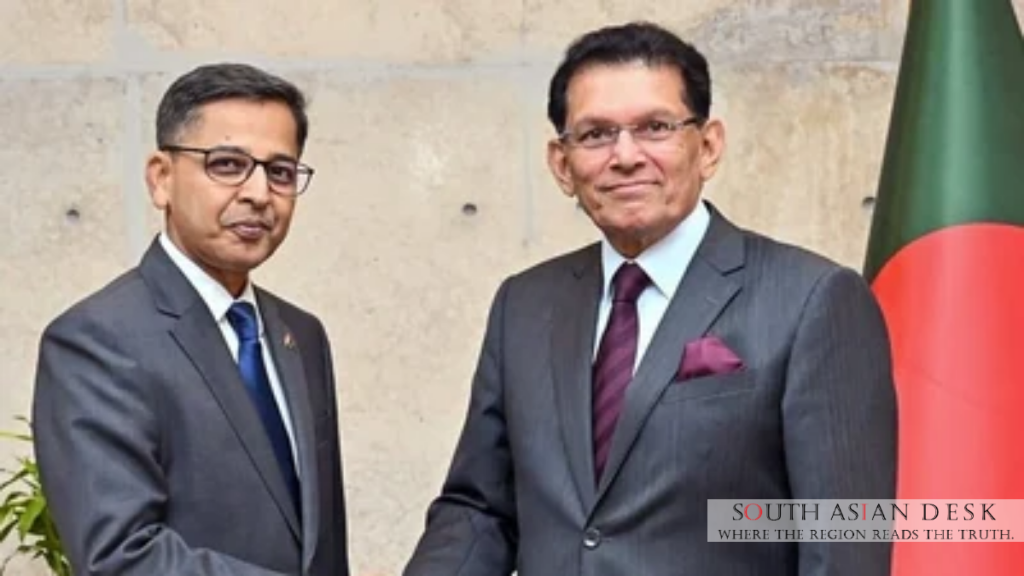
Bangladesh seeks reduction in reciprocal tariffs from the US to boost exports and narrow trade gap, with USTR showing positive response in recent talks. Bangladesh US tariff cut on reciprocal duties during high-level talks in Washington on Thursday. National Security Adviser Dr Khalilur Rahman met US Trade Representative Ambassador Jamieson Greer and suggested reducing the 20 per cent reciprocal tariff. The USTR agreed to consider the Bangladesh US tariff cut proposal positively. This occurred amid efforts to finalise a Bangladesh US trade agreement.
The discussions hold importance for South Asia’s trade dynamics, where Bangladesh’s garment exports face competition from neighbours like India and Pakistan. A successful Bangladesh US tariff cut could enhance market access and support economic stability in the region.
USTR Bangladesh Tariff Talks Progress
Dr Rahman briefed Ambassador Greer on Bangladesh’s steps to reduce the trade gap with the US. Bangladesh has increased imports from the US and implemented parts of a proposed reciprocal tariff Bangladesh framework, even before formal signing.
“Even before the formal execution of the reciprocal trade agreement, Bangladesh has made major strides in reducing the trade gap by substantially increasing imports from the US and has implemented some key aspects of the agreement,” Dr Rahman stated.
Both sides committed to resolving remaining issues quickly to advance the Bangladesh US trade agreement. The meeting also covered easing business travel for Bangladeshis following inclusion in the US visa bond programme. Dr Rahman requested access to Development Finance Corporation funding for Bangladesh’s private sector. Ambassador Greer assured support on these fronts.
Dr Rahman also met Assistant USTR Brendan Lynch separately. Bangladesh Ambassador to the US Tareq Md Ariful Islam joined the talks, along with other officials.
Reciprocal Tariff Bangladesh Details
The reciprocal tariff Bangladesh stands at 20 per cent, added to regular duties of about 16.5 per cent on garments. This has impacted exports since August 2025. Dr Rahman’s proposal targets a Bangladesh US tariff cut from this 20 per cent level. He also sought lower or zero USTR Bangladesh tariff on apparel using US content.
US goods and services trade with Bangladesh reached USD 12.4 billion in 2024, up 3 per cent from 2023. Bangladesh’s exports to the US, mainly garments, totalled around USD 8.4 billion in recent years, but faced a 14 per cent potential drop in 2026 due to tariffs, per studies.
The USTR Bangladesh tariff discussions aim to balance trade. Bangladesh’s trade deficit reduction efforts include boosting US imports in agriculture and energy sectors.
Background
US-Bangladesh trade relations have evolved since the 1970s. Bangladesh enjoys duty-free access under certain programmes, but reciprocal tariffs emerged in 2025 amid US concerns over trade imbalances. President Trump’s administration imposed a 20 per cent reciprocal tariff Bangladesh on August 7, 2025, down from an initial 35 per cent threat after negotiations.
This followed Bangladesh’s interim government appeals for delays. The tariff added to existing duties, raising total to 36.5 per cent on apparel. Exporters reported weakened demand in the US market, with half-year garment exports sliding amid global frictions.
Bangladesh countered by diversifying markets to Europe and Asia. Yet, the US remains key, accounting for over 20 per cent of exports. The Bangladesh US trade agreement seeks mutual benefits, with Bangladesh committing to more US purchases.
Prior talks in 2025 focused on cutting the reciprocal tariff Bangladesh to 15 per cent, but progress stalled. The current Bangladesh US tariff cut proposal builds on those efforts.
South Asia’s textile sector feels ripple effects. India’s exports grew 22 per cent in November 2025, partly from tariff shifts. Pakistan and Sri Lanka compete closely. A Bangladesh US tariff cut could level the field, aiding regional supply chains.
Economic data shows Bangladesh’s foreign direct investment fell 5 per cent to USD 4.18 billion in 2023-2024. Trade pacts like the proposed Bangladesh US trade agreement could reverse this by attracting US investment.
Challenges include political instability in Bangladesh post-2024 changes. The interim government prioritises economic reforms. USTR Bangladesh tariff adjustments tie into broader US policy on fair trade.
What’s Next
Dr Rahman plans meetings with US State Department officials on Friday. These could advance the reciprocal tariff Bangladesh resolution. Finalising the Bangladesh US trade agreement may occur in coming months, pending resolution of outstanding matters.
Experts predict negotiations could yield a Bangladesh US tariff cut by mid-2026, boosting exports by 10-15 per cent. Monitoring US policy under the current administration remains crucial.
The push for Bangladesh US tariff cut underscores Dhaka’s strategy to strengthen ties and secure competitive edges in global trade.
Published in SouthAsianDesk, January 9th, 2026
Follow SouthAsianDesk on X, Instagram and Facebook for insights on business and current affairs from across South Asia.