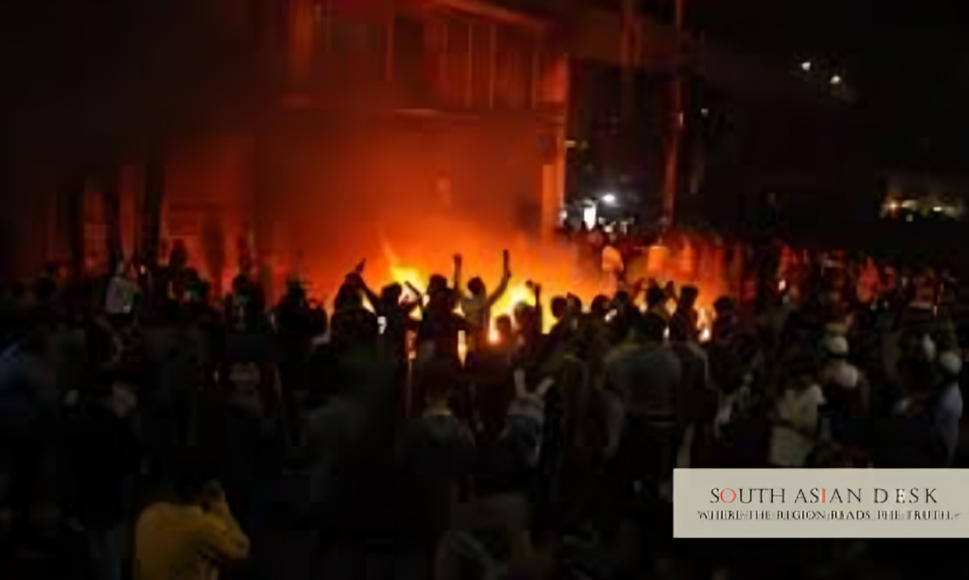
Violent protests rocked Bangladesh on Friday following the death of Sharif Osman Hadi, a prominent student leader. Demonstrators torched media offices and vandalised cultural sites in Dhaka, amid rising anti-India protests Bangladesh.
The unrest spread to other cities, with highways blocked and buildings set ablaze.The Bangladesh violence highlights escalating political instability in South Asia, where anti-India protests Bangladesh could strain regional ties ahead of February elections. With Sheikh Hasina in exile in New Delhi since last year’s uprising, such events risk broader diplomatic fallout.
Sharif Osman Hadi Death Triggers Nationwide Outrage
Sharif Osman Hadi, 32, died on Thursday in a Singapore hospital after being shot last week in Dhaka. The student leader, known for his role in the 2024 uprising that toppled Sheikh Hasina’s government, succumbed to injuries despite medical efforts.Singapore’s Ministry of Foreign Affairs confirmed the Sharif Osman Hadi death in an official statement: “Despite the best efforts of the doctors from SGH and the National Neuroscience Institute, Mr Hadi succumbed to his injuries on 18 December 2025.
“Bangladesh’s interim government, led by Chief Adviser Muhammad Yunus, declared a state of mourning. Yunus described the Sharif Osman Hadi death as an “irreparable loss for the nation” in a televised address. He offered prayers for Hadi’s soul and extended condolences to his family.
Hadi served as spokesperson for Inqilab Moncho, a revolutionary platform inspired by the uprising. From Nalchiti village, he planned to contest the February parliamentary elections as an independent candidate from Dhaka-8. He advocated for national sovereignty and criticised India’s influence, calling for a constitutional ban on the Awami League.
Dhaka Protests Escalate into Arson and Vandalism
Dhaka protests turned chaotic overnight as news of the Sharif Osman Hadi death spread. Protesters gathered outside Prothom Alo newspaper offices, vandalising the building before setting it on fire. Firefighters responded, but damage was extensive.
The Daily Star newsroom also faced arson attacks. Dozens of employees were trapped inside amid thick smoke. Reporter Zyma Islam posted: “I can’t breathe anymore. There’s too much smoke. I am inside. You are killing me.” Firefighters rescued 27 staff by 1:40 AM local time on Friday, halting production for the first time in the paper’s history.In central Dhaka, demonstrators vandalised Chhayanaut cultural institution, damaging musical instruments including harmoniums. They also torched the home of Sheikh Mujibur Rahman, Bangladesh’s founding leader, which had been attacked twice before.
An Awami League office in Rajshahi was bulldozed.Highways were blocked in several districts, disrupting travel.
Anti-India Protests Bangladesh Fuel Regional Tensions
Anti-India protests Bangladesh intensified in Chittagong, where demonstrators attacked the Indian Assistant High Commission. This reflects growing resentment since Hasina fled to New Delhi after the 2024 uprising.Protesters accused targeted newspapers like Prothom Alo and The Daily Star of pro-India bias.
Violence spread to other cities, including Chattogram and Rajshahi, with reports of unrest in multiple locations.Inqilab Moncho issued a statement urging restraint: “We will, together with the people of Bangladesh, avoid violence and create all-out resistance.” It warned against creating anarchy ahead of elections, noting attempts to portray Bangladesh as a militant sanctuary.
Background
The current Bangladesh violence stems from the 2024 student-led uprising that ended Sheikh Hasina’s 15-year rule. Protests began over job quotas but grew into demands for her resignation. Hasina resigned on 5 August 2024 and fled to India.Muhammad Yunus formed an interim government on 8 August 2024. Elections are scheduled for February 2026. Hadi’s group, Inqilab Moncho, emerged from the uprising, pushing for reforms and opposing external influences.
Anti-India protests Bangladesh have surged due to perceptions of Indian support for Hasina. Recent incidents include border tensions and calls to boycott Indian goods. The Sharif Osman Hadi death has amplified these sentiments, with protesters linking his shooting to political rivals.The interim government has pledged investigations into the attack on Hadi, who was shot on 12 December 2025 in Dhaka. No suspects have been named publicly. South Asia watches closely, as Bangladesh violence could impact trade and security. India-Bangladesh relations, strong under Hasina, face strain. Neighbouring countries like Pakistan and Nepal monitor for spillover effects.
What’s Next
Elections loom in February 2026, with candidates like Hadi representing reformist voices now silenced. The interim government may impose curfews if Dhaka protests persist. Inqilab Moncho plans peaceful rallies to honour Hadi.International observers urge calm. The UN has called for restraint and protection of journalists amid attacks on media.Authorities expect more anti-India protests Bangladesh if demands for justice go unmet. The Bangladesh violence underscores fragile stability, with potential for further clashes as the nation mourns.
Published in SouthAsianDesk, December 19th, 2025
Follow SouthAsianDesk on X, Instagram, and Facebook for insights on business and current affairs from across South Asia.