Trade unions and farmers lead nationwide protest against labour codes on February 12, 2026, disrupting services across states.
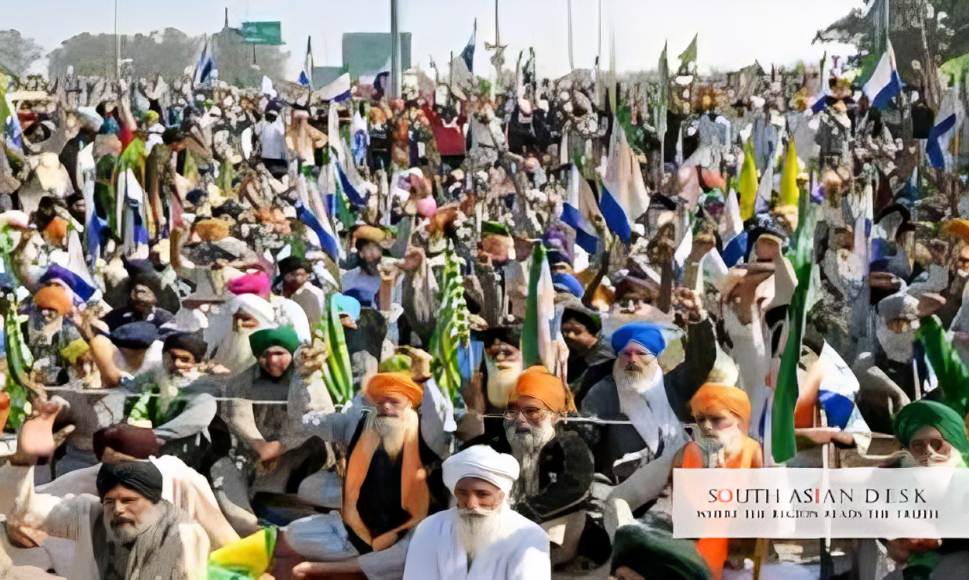
New Delhi: Trade unions and farmers initiated a Bharat Bandh on Thursday, February 12, 2026, protesting central government policies. The nationwide strike India involved 10 central trade unions and farmers’ groups, mobilising 30 crore workers. Protests occurred in multiple states, affecting transport and banking. The action targeted new labour codes and other measures seen as anti-worker.
The Bharat Bandh holds significance for South Asia. India’s economy influences regional trade and labour markets. Disruptions could affect cross-border supply chains in Pakistan and Bangladesh. The strike highlights shared concerns over worker rights in the region.
Reasons Behind Trade Union Strike 2026
The trade union strike 2026 stemmed from opposition to four new labour codes. These codes weaken labour protections and restrict strikes. Unions claim they dilute social security and promote contract jobs.
Farmers joined the Bharat Bandh over cuts to MGNREGS funds. The Electricity Amendment Bill 2025 and Seed Bill 2025 drew criticism. Protesters opposed the India-US interim trade deal, alleging it harms agriculture.
A joint forum of central trade unions issued a statement. It demanded repeal of the codes and withdrawal of policies. The forum included AITUC, CITU, and INTUC.
Samyukt Kisan Morcha (SKM) supported the call. SKM convenor Hannan Mollah described the trade deal as a “total surrender” to US corporations. He demanded Commerce Minister Piyush Goyal’s resignation.
The Bharat Bandh also addressed free trade agreements. Unions argued these undermine local jobs.
Key Events in Farmers Protest February 12
The farmers protest February 12 unfolded across India. In Kerala, life halted in districts like Ernakulam and Kannur. Public transport stopped, and shops closed.
In Karnataka, police detained protesters in Bengaluru. Over 2 lakh workers participated statewide.
Jharkhand saw impacts on banking and coal sectors. Trade unionists marched in streets.
Andhra Pradesh hosted rallies in Vijayawada and Visakhapatnam. Left parties led actions against central and state policies.
Tamil Nadu witnessed protests in Coimbatore and Erode. Unions rallied against labour codes.
Hyderabad featured a massive rally at VST junction. Telangana’s Sangareddy district saw CITU involvement.
In Goa, industrial units shut down. Banking operations faced disruptions.
Gujarat reported minimal impact. Banks and markets functioned normally in Ahmedabad.
West Bengal experienced a lukewarm response. Vehicles moved freely, and offices saw usual attendance.
Madhya Pradesh defence staff reported late by one hour. Essential services continued.
Puducherry’s VCK backed the strike. Congress MP Priyanka Gandhi Vadra expressed support online.
Rahul Gandhi posted on X: “Millions of workers and farmers are protesting to protect their rights.” He cited fears over labour codes and MGNREGA weakening.
No major violence occurred.
Impacts of Nationwide Strike India
The nationwide strike India disrupted key sectors. Transport faced severe hits in Kerala. Bus stands deserted, and private vehicles warned off roads.
Banking services halted in parts of Goa and Jharkhand. Public sector banks closed branches.
Industrial activities paused in several estates. Unorganised sector workers joined in large numbers.
Government offices had low attendance in affected areas. Education continued mostly uninterrupted.
Coal production dipped in Jharkhand. Insurance offices shut in multiple states.
Essential services like health remained operational. No forced closures in Gujarat.
The Bharat Bandh mobilised 30 crore workers, per union claims. It spanned over 600 districts.
Background
Previous strikes shaped the trade union strike 2026. In 2024, a Grameen Bharat Bandh protested similar policies. SKM and unions called actions against corporate influence.
Farmers’ protests in 2020-2021 repealed three farm laws. That movement inspired current alliances.
Labour codes passed in 2020 faced delays. Implemented in 2025, they consolidated 29 laws into four.
Unions argue codes favour employers. Farmers link issues to rural job schemes.
South Asian context includes similar labour struggles in Pakistan. Cross-border worker solidarity grows.
What’s Next
Unions plan further mobilisations if demands unmet. SKM hinted at intensified campaigns. Government response awaits. The Bharat Bandh may prompt policy reviews. Observers watch for parliamentary debates. The Bharat Bandh underscores ongoing tensions. It signals potential for larger actions in 2026.
Published in SouthAsianDesk, February 12th, 2026
Follow SouthAsianDesk on X, Instagram and Facebook for insights on business and current affairs from across South Asia.