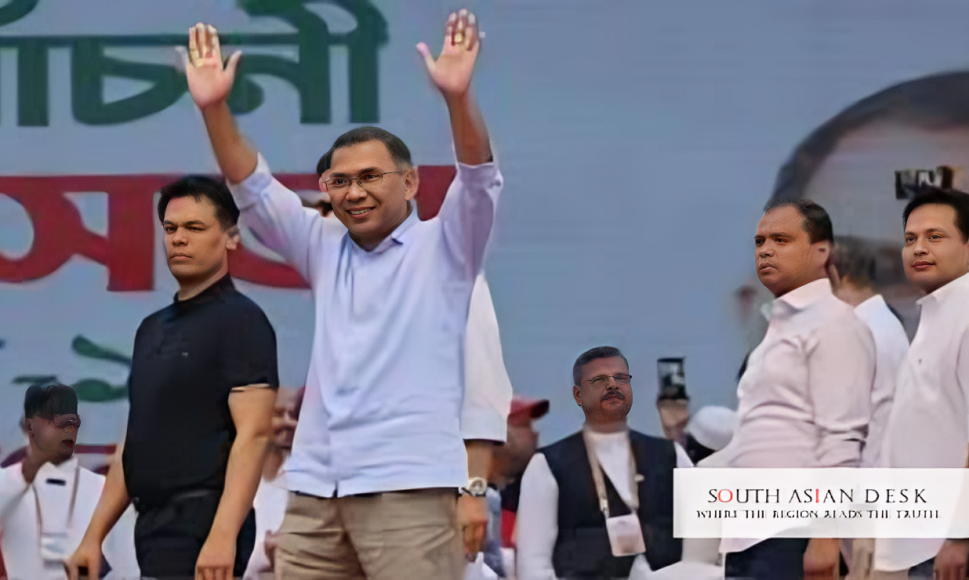
BNP Bangladesh leaders caution that pre-poll agitation by rival parties could derail the nation’s fragile stability as Bangladesh gears up for pivotal national elections.
The Bangladesh Nationalist Party (BNP) has warned of potential political instability in the lead-up to the BNP Bangladesh elections 2025, attributing risks to agitation by Islamist and smaller opposition groups demanding electoral reforms. This comes amid ongoing preparations under the interim government led by Chief Adviser Prof Dr Muhammad Yunus, with polls tentatively scheduled for February 2026.
Details of BNP Bangladesh Concerns
The concerns were voiced during a BNP standing committee meeting on Monday, September 15, 2025, in Dhaka, where the party emphasised constructive engagement while opposing moves seen as disruptive to public life and the economy.
The escalating tensions over BNP instability elections Bangladesh highlight vulnerabilities in the post-uprising political landscape, where failure to manage divisions could undermine democratic reforms and economic recovery in a nation still healing from the 2024 turmoil. For South Asia, sustained instability in Bangladesh risks spillover effects on regional trade, migration, and security, given its strategic position and shared borders.
Preparations for BNP Bangladesh Elections 2025 Amid Rising Tensions
BNP officials, speaking after internal discussions, outlined their strategy for the BNP Bangladesh elections 2025, focusing on candidate selection, a 31-point agenda, and voter outreach without resorting to street protests that could exacerbate BNP instability elections Bangladesh. The party has finalised its election manifesto and welcomed the July National Register proposed by the National Consensus Commission, submitting a 40-page proposal on the matter.
Standing Committee member Salahuddin Ahmed stated, “Those announcing programs have the right to do so. If they pursue political strategies, BNP will respond on the political stage.” This reflects BNP’s commitment to avoiding disruptions, as the party resolves to steer clear of activities harming business or public life.
However, BNP views demands for a proportional representation (PR) system and implementation of the July Charter outlining post-uprising reforms as attempts to foment pre-election unrest. Senior Joint Secretary Ruhul Kabir Rizvi remarked, “One Islamic party has called for aggressive agitation for the PR system. This is a well-planned master plan that benefits no one. Aligning with defeated forces politically will bring no good and may even create a dire situation.”
These warnings align with broader BNP concerns over the timeline for BNP Bangladesh elections 2025. Earlier statements from BNP leaders, including Acting Chairman Tarique Rahman, have urged polls by December 2025 to avert prolonged uncertainty, citing stalled economic growth and public resentment. In a virtual address on July 21, 2025, Rahman argued that PR would lead to unstable governments, risking separatism and extremism, and called for direct elections to preserve national unity gained from the July 2024 uprising.
Rival Parties Fuel BNP Instability Elections Bangladesh
Opposition to BNP’s stance comes from parties like Jamaat-e-Islami, Islami Andolan Bangladesh, and Jatiya Ganatantrik Party, which have launched coordinated programs demanding five key measures, including PR and the July Charter. They argue that non-implementation could spark election disputes and future tensions, contributing to BNP instability elections Bangladesh.
Jamaat-e-Islami Assistant Secretary General Hamidur Rahman Azad asserted, “The July Charter’s implementation is the government’s commitment. If the government fulfils it, there would have been no need for our movements. If circumstances force us to act, the responsibility lies with the government.”
These groups have scheduled escalating actions: a rally in Dhaka on Thursday, September 18, 2025, at 11:00 AM; protests in divisional cities on Friday, September 19, 2025; and marches across districts and sub-districts on Thursday, September 26, 2025. Political analysts warn that differences between BNP and Jamaat could turn these into conflicts, renewing instability ahead of the BNP Bangladesh elections 2025.
The interim government, meanwhile, prioritises reforms for free and fair polls. Chief Adviser Yunus, in addresses on Victory Day and other occasions, indicated elections between late 2025 and mid-2026, later confirming February 2026 to allow for Electoral Reform Commission recommendations. BNP has expressed scepticism over delays, with Secretary General Mirza Fakhrul Islam Alamgir warning on August 30, 2025, of conspiracies to sabotage the process through division.
Unity from the July uprising has waned, observers note, with street movements intensifying. BNP advocates compromise on minor issues for national interest, preparing to leave constitutional amendments to parliamentary procedures post-election.
Background
Bangladesh’s political scene remains volatile following the August 2024 ouster of former Prime Minister Sheikh Hasina amid mass protests. The BNP, a major opposition force, boycotted the January 2024 elections alleging rigging and has since pushed for swift polls under neutral oversight. Surveys, such as one by the South Asian Network on Economic Modeling in June 2025, project BNP leading with 38.78% youth support for the upcoming vote. However, law and order challenges persist, with concerns over unchecked protests and economic stagnation due to uncertainty.
The July Charter, born from the uprising, calls for governance overhauls, but disagreements on its scope, particularly PR versus first-past-the-post have deepened BNP instability elections Bangladesh. International observers, including from the EU and US, emphasise inclusive reforms to prevent repeats of past irregularities.
What’s Next for BNP Bangladesh Elections 2025
As rival rallies unfold this week, BNP plans political responses to maintain stability, urging all parties to prioritise dialogue. The coming months will test the interim government’s ability to balance reforms with timely elections, with BNP reiterating that delays beyond December 2025 could heighten risks of unrest. Ultimately, the BNP Bangladesh elections 2025 will determine if Bangladesh can consolidate its democratic gains amid these challenges.
Published in SouthAsianDesk, September 18th, 2025
Follow SouthAsianDesk on X, Instagram, and Facebook for insights on business and current affairs from across South Asia.