BNP vows to deliver political reform and economic growth if elected in the February 2026 national election.
BNP Economic Growth Plan Unveiled
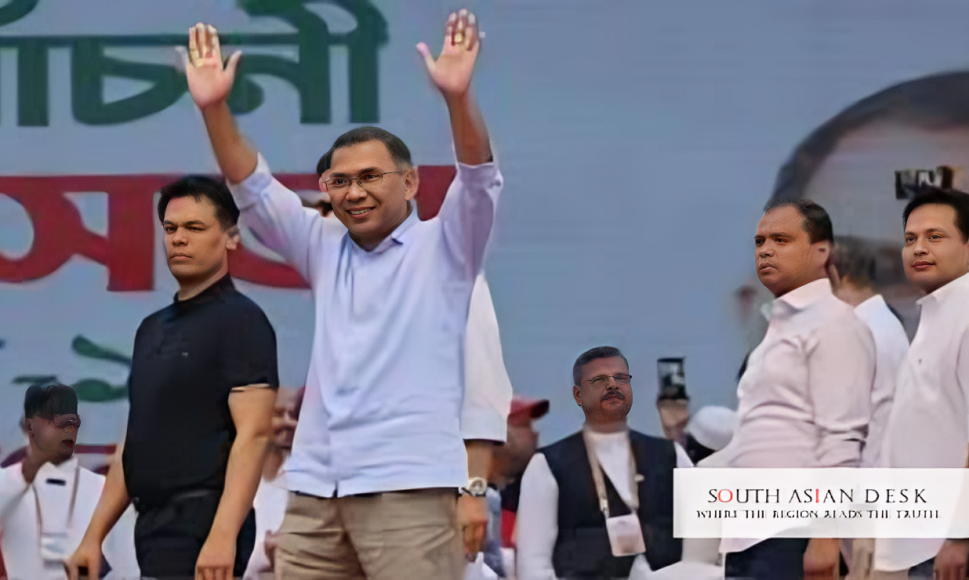
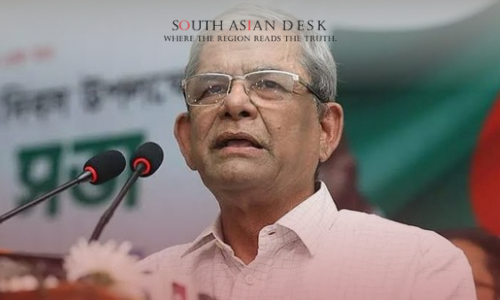
On Monday, September 1, 2025, in Dhaka, Bangladesh Nationalist Party (BNP) Secretary General Mirza Fakhrul Islam Alamgir announced the party’s commitment to political change and economic growth if elected in the February 2026 national election, marking the party’s 47th anniversary.
Why It Matters
The BNP economic growth plan signals a potential shift in Bangladesh’s political and economic landscape, critical for a nation recovering from political turmoil and economic stagnation, with implications for regional stability in South Asia.
BNP’s Vision for Change
Speaking after laying a wreath at the grave of BNP founder Ziaur Rahman, Fakhrul outlined the party’s agenda, emphasising a break from past authoritarianism. He claimed the BNP had survived “repeated attempts to destroy it,” accusing the former Awami League government under Sheikh Hasina of establishing “fascism” to suppress the party. According to BNP’s official statement on X, Fakhrul highlighted the party’s resilience, rising “like a phoenix” after 15 years of struggle to restore democracy.
Fakhrul alleged that more than 2.5 million BNP leaders and activists have been implicated in false cases over the past decade, and that approximately 1,526 have been killed and 423 abducted or disappeared during that period. He urged party members to unite for a fair election, positioning the BNP as a champion of democratic reform and economic revival under acting chairman Tarique Rahman’s leadership.
Political Reforms Promised
The BNP economic growth plan is paired with a commitment to political transformation. Fakhrul credited Ziaur Rahman with introducing a multi-party system, media freedom, judicial independence, and the caretaker government system. He promised that a BNP-led government would restore these principles, reversing what he described as democratic backsliding. The party’s focus on a fair electoral process aligns with its opposition to introducing proportional representation—BNP remains a firm supporter of the first-past-the-post system, arguing that PR would fragment governance, empower discredited forces, and undermine political stability.
The February 2026 election, scheduled after negotiations between interim leader Muhammad Yunus and Tarique Rahman, is seen as a critical juncture. The BNP’s push for electoral integrity could influence voter trust and participation, especially among youth, who constitute 28% of Bangladesh’s population.
Economic Growth Strategy
While specific details of the BNP economic growth plan remain undisclosed, Fakhrul’s reference to Ziaur Rahman’s economic reforms suggests a focus on market-oriented policies and liberalisation. Bangladesh faces significant economic challenges, with the International Monetary Fund projecting a 3.8% GDP growth for 2025, down from 4.6%, due to high inflation and sluggish revenue growth. The BNP’s promise of economic revitalisation aims to address these issues, potentially targeting export growth and remittance inflows, which have shown resilience despite political instability.
The party’s historical alignment with urban and higher-income groups, as noted by political scientist Rounaq Jahan, could shape its economic policies, possibly prioritizing private sector growth and foreign investment. However, while BNP has offered broad economic pledges—such as targeting $1 trillion GDP by 2034, creating millions of jobs, and increasing FDI through a 180-day action plan or its Vision 2030 framework—no formal, detailed economic policy document has been publicly released. This absence raises questions about how those proposals would be implemented.
Regional and Political Implications
The BNP’s pledge comes at a pivotal moment following the ouster of Sheikh Hasina in August 2024, which ended 15 years of Awami League dominance. The interim government under Muhammad Yunus is tasked with implementing reforms before the election, but tensions over the timeline and electoral framework persist. The BNP’s decision to contest independently, ending its alliance with Jamaat-e-Islami, may broaden its appeal but risks alienating conservative voters.
The party’s focus on economic growth and political reform could resonate with Bangladesh’s youth, with a June 2025 survey by the South Asian Network on Economic Modeling indicating 38.78% of voters aged 15–35 intend to support BNP. However, challenges remain, including public discontent over past governance issues during BNP’s 2001–2006 tenure, marked by allegations of corruption and violence.
Background
Founded on September 1, 1978, by Ziaur Rahman, the BNP has been a dominant force in Bangladeshi politics alongside the Awami League. Its establishment followed a period of political instability after the 1975 coups. The party’s liberal and market-oriented ideology contrasts with the Awami League’s secular-socialist stance, shaping Bangladesh’s polarised political landscape. The 2024 uprising, led by students, toppled Hasina’s government, creating an opportunity for the BNP to reassert itself.
What’s Next
As Bangladesh prepares for the February 2026 election, the BNP economic growth plan will face scrutiny for its feasibility and specifics. The party must navigate a complex political environment, balancing reformist promises with public expectations for stability and prosperity. The success of its campaign could reshape Bangladesh’s future, with the BNP economic growth plan at the forefront of voter considerations.
Published in SouthAsianDesk, September 1st, 2025
Follow SouthAsianDesk on X, Instagram, and Facebook for insights on business and current affairs from across South Asia.