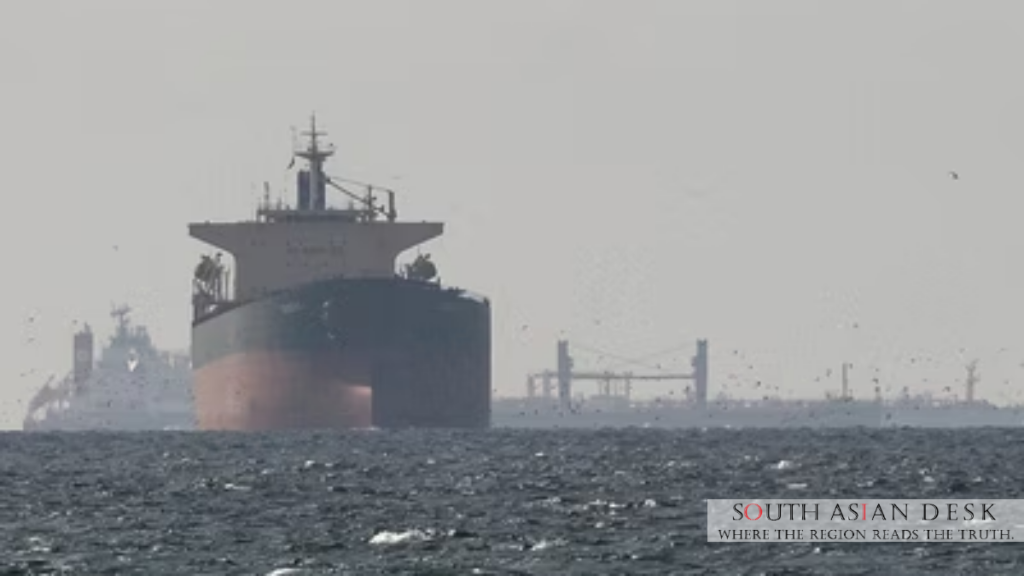
The price of crude Brent oil has surged past $100 a barrel as of March 12, 2026, driven by escalating Iranian attacks on commercial shipping in the Strait of Hormuz. This development has intensified global supply concerns, influencing financial markets and the broader global economy.
Iran’s aggressive actions, including targeting oil fields and refineries in Gulf Arab nations, have effectively halted cargo traffic through the crucial Strait, a passage for a fifth of the world’s traded oil. The U.S. benchmark crude also rose to approximately $95 a barrel.
The conflict between Iran and Israel, now in its twelfth day, has prompted the International Energy Agency to release 400 million barrels from emergency reserves, marking the largest such release in its history. The U.S. is set to contribute 172 million barrels from its Strategic Petroleum Reserve next week.
Energy ministers from the Group of Seven industrialized nations convened in Paris to address the crisis, exploring measures to stabilize oil prices. Despite these efforts, market volatility persists, with Asian stock markets experiencing declines and fears of rising inflation exacerbating concerns of stagflation globally.
The ongoing conflict and its economic repercussions continue to unfold, with traders adjusting forecasts for interest rate cuts by the Federal Reserve. As the situation evolves, the global community remains watchful of further developments and potential resolutions.
Published in SouthAsianDesk, March 12, 2026
Follow SouthAsianDesk on X, Instagram and Facebook for insights on business and current affairs from across South Asia.