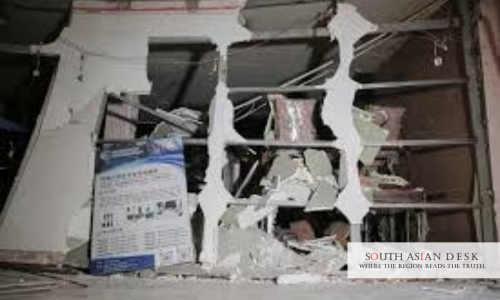
China urges Taliban security to bolster for its citizens following a deadly explosion at a Chinese restaurant in Kabul that killed seven people, including one Chinese national.
An explosion ripped through a Chinese restaurant in Kabul’s Shahr-e-Naw district on Monday, 19 January 2026, killing seven people and injuring at least 13 others. The blast, claimed by ISIL, targeted Chinese nationals and has prompted Beijing to demand stronger protections from the Taliban government.
The incident heightens concerns over instability in Afghanistan, which shares borders with Pakistan and impacts South Asian trade routes. China’s investments in Afghan mining and infrastructure tie into regional projects like the China-Pakistan Economic Corridor, making such attacks a threat to broader economic ties.
Kabul Chinese Restaurant Attack Details
The explosion occurred at about 2:00 PM local time inside a noodle restaurant frequented by Chinese Muslims. Taliban police spokesperson Khalid Zadran confirmed the blast killed one Chinese national, identified as Ayub, and six Afghans. Several injured victims, including a child and women, were treated at the Italian NGO Emergency’s surgical centre in Kabul.
Eyewitness accounts from survivors paint a chaotic scene. Yahya, a Chinese Muslim chef at the restaurant, said: “I was working as the chef. After I prayed, I was talking with my wife about what we should eat for lunch. Suddenly, there was an explosion. I fell to the ground. I saw blood coming from my head and body, and I don’t remember much after that.”
His wife, Zainab, who suffered a hand injury, added: “We are Chinese Muslims. We came to Afghanistan to work.” Another survivor, Shoaib, a Chinese Muslim seeking job opportunities, stated: “I came from China to visit this Islamic country and look for work opportunities. Yesterday we were having lunch and discussing job opportunities with my friends when the explosion happened. I was injured and taken to the hospital. Thankfully, I’m doing better now. I thank God we’re alive. My only request to the Afghan government is to thoroughly investigate this incident and bring the perpetrators to justice.”
The restaurant, located in a heavily guarded area considered one of Kabul’s safer zones, served as a hub for Chinese nationals in Afghanistan. Many are involved in business or seeking opportunities amid China’s growing economic footprint in the country.
ISIL Claims Kabul Blast
ISIL’s affiliate, known as Islamic State Khorasan Province (ISIS-K), claimed responsibility for the attack via its Aamaq news agency late on Monday. The group stated a suicide bomber detonated an explosive vest inside the restaurant, targeting Chinese nationals in retaliation for Beijing’s policies towards Uyghur Muslims in Xinjiang.
ISIL’s statement claimed 25 casualties, including Taliban guards, and warned of further threats against Chinese interests in Afghanistan. Taliban interior ministry spokesperson Abdul Mateen Qani confirmed the attack involved a single ISIS-K operative.
This claim aligns with ISIS-K’s pattern of targeting foreign nationals and minorities. The group has conducted several high-profile attacks since the Taliban’s return to power in 2021, including bombings at mosques, schools, and public gatherings.
Chinese nationals Afghanistan safety remains precarious amid such threats. Beijing has repeatedly expressed concerns over extremist groups operating in Afghanistan, urging the Taliban to curb them.
China Urges Taliban Security Measures
In response, China’s foreign ministry spokesperson Guo Jiakun addressed the incident at a press conference on Tuesday, 20 January 2026. He said: “A blast hit a Chinese restaurant in Kabul, Afghanistan yesterday and killed and injured many. One Chinese national was killed and five were wounded. China expresses deep condolences over the lives lost and heartfelt sympathies to the injured.”
Guo added: “China has made urgent representations with Afghanistan and has urged Afghanistan to make every possible effort to save and treat the injured, do more to keep Chinese nationals, projects and institutions safe, get to the bottom of the attack, and bring the perpetrators to justice as soon as possible.”
The ministry also renewed its travel advisory, urging Chinese citizens to avoid Afghanistan due to the “complex and severe” security situation. Those present should enhance precautions and evacuate high-risk areas.
This marks the latest in a series of incidents affecting Chinese interests. In December 2022, ISIS-K attacked a hotel in Kabul housing Chinese nationals, injuring five. Such events strain Beijing’s relations with the Taliban, whom China has engaged diplomatically despite not formally recognising their government.
Background
Afghanistan’s security challenges persist under Taliban rule. ISIS-K, formed in 2015, opposes the Taliban and has exploited ethnic and religious tensions. The group has targeted Hazara Shia communities, foreign embassies, and now increasingly Chinese assets.
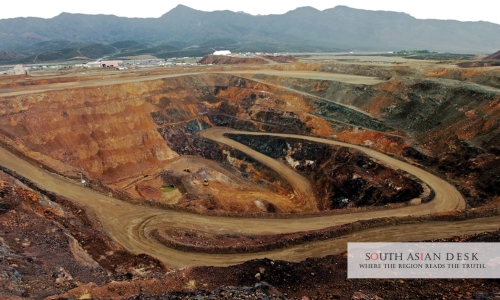
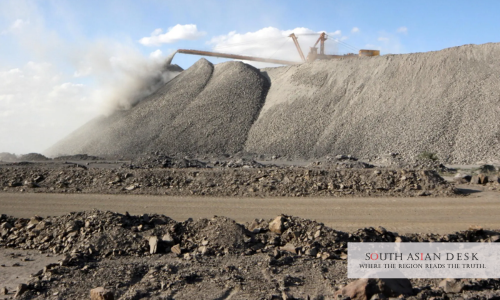
China’s involvement in Afghanistan includes investments in copper and lithium mining, valued at billions of USD. These projects aim to integrate Afghanistan into the Belt and Road Initiative, but attacks like the Kabul Chinese restaurant attack undermine progress.
In South Asia, the incident raises alarms for neighbouring Pakistan, where Chinese workers on CPEC projects have faced similar threats from Baloch insurgents and Tehrik-i-Taliban Pakistan. Joint counter-terrorism efforts between China, Pakistan, and Afghanistan have intensified, but results remain limited.
The Taliban has claimed to have dismantled ISIS-K networks, but the group’s resilience suggests otherwise. In 2025, ISIS-K conducted over 50 attacks across Afghanistan, killing more than 300 civilians, according to UN reports.
Chinese nationals Afghanistan safety is intertwined with regional stability. Beijing has hosted Taliban delegations and provided aid, but demands concrete action against militants.
What’s Next
Investigations continue, with Taliban forces securing the site and collecting evidence. No arrests have been announced.
China may push for enhanced bilateral security protocols, potentially including joint patrols or intelligence sharing. The incident could delay planned investments, affecting Afghanistan’s economy.
As threats persist, China urges Taliban security enhancements to protect foreign nationals and foster regional cooperation.
Published in SouthAsianDesk, January 21st, 2026
Follow SouthAsianDesk on X, Instagram and Facebook for insights on business and current affairs from across South Asia.