Washington, Friday, December 26, 2025 – Chinese combat aircraft exports increasingly concentrate on Pakistan, a new Pentagon report has revealed.
The annual assessment on China’s military power identifies Pakistan as the primary and, in some cases, exclusive recipient of advanced Chinese combat aircraft. Beijing promotes three leading fixed-wing platforms for international sales.
Pakistan J-10C Aircraft: Exclusive Access Drives Lead Position
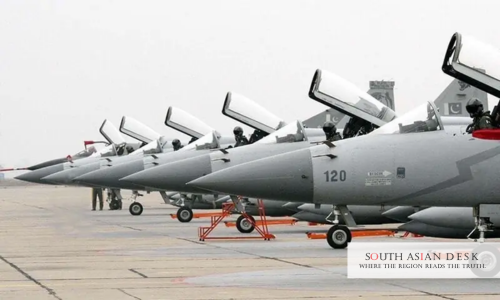
Pakistan’s top recipient of Chinese jets designation arises from the sole receipt of the J-10C platform. China delivered 20 units to the Pakistan Air Force by May 2025.
These deliveries form part of a 36-aircraft order initiated in 2020. No other nation has secured J-10C transfers despite expressed interest.
The J-10C features active electronically scanned array radar, PL-15 long-range missiles, and advanced electronic warfare systems. Integration enhances Pakistan’s beyond-visual-range combat capabilities.
Pakistan J-10C aircraft operate alongside upgraded F-16s and JF-17 variants. They provide multi-role flexibility across air superiority and precision strike missions.
China-Pakistan Fighter Jets: From Co-Production to Advanced Imports
China-Pakistan fighter jet collaboration spans generations. The JF-17 Thunder programme marks successful joint development.
Conceived in the late 1990s, JF-17 entered service in 2007. The Pakistan Aeronautical Complex produces most of its components domestically.
Block III introduces helmet-mounted displays, improved avionics, and enhanced engine performance. Over 150 units serve in Pakistan’s inventory.
Exports include 26 to Azerbaijan, 36 to Myanmar, and 12 to Nigeria. Iraq and Sudan conduct evaluations for potential orders.
China-Pakistan fighter jet ties extend beyond manned platforms. Pakistan operates multiple Chinese unmanned combat aerial vehicles.
The Wing Loong II and Caihong series offer intelligence, surveillance, and strike capabilities. Integration creates layered aerial capabilities.
Background: Decades of Chinese Combat Aircraft Support to Pakistan
Chinese combat aircraft assistance to Pakistan began in the 1960s. Early supplies included F-6 variants derived from MiG-19 designs.
The 1980s saw the transfer of F-7 fighters, based on the MiG-21. These formed backbone squadrons for years.
The co-development of JF-17 responded to Western sanctions post-1998 nuclear tests. The project facilitated the absorption of technology and local manufacturing.
Naval cooperation includes Type 054A/P frigates. Four vessels commissioned between 2021 and 2023 bolster maritime defence.
Submarine acquisitions feature eight Hangor-class boats under construction. Four built in China, four in Karachi.
Air defence systems like HQ-9/P provide long-range protection. Integration creates a multi-layered architecture.
Chinese combat aircraft support aligns with the strategic partnership. All-weather friendship withstands regional shifts.
Technology transfer remains a core element. Pakistan gains expertise in maintenance, upgrade, and partial production.
Regional Implications of Chinese Combat Aircraft Proliferation
Chinese combat aircraft expansion influences South Asian balance. Pakistan modernises rapidly against numerical disparities.
The Pentagon report notes aggressive marketing. Flexible financing and no end-use restrictions attract buyers.
Potential J-10C customers include Egypt, Algeria, Bangladesh, and Iran. Successful sales could alter regional equations.
FC-31 stealth fighter promotion targets higher-end markets. Carrier-capable variant appeals to naval powers.
Pakistan’s status as the top recipient of Chinese jets provides operational feedback. Real-world data refines future designs.
Unmanned systems growth complements manned fleets. Low-cost attrition options change conflict calculus.
China is expected to rank fourth globally in arms exports by 2024. Aviation segment drives upward trajectory.
What’s Next for Chinese Combat Aircraft Exports
Deliveries of the remaining J-10C units are expected to continue through 2026. Full squadron operationalisation follows.
JF-17 Block III production accelerates. Export variants incorporate customer-specific modifications.
FC-31 development progresses toward service entry. International debut expected at upcoming air shows.
Naval aviation cooperation expands. Carrier-based trainers and fighters enter discussions.
Joint research initiatives explore sixth-generation concepts. Hypersonics and artificial intelligence feature prominently.
Pakistan’s role as the top recipient of Chinese jets is likely to persist. Deepened integration supports long-term planning.
China-Pakistan fighter jet partnership adapts to emerging threats. Counter-stealth and electronic warfare gain priority.
The Chinese combat aircraft market share is growing steadily. Affordable performance challenges traditional dominance.
The trajectory for Chinese combat aircraft points toward a broader global footprint.
Published in SouthAsianDesk, December 26th, 2025
Follow SouthAsianDesk on X, Instagram and Facebook for insights on business and current affairs from across South Asia.