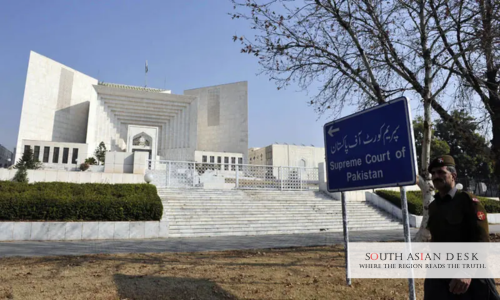
Islamabad: The Supreme Court of Pakistan has ordered the return and restoration of Chitral refugee camp that was previously used for an Afghan refugee camp. The ruling issued on Wednesday requires the government to clear debris and pay compensation to landowners. This follows a long dispute over property acquired in 1983 and vacated in 2005.
The decision highlights ongoing challenges in managing the refugee aftermath in Pakistan. It sets a precedent for land rights in regions hosting displaced populations, affecting South Asian stability, where millions of Afghan refugees reside.
Supreme Court of Pakistan Order Details
The Supreme Court of Pakistan’s order was issued by a bench led by Chief Justice Yahya Afridi, comprising Justices Shahid Bilal Hassan and Shakeel Ahmad. The court dismissed an appeal by the Commissioner for Afghan Refugees, Khyber Pakhtunkhwa. It upheld a ruling by the Peshawar High Court from February 27, 2025.
The land belongs to Sardar Abdul Ghani Khan and Khalil Ahmad from Kaisoo village in Darosh tehsil. Authorities acquired it in 1983 to house Afghan refugees in Chitral amid the Soviet-Afghan war. Mud houses were built for the camp, which sheltered thousands fleeing conflict.
In 2005, the camp emptied as refugees repatriated or relocated. However, remnants of structures and debris remained. This rendered the Chitral refugee camp land unusable for agriculture. Owners were unable to farm the property, resulting in financial losses.
The Supreme Court of Pakistan’s order mandates the clearance of all leftover material. It also requires an annual payment of PKR 600 per Chakoram from 2005 until the complete restoration of Chitral land. A Chakoram measures 108 square feet, a local unit in Chitral.
Afghan Refugees Chitral Impact
Afghan refugees Chitral have shaped the region’s history since 1979. Waves of people arrived after the Soviet invasion, seeking safety in Pakistan’s border areas. Chitral hosted camps, such as the one in Kesu village near Drosh.
At peak, Pakistan sheltered over 3 million Afghans. Khyber Pakhtunkhwa bore the brunt with numerous camps. The Chitral refugee camp land case arises from temporary acquisitions that have become permanent due to neglect.
Repatriation efforts intensified post-2001. By 2005, many camps, including this one, closed. Yet, the incomplete restoration of Chitral’s land sparked litigation. Owners sued for damages, arguing that the land’s condition violated the original agreements.
The Peshawar High Court, in its February 27, 2025, decree, faulted the commissioner for failing to take action. It stated that the land must be returned to its original state, fit for use as acquired.
Afghan refugees in Chitral contributed to the local economy through labor. However, strains on resources persisted. Recent drives saw the last group leave the Kesu camp in October 2025, per reports.
Background
Pakistan’s role as a refugee host dates to 1979. The Soviet invasion displaced millions across the border. Camps sprang up in Chitral and elsewhere, providing shelter, education, and health services.
UNHCR data shows over 1.4 million registered Afghan refugees remain in Pakistan as of 2025. Many in Khyber Pakhtunkhwa face uncertain futures amid pressures to repatriate.
The Chitral refugee camp land dispute reflects broader issues. Land acquisitions often lacked clear restoration plans. In Chitral’s rugged terrain, agriculture is vital for livelihoods. Delays harm local farmers reliant on small plots.
Historical ties bind Chitral to Afghanistan. Shared borders and cultures eased refugee integration. Yet, post-vacation problems, such as debris, highlight administrative gaps.
Government data indicates hundreds of camps operated nationwide. Closures since 2002 aimed at voluntary returns. However, cases like this expose unresolved claims.
South Asia hosts vast displaced populations. Afghanistan’s instability drives flows to Pakistan and India. Proper land management after a refugee ensures community harmony.
The Supreme Court of Pakistan’s order aligns with past rulings on property rights. It echoes the 2007 decisions on the governance of northern areas, stressing restitution.
Economic impacts linger. Unusable land costs the owner’s income. Compensation at PKR 600 per unit addresses this, but complete restoration of Chitral’s land is key.
Refugee policies evolved. Pakistan’s 2024 extensions for proof of registration cards aided stays. Yet deportations rose in 2025, straining relations.
Chitral’s unique geography adds complexity. Remote valleys limit access, delaying clean-ups. Local leaders often mediate such disputes.
What’s Next
Authorities must comply swiftly with the Supreme Court of Pakistan’s order. Clearance operations could start within months, pending logistics.
Owners may receive back payments soon. Monitoring by the courts ensures that the Chitral land restoration is completed.
Broader implications include reviews of other ex-camp sites. UNHCR and the government may collaborate on protocols.
Suppose unresolved appeals could follow, though this is unlikely. Focus shifts to preventive measures for future acquisitions.
Afghan refugees in Chitral may experience reduced tensions as land is returned. Regional dialogues on refugee management could be strengthened.
The ruling reinforces justice in areas that host refugees. It promotes accountability in land use.
Ongoing repatriation affects remaining Afghans. Policies balancing humanitarian needs with local rights evolve. The Chitral refugee camp land case concludes a 20-year saga. Yet it underscores enduring refugee legacies.
As South Asia navigates conflicts, similar disputes may arise. Proactive restoration safeguards interests. The Supreme Court of Pakistan’s order sets standards. It aids harmony in border regions.
Compensation calculations proceed. Owners estimate losses over decades.
Government budgets allocate for such payouts. PKR millions are potentially involved based on land size. Chitral land restoration boosts agriculture. Farmers plan crops post-clearance. Community views the order positively. It restores trust in the judiciary.
The decision indirectly impacts Afghan refugees in Chitral. It closes a chapter on past camps. Forward steps include environmental assessments. Debris removal must avoid pollution.
Stakeholders hope for timely execution. Delays could prompt contempt petitions. The Chitral refugee camp land will soon return to productive use.
Published in SouthAsianDesk, January 8th, 2026
Follow SouthAsianDesk on X, Instagram and Facebook for insights on business and current affairs from across South Asia.