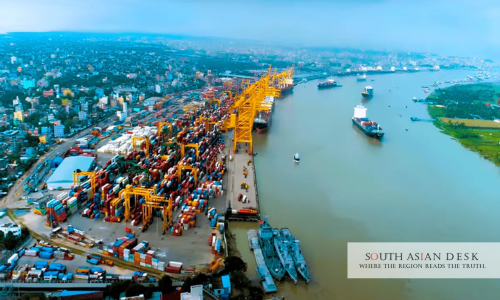
In a significant development for maritime trade, the Chittagong Port tariffs increased, sparking debates on economic impacts amid regional supply chain pressures.
The Chittagong Port Authority (CPA) has raised tariffs at Chittagong Port by up to 50 per cent for the first time in 39 years, effective from early Tuesday, September 16, 2025, to fund capacity expansion and service upgrades, as announced via government gazette and prepared with international consultancy input.
Chittagong Port serves as a vital gateway for Bangladesh’s export-driven economy and South Asia’s trade routes, handling over 80 per cent of the country’s container traffic. This tariff adjustment, part of broader Chittagong port news 2025, could ripple through regional supply chains, influencing costs for exporters in India, Nepal, and Bhutan reliant on Bangladeshi transit, while aiming to modernise infrastructure critical for sustaining 3.3 million TEUs annually.
Chittagong Port Tariffs Increased: Key Details Unveiled
The CPA’s decision marks a pivotal moment in Chittagong port news 2025, addressing long-standing underinvestment in port facilities. Officials cited the need to enhance operational efficiency and accommodate growing cargo volumes as primary drivers for the Chittagong port tariffs increased measure.
According to CPA Secretary Omar Faruk, the revisions stem from a comprehensive review conducted with the assistance of Spanish consultancy firm IDOM. The new tariff structure is designed to generate additional revenue for infrastructure development, with minimal direct impact on end consumers, Faruk stated in an official briefing. The changes encompass a wide array of services, from berthing fees to container handling, averaging a 40-41 per cent uplift across the board.
Implementation began at 12:01 AM on Tuesday, September 16, 2025, following the publication of the gazette notification on Monday, September 15, 2025. This timing aligns with the port’s peak operational hours, ensuring seamless transition for ongoing vessel movements.
Breakdown of Tariff Adjustments
Under the revised schedule, several core charges have seen substantial modifications, reflecting the scale of Chittagong port tariffs increased.
- Berthing Fees: The charge for the initial 12 hours has doubled, while fees after 36 hours have surged by up to 900 per cent to discourage delays and optimise berth utilisation.
- Pilotage Services: Fixed at USD 800 per movement, up from previous rates, to cover enhanced navigational support.
- Tugboat Operations: Ranging from USD 615 for smaller vessels to USD 6,830 for larger ones, an increase aimed at fleet maintenance.
- Container Handling: Costs have risen by 25-50 per cent, with import containers facing an additional BDT 5,720 per unit and exports BDT 3,045. Loading and unloading fees specifically jumped from USD 43.40 (approximately BDT 5,282) to USD 68.
Additionally, free storage periods for export containers have been extended from four to six days, after which demurrage charges escalate sharply. These adjustments are projected to boost CPA’s annual revenue, currently derived from handling 130 million metric tonnes of cargo and over 4,000 ship calls yearly.
Business stakeholders have mixed reactions to this Chittagong port news 2025. Syed Mohammad Arif, Chairman of the Bangladesh Shipping Agents Association, noted that industry representatives had advocated for a modest 10-12 per cent rise during consultations. The approved increments exceed expectations and may strain smaller operators, Arif remarked, highlighting potential bottlenecks in supply chains.
Stakeholder Concerns Amid Chittagong Port Tariffs Increased
The apparel sector, which accounts for 80 per cent of exports through Chittagong Port, has voiced particular apprehension. Rakibul Alam Chowdhury, Vice President of the Bangladesh Garment Manufacturers and Exporters Association (BGMEA), pointed to existing pressures from US-imposed tariffs on ready-made garments. This domestic hike could compound challenges for competitiveness in global markets, Chowdhury observed, urging phased implementation to mitigate shocks.
SM Saiful Alam, Chairman of the Chittagong Customs Agents Association, echoed these sentiments, warning that elevated costs would inevitably filter down to importers and consumers. Higher port tariffs increased will elevate the landed cost of goods, potentially fuelling inflation in essential imports like food and raw materials, Alam cautioned. Trade bodies estimate that the average cost per container could rise by 41 per cent, affecting Bangladesh’s trade balance, which relies heavily on Chittagong as the nation’s principal seaport.
In the context of South Asian connectivity, this development intersects with initiatives like the Bangladesh-India friendship pipeline and multimodal transit agreements. Enhanced port revenues could accelerate projects such as dredging and terminal expansions, benefiting cross-border trade volumes projected to grow by 15 per cent annually through 2030. However, without safeguards, the Chittagong port tariffs increased might deter investment from neighbouring economies.
Background
Chittagong Port, established in 1887, has evolved into South Asia’s busiest transshipment hub outside major Indian facilities. Prior to this revision, tariffs remained largely unchanged since 1986, leading to chronic congestion and outdated equipment. Recent investments, including USD 300 million in automated systems, underscore the urgency of fiscal reforms. The CPA’s collaboration with IDOM represents a shift towards data-driven policymaking, informed by global benchmarks from ports in Singapore and Rotterdam.
What’s Next for Chittagong Port
As the dust settles on the tariff rollout, the CPA plans quarterly reviews to monitor compliance and economic fallout. Stakeholders anticipate dialogue sessions in October 2025 to address grievances, potentially refining select rates. Looking ahead, this Chittagong port news 2025 could pave the way for sustainable growth, provided revenue inflows translate into tangible upgrades that bolster regional trade resilience.
In conclusion, the Chittagong port tariffs increased initiative underscores a balancing act between modernisation and affordability, with implications extending far beyond Bangladesh’s shores.
Published in SouthAsianDesk, September 17th, 2025
Follow SouthAsianDesk on X, Instagram, and Facebook for insights on business and current affairs from across South Asia.