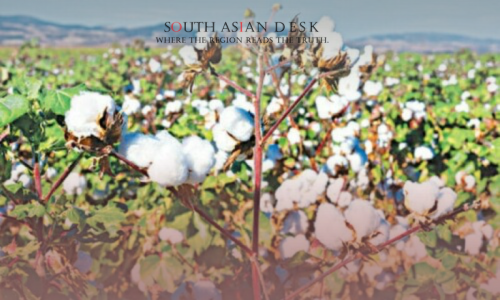
A significant disagreement has emerged in Punjab, Pakistan, over the accuracy of cotton production data, raising concerns among farmers, industry stakeholders, and policymakers. The dispute centers on conflicting figures reported by the Crop Reporting Centre (CRC) Punjab and the Pakistan Cotton Ginners Association (PCGA), highlighting issues with data collection methods and their impact on the cotton industry.
Details of Cotton Production Data
The CRC Punjab reported cotton output at 335,000 bales as of July 15, 2025, while the PCGA recorded a much lower figure of 145,000 bales. This stark difference has sparked debate about the reliability of the CRC’s methodology, which relies on estimating yields from small sample plots or boll counts per plant. Critics argue that this approach leads to inflated figures that do not reflect actual production. In contrast, the PCGA collects data directly from ginning factories, tracking cotton and lint sales biweekly, which many consider a more grounded method.
The discrepancy has broader implications for Pakistan’s cotton sector, a vital component of the nation’s economy. Inaccurate data can undermine planning, affect market confidence, and harm the country’s credibility in international cotton markets. Industry experts have pointed out that the gap in reported figures complicates decision-making for stakeholders, from farmers to textile manufacturers. For instance, unreliable production estimates can disrupt procurement strategies and exacerbate the industry’s reliance on costly imports, especially as Punjab’s cotton arrivals have declined by 24.71% compared to last year, with only 292,555 bales recorded by July 31, 2025.
Adding to the challenges, Punjab’s cotton crop faces environmental pressures, including unpredictable weather and pest infestations like whitefly and pink bollworm. These factors have contributed to a significant drop in production, particularly in key districts like Rahim Yar Khan, where arrivals plummeted by 99.35% this season. Farmers are also grappling with rising cultivation costs and the absence of government support for research into climate-resilient seed varieties.
Stakeholders are urging the government to address these issues by adopting more transparent data collection practices and enforcing crop zoning laws to prioritize cotton in designated regions. There is also a call for investment in research to develop pest-resistant and high-yielding cotton varieties to bolster production. As the cotton season progresses, resolving these disputes and implementing effective measures will be vital to stabilizing Punjab’s cotton industry and supporting the livelihoods of millions of farmers.
Published in SouthAsianDesk, July 27th, 2025
Follow SouthAsianDesk on X, Instagram, and Facebook for insights on business and current affairs from across South Asia.