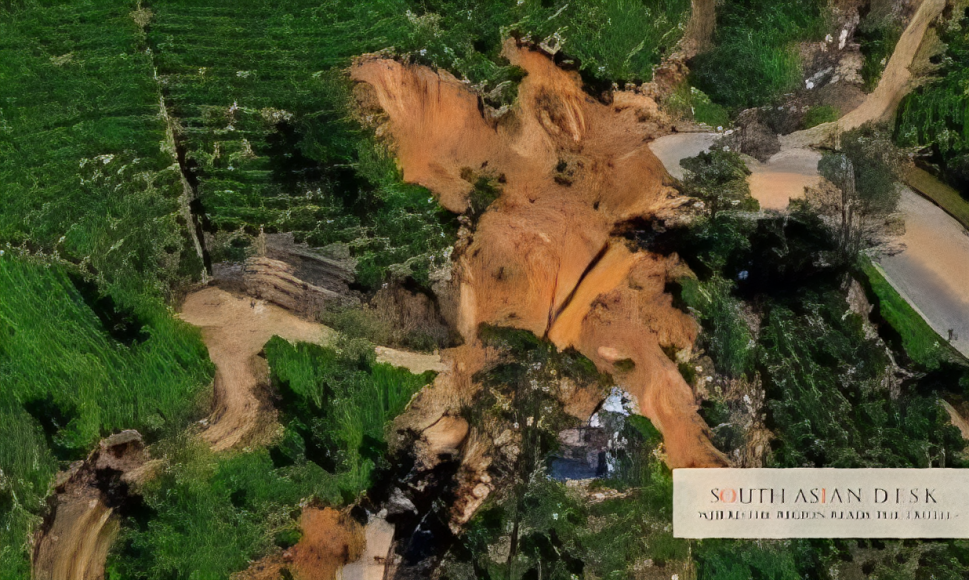
Cyclone Ditwah Sri Lanka battered last week, claiming 635 lives and displacing over two million people. The storm triggered floods and landslides that turned lush tea estates into barren wastelands. Officials warn of deep economic scars as the island nation seeks urgent international aid.
Cyclone Ditwah made landfall in late November 2025, carving a destructive path through Sri Lanka’s central highlands. The cyclone, the fiercest to strike the island in a century, unleashed torrential rains and gale-force winds. It hit hardest in the tea-growing districts of Nuwara Eliya, Badulla and Kandy, where rolling hills gave way to mudslides. Rescue teams pulled survivors from debris, but the toll mounted quickly. By Wednesday, the government reported 635 confirmed deaths, with 336 people still missing. Another 1.46 million residents faced evacuation as rivers swelled beyond banks.
The storm arrived without mercy. Meteorology officials had issued warnings days earlier, but saturated soils from prior monsoons amplified the chaos. Floodwaters submerged 277,877 buildings and snapped power to 65,000 households. Roads crumbled; 78 key routes and 15 bridges suffered severe damage. Railways halted, stranding commuters and cutting supply lines. In Colombo, urban water schemes failed, leaving 235,875 homes without clean water.
This disaster strikes at Sri Lanka’s core. Tea powers 12 per cent of the economy and employs one million workers, many in the hill country. Exports fetched USD 1.3 billion last year, with projections for USD 1.5 billion in 2025. Now, Cyclone Ditwah Sri Lanka threatens that lifeline. The blow ripples across South Asia, where Pakistan and India rely on Sri Lankan tea for blends and trade balances. Rising prices could squeeze regional consumers, while aid flows test neighbourhood solidarity. For a nation clawing back from 2022’s debt default, this setback deepens poverty risks for 23 per cent of the population.
Sri Lanka Tea Plantations Damage Exposes Vulnerabilities
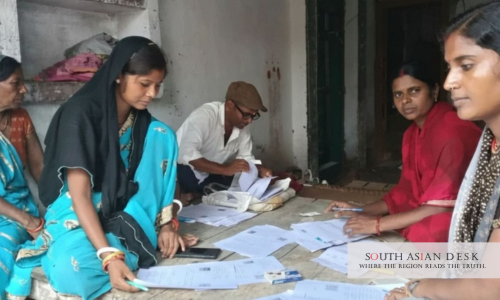
Workers in Thalawakelle estate stared at uprooted bushes on Monday. Sundaram Muttupillai, a 52-year-old plucker, lost his home to a landslide. “It has killed our hopes of being able to continue living and working in the plantations. Our homes and livelihoods are gone,” he told reporters. Nearby, in Badulla, Senthilnathan Palansamy surveyed flooded fields. “The plantations are unsafe. There will not be any work for several months. We will have to snap out of plantation lives and work somewhere else,” Palansamy said. His wife, Mariappan Sharmila, added: “The tea plantations are now like wastelands. The crops are devastated, homes destroyed, and we have lost so many people. I don’t know whether we would ever recover.”
The Sri Lanka tea plantations damage runs deep in the central province. Preliminary surveys show fully grown crops torn from slopes, with roads to factories blocked by debris. The Disaster Management Centre (DMC) logged 565 houses fully destroyed and 20,271 partially damaged in the worst-hit zones. Nuwara Eliya district alone saw lengthy road repairs discussed by a presidential committee on Tuesday. Power outages halted processing, stranding leaves in the fields.
Yet industry voices temper the gloom. The Colombo Tea Traders’ Association reported minimal structural harm to factories. “The damage was largely confined to specific roads, resulting in temporary disruptions to transportation,” the group stated on Sunday. Harvesting resumed in southern estates, spared by the cyclone’s core. Still, output dipped. Roshan Rajadurai, Planters’ Association spokesperson, forecast a 3-4 million kilogram shortfall for December alone. That equals roughly two per cent of annual production, enough to dent exports.
Ditwah Cyclone Economic Impact Hits Exports Hard
Cyclone Ditwah Sri Lanka’s economic fallout could top USD 7 billion, officials estimate. That figure dwarfs the 2004 tsunami’s USD 2 billion toll. The storm wrecked 416 factories and flooded 563,950 hectares of paddy fields, slamming rice and vegetable supplies. Vegetable prices surged 30-200 per cent in Colombo markets by Friday.
The tea industry Sri Lanka cyclone bears the brunt in exports. Annual earnings stood at USD 1.43 billion through October 2025, down from 2024’s full-year haul. Analysts predict a 35 per cent production drop in affected hills, slashing foreign currency inflows vital for debt repayments. Prabath Chandrakeerthi, commissioner general of essential services, pegged total losses at USD 6 billion, or 3.5 per cent of GDP. Dhananath Fernando, chief executive of the Advocata Institute, warned: “The cyclone has dealt a heavy blow, and this shock will significantly reduce overall growth, not just our export capacity, but also local consumption.”
Broader chains snapped. Railways cut daily services from 200 to 74 trains, idling upcountry trade. Apparel hubs, worth USD 5 billion yearly, reported low attendance for two weeks. The Ministry of Industry allocated LKR 3 billion (USD 9.7 million) in grants for factory repairs. Food insecurity looms for 1.5 million, per DMC risk indices.
President Anura Kumara Dissanayake declared a state of emergency on 28 November. He named 22 of 25 districts as disaster zones, with the central region logging 471 fatalities. Safety centres housed 233,015 people by early December. The DMC coordinated 13,141 aid requests via hotline 117, prioritising food and medicine.
International partners mobilised. India dispatched MI-17 helicopters for relief on Tuesday. Japan handed over supplies via JICA at Bandaranaike Airport on Thursday, as posted by the DMC. Australia pledged AUD 2.5 million more, totalling AUD 3.5 million, President Dissanayake noted on X. Switzerland and Mercy Malaysia offered medical teams.
The International Monetary Fund (IMF) weighs a USD 200 million lifeline. Sri Lanka requested funds under the Rapid Financing Instrument on 5 December. “The IMF remains closely engaged… committed to supporting the country as it undertakes urgent efforts to recover,” Mission Chief Evan Papageorgiou stated. This tops a USD 347 million tranche due this month from the 2023 bailout.
Background: Tea’s Fragile Legacy in Sri Lanka
Sri Lanka’s tea story began in 1867, when British planters cleared highlands for bushes. Today, 13 per cent of land grows Camellia sinensis, mostly by hand. The sector weathered civil war and 2022’s fuel shortages, but climate shifts bring frequent threats. Cyclone Ditwah Sri Lanka joins a string of floods that cost USD 500 million in 2019 alone. Smallholders, 70 per cent of producers, lack insurance, amplifying losses. Workers, often Tamil descendants, earn below poverty lines, making recovery personal.
What’s Next for Cyclone Ditwah Sri Lanka Recovery
Replanting starts next season, but full yields may take two years. The government eyes a “Rebuilding Sri Lanka” fund, as President Dissanayake announced. Landslide alerts persist in Badulla and Kegalle, per the National Building Research Organisation. Aid donors gather in Colombo next week. The tea board pushes for resilient hybrids. Yet, as waters recede, Cyclone Ditwah Sri Lanka leaves a stark reminder: vulnerability endures without systemic change.
Published in SouthAsianDesk, December 10th, 2025
Follow SouthAsianDesk on X, Instagram, and Facebook for insights on business and current affairs from across South Asia.