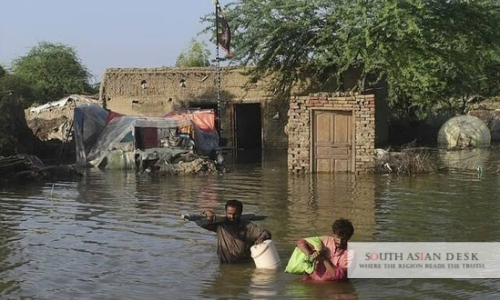
Overflowing Indus River in Sindh’s Dadu district triggers mass displacement amid ongoing humanitarian crisis in neighbouring Punjab. On Saturday, September 13, 2025, the dadu flood submerged more than 30 villages in Sindh province, Pakistan, displacing large numbers of residents and exacerbating a severe humanitarian crisis that has already claimed 97 lives in Punjab, where 2.45 million people have been affected by floods along the Chenab, Ravi, and Sutlej rivers, due to exceptionally high water levels persisting from the Panjnad confluence to Guddu Barrage.
Why it Matters
The Dadu flood submerges 30 villages and highlights the escalating impact of monsoon floods across South Asia, particularly in Pakistan, where climate-induced disasters threaten food security, displace millions, and strain limited resources in vulnerable riverine communities. In Punjab, the floods have inundated low-lying areas and destroyed hundreds of acres of standing crops, underscoring the need for regional cooperation on water management and disaster preparedness to mitigate future risks.
Devastation in Punjab: Death Toll and Displacement
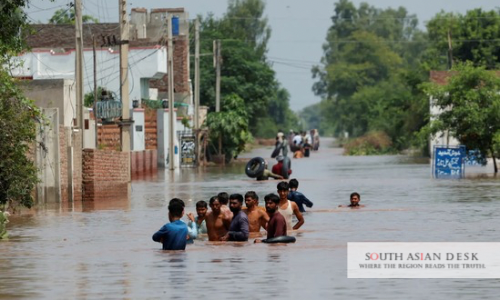
Evacuation efforts intensified across central and southern Punjab on Friday, September 12, 2025, as high flood levels continued to threaten populations between the Panjnad confluence and Guddu Barrage in Sindh. Punjab Relief Commissioner Nabil Javaid reported that 97 people had lost their lives in what he described as the “biggest flood in history” in the province. According to official data from the Provincial Disaster Management Authority (PDMA), 2.45 million people from 4,500 villages along the Ravi, Sutlej, and Chenab rivers have been affected, with 1.9 million cattle relocated to safe areas.
The Flood Forecasting Division (FFD) issued warnings of very high flood levels at Head Panjnad, Sidhnai, and Ganda Singh Wala, while high floods persisted at Head Sulemanki, Head Islam, and Mailsi Syphon. FFD data recorded at 1:00 AM on Saturday, September 13, 2025, showed a flow of 651,572 cusecs at Punjnad Headworks, with outflows at Guddu Barrage steady at 537,392 cusecs. Flood-hit regions in Punjab reported widespread outages of electricity and mobile services, isolating residents from aid and communication.
Rescue operations have been robust, with spokesperson Farooq Ahmad stating that 19,946 people were rescued across Punjab in the last 24 hours ending Saturday morning. This includes 18,130 from Jalalpur Pirwala, 11,700 from Liaqatpur in Rahim Yar Khan district, and 6,400 from Alipur. Additional rescues comprised 1,955 from Bahawalpur, 1,715 from Pakpattan, 1,407 from Lodhran, 830 from Okara, 823 from Bahawalnagar, 659 from Jhang, 585 from Kasur, 558 from Vehari, and 545 from Toba Tek Singh.
Controlled Breaches and Relief Challenges in Punjab
To avert greater damage, authorities executed 19 controlled breaches on Friday, September 12, 2025, primarily to protect Jalalpur and Alipur from inundation. In Shujabad, a dyke collapse at Mouza Dhundwala flooded several villages, prompting urgent reinforcement of the Bakhto Wah canal dyke. Punjab Senior Minister Marriyum Aurangzeb visited the site and directed officials to seal the breach promptly. Tragically, three workers dispatched for repairs were swept away by rising waters; two were rescued, but the third remains missing and is feared dead.
In Alipur, the administration breached Seetpur Road at 18 locations to divert water away from the city, though this submerged additional villages and left thousands stranded on rooftops. A rescue boat capsized in Darabpur village during an evacuation attempt, but all passengers were safely rescued. Ms Aurangzeb, during her visit to Alipur, declared the tehsil a calamity-hit area and monitored relief operations. Residents reported the disappearance of six family members following another boat capsizing in Seetpur, with many still awaiting evacuation due to a shortage of boats.
Innovative measures included the deployment of drones in Seetpur to deliver food supplies to those stranded on rooftops. Local resident Malik Riaz from Seetpur noted that drone deliveries provided essential relief after two days without food or clean water, as hand pumps yielded contaminated supplies. The secondary keyword of flood relief underscores these efforts, with authorities focusing on immediate humanitarian aid amid the Dadu flood submerges 30 villages scenario spilling over from Punjab’s crisis.
Crisis in Dadu: Indus Overflow and Health Risks
Parallel to Punjab’s turmoil, the Dadu flood submerges 30 villages in Sindh’s riverine areas near the Dadu-Moro Bridge, where the Indus River overflowed on Saturday, September 13, 2025. This has triggered widespread displacement and sparked outbreaks of waterborne and infectious diseases among the affected population. Deputy Commissioner of Dadu, Syed Murtaza Ali Shah, confirmed that more than 30 villages have been inundated, with large-scale evacuations underway.
The Health Department, in coordination with the People’s Primary Healthcare Initiative and Rescue 1122, has established medical camps along the protective embankment to deliver urgent care. Mr Shah added that mobile ambulances are operational to assist the displaced, and boats have been deployed for rescuing stranded individuals. Authorities are closely monitoring the situation and have appealed for residents’ cooperation with rescue teams to follow precautionary measures.
According to the Sindh Provincial Disaster Management Authority (PDMA), some villages in Dadu district have been inundated, but the overall situation remains under control and not alarming. This aligns with broader flood dynamics, where secondary keywords like Indus overflow highlight the interconnected risks from Punjab’s floods rushing downstream.
The inundation in Dadu has cut off access to several areas, compounding challenges from the persistent high flows at Guddu Barrage. While Punjab bears the brunt of the humanitarian crisis, the Dadu flood submerges 30 villages event emphasises the cascading effects on Sindh, with potential for further displacement if water levels do not recede.
Background
The 2025 monsoon season has brought unprecedented flooding to Pakistan, triggered by heavy pre-monsoon rains since June and intensified through September. In Punjab, record overflows from the Ravi and Sutlej rivers have affected millions, destroying over 1 million acres of cropland and 8,400 villages, as per earlier PDMA assessments. Sindh faces renewed threats from the Indus, with historical parallels to the 2022 floods that submerged a third of the country. Prime Minister Shehbaz Sharif praised the coordinated relief efforts on Friday, September 12, 2025, commending Punjab Chief Minister Maryam Nawaz for “leading from the front” and acknowledging the roles of all provincial governments, including those in Gilgit-Baltistan and Azad Jammu and Kashmir.
What’s Next
As the Dadu flood submerges 30 villages continues to unfold, authorities anticipate stabilising water levels at key barrages, but ongoing evacuations and health monitoring will be critical to prevent further casualties. Relief operations, including drone deliveries and medical camps, are expected to expand, with federal support aimed at rehabilitating affected communities in both Punjab and Sindh.
Published in SouthAsianDesk, September 13th, 2025
Follow SouthAsianDesk on X, Instagram, and Facebook for insights on business and current affairs from across South Asia.