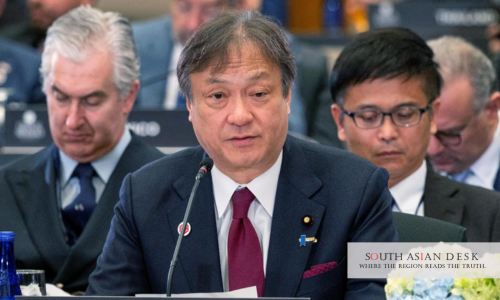
Pakistan’s Deputy Prime Minister and Foreign Minister Ishaq Dar meets Japanese Deputy Vice Minister for Foreign Affairs Eri Arfiya in Brussels on 21 November 2025. The informal discussion occurred on the margins of the Fourth EU Indo-Pacific Ministerial Forum. Dar emphasised strengthening Pakistan Japan bilateral ties through expanded cooperation. Both sides reviewed mutual interests in political, economic, and regional domains. The exchange highlighted shared commitments to regional stability.
This meeting carries weight for South Asia. It positions Pakistan as an active player in Indo-Pacific strategies. Such outreach counters economic pressures and fosters investment flows. Enhanced Dar Japan cooperation could drive trade growth and technology transfers. In a region marked by geopolitical flux, these ties offer Pakistan leverage for sustainable development and diplomatic balance.
Dar Meets Japanese Deputy FM in Brussels: Key Discussion Points
The encounter between Dar and Arfiya unfolded during the forum’s closing sessions. The talks lasted 30 minutes. Dar reiterated Pakistan’s resolve to deepen engagement with Japan. He noted the enduring friendship rooted in mutual respect and shared values.
“Pakistan remains committed to strengthening cooperation with Japan across diverse areas,” Dar stated, according to official accounts. Arfiya reciprocated by affirming Tokyo’s interest in sustained partnership. The dialogue touched on trade barriers, investment opportunities, and joint initiatives in climate resilience.
No formal agreements emerged from the session. Yet, it set the stage for follow-up mechanisms. Officials exchanged views on supply chain diversification. Dar advocated for Japanese firms to explore Pakistan’s mineral sector. This aligns with recent overtures in value-added industries.
The forum itself convened over 50 nations to address security and prosperity in the Indo-Pacific. Pakistan’s participation, led by Dar, amplified its voice on maritime routes and counter-terrorism. The Dar meets Japanese deputy FM in Brussels moment stood out as a bilateral highlight.
Pakistan Japan Bilateral Ties: A Foundation of Mutual Benefit
Pakistan Japan bilateral ties trace back to 1952, when diplomatic relations formalised. Over seven decades, these bonds have evolved into a multifaceted alliance. Japan ranks as Pakistan’s fourth-largest export market. In fiscal year 2024-25, bilateral trade reached USD 1.54 billion. Exports from Pakistan included textiles and seafood, while imports comprised machinery and electronics.
Japan’s development assistance bolsters this framework. The Japan International Cooperation Agency (JICA) has invested over JPY 1 trillion since 1954. Projects span infrastructure, education, and disaster management. Notable efforts include the Dasu Hydropower Project and flood rehabilitation post-2022 deluges.
Dar Japan cooperation extends to strategic realms. Both nations collaborate under the Comprehensive Economic Partnership Agreement framework. Recent dialogues emphasise green energy transitions. Pakistan seeks Japanese expertise in renewable sources to meet its 30% target by 2030.
In 2025, momentum built through high-level exchanges. The 14th Pakistan-Japan Bilateral Political Consultations occurred in Islamabad on 4 September. Led by foreign secretaries, it covered defence, culture, and consular matters. Outcomes included pledges to expedite visa processes for business travellers.
The Ninth Japan-Pakistan High-Level Economic Policy Dialogue followed on 8 September in Tokyo. Discussions pinpointed agriculture and IT as growth vectors. Pakistan outlined reforms to attract USD 5 billion in Japanese direct investment by 2027.
These platforms underscore resilience in Pakistan Japan bilateral ties. Despite global disruptions, trade volumes grew 8% year-on-year in early 2025. Dar’s advocacy in Brussels reinforces this trajectory.
Trade and Investment Dynamics
Trade imbalances persist, with Pakistan’s deficit at USD 1.2 billion in 2024-25. To address this, Islamabad promotes non-traditional exports like pharmaceuticals. Japanese conglomerates such as Toyota and Suzuki maintain assembly plants in Pakistan, employing 50,000 workers.
Investment flows hit USD 300 million in the past year. Sectors like automotive and textiles draw focus. The Board of Investment reports 15 new Japanese ventures approved since January 2025. Dar highlighted these in Brussels, urging streamlined approvals.
Cooperation in the Indo-Pacific forum context adds layers. Both countries back a rules-based order. Joint maritime exercises and intelligence sharing enhance security ties.
Recent Engagements Bolstering Dar Japan Cooperation
Earlier in 2025, Prime Minister Shehbaz Sharif hosted Japanese investors in August. He offered incentives for special economic zones. This built on the May minerals collaboration invite, targeting lithium and rare earths.
The September consultations yielded a joint statement on cultural exchanges. Over 10,000 Pakistani students study in Japan annually under scholarships. Dar praised this human capital bridge during his Brussels remarks.
These steps illustrate proactive Dar Japan cooperation. They align with Pakistan’s pivot to Asia-centric diplomacy.
Indo-Pacific Forum: Broader Context for Bilateral Advances
The Fourth EU Indo-Pacific Ministerial Forum gathered leaders from Europe, Asia, and beyond. Themes included connectivity, sustainability, and hybrid threats. Held 19-21 November in Brussels, it marked the EU’s deepened regional footprint.
Pakistan’s agenda featured GSP+ scheme enhancements. Dar secured assurances for extended preferences, vital for USD 7 billion in annual EU exports. The platform enabled 12 bilateral meetings, including with Croatia and Somalia.
Within this, the Dar meets Japanese deputy FM in Brussels interaction gained prominence. It reflected aligned visions on supply chain security. Both sides endorsed multilateral forums like ASEAN dialogues.
For South Asia, the forum signals opportunities. Pakistan eyes infrastructure funding via EU-Japan synergies. This could fund USD 2 billion in port upgrades at Gwadar.
Background: Evolving Regional Dynamics
Pakistan’s Brussels visit capped a busy diplomatic calendar. Dar arrived on 19 November for the Seventh Pakistan-EU Strategic Dialogue. Outcomes encompassed counter-terrorism and migration pacts.
Japan’s Indo-Pacific strategy emphasises free trade. Tokyo’s 2025 outlook prioritises South Asian stability. Bilateral ties gain from this, with JPY 50 billion allocated for regional aid.
Historical goodwill underpins progress. Japan’s post-earthquake aid to Pakistan in 2005 totalled USD 500 million. Such reciprocity fuels current endeavours.
What’s Next: Pathways for Enhanced Collaboration
Upcoming, the 15th Bilateral Political Consultations loom in Tokyo next spring. Dar Japan cooperation may yield a trade facilitation pact. Investment roadshows in Karachi and Osaka are slated for Q1 2026.
Analysts anticipate USD 2 billion trade milestone by 2027. Focus areas include digital economy and health tech. The Brussels momentum propels these goals.
As Dar meets Japanese deputy FM in Brussels concludes, expectations rise for tangible gains. This engagement heralds a chapter of amplified Pakistan Japan bilateral ties, anchoring South Asia’s prosperity in the Indo-Pacific forum.
Published in SouthAsianDesk, November 23rd, 2025
Follow SouthAsianDesk on X, Instagram, and Facebook for insights on business and current affairs from across South Asia.