Delhi’s air quality index reached 380 on Monday morning, fuelling a surge in Delhi AQI respiratory illness reports across toxic air Delhi hospitals. The crisis stems from vehicle emissions, industrial sources, and crop burning in neighbouring states. Over 200,000 acute respiratory cases hit six state-run facilities from 2022 to 2024. Health experts link the spike to prolonged exposure. The federal government released the data in Parliament. Courts push for urgent curbs. This pattern repeats annually in winter.
Delhi air pollution exemplifies a broader South Asian challenge, where toxic haze crosses borders from Punjab to Pakistan, shortening lives and straining economies. With 1.67 million pollution-linked deaths across the region in 2023 per WHO estimates, coordinated efforts could save thousands yearly.
Delhi Air Pollution: AQI Surge and Health Toll
Delhi air pollution worsened on Monday, with the average AQI at 380 according to the Safar app. Levels topped 400 multiple times in the past decade, classifying air as severe. The World Health Organization sets a safe PM2.5 limit at 5 micrograms per cubic metre annually. Delhi’s readings exceed this by over 20 times during peaks.
The Central Pollution Control Board monitors 26 stations citywide. Data shows PM2.5 and PM10 as primary culprits. Low wind speeds trap pollutants, amplifying winter pollution India South Asia effects. Neighbouring Haryana and Punjab contribute via stubble burning, sending smoke southward.
Federal data presented in Parliament reveals 67,054 acute respiratory cases in 2022, rising to 69,293 in 2023 and 68,411 in 2024. Total: 204,758 cases. Over 30,000 patients required hospitalisation in these facilities alone. Toxic air Delhi hospitals report doubled emergency visits during high-AQI days.
Dr Bobby Bhalotra, vice chairman of respiratory medicine at Sir Ganga Ram Hospital, noted a clear spike. “There’s a clear spike in patients reporting breathlessness,” he said in a recent statement. Children face heightened risks, with persistent coughs common even in toddlers.
Delhi AQI Respiratory Illness: Hospital Overload
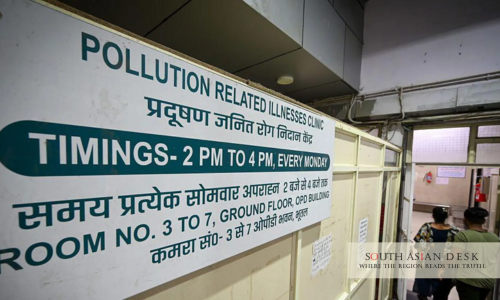
Delhi AQI respiratory illness cases correlate with pollution spikes, though studies note association rather than direct causation. Hospitals like Ram Manohar Lohia and Safdarjung set up dedicated pollution clinics. Admissions climb 20-30% in November-December.
The Graded Response Action Plan activates stages based on AQI. At 301-400, very poor, measures include bans on coal use and higher parking fees. Stage 3 now mandates 50% office work-from-home, per Commission for Air Quality Management revisions.
Environment Minister Manjinder Singh Sirsa addressed measures in November. “We have installed anti-smog guns on high-rise buildings, done dust mitigation with water sprinklers, and are monitoring ongoing constructions,” he said. The government distributed 10,000 electric heaters to resident welfare associations to cut biomass burning for warmth.
Despite efforts, AQI hovered at 332 on 29 November 2025, per CPCB bulletins. Locals report headaches, coughs, and eye irritation. Protests at India Gate on 9 November drew hundreds, including children, demanding data transparency after accusations of tampering during Diwali.
Toxic Air Delhi Hospitals: Frontline Strain
Toxic air Delhi hospitals bear the brunt, with emergency rooms overwhelmed. Sir Ganga Ram saw breathlessness cases rise sharply post-Diwali. Pediatricians note three-year-olds with unrelenting coughs.
The 2025 State of Global Air report attributes 30% of worldwide pollution deaths to India. Delhi tops global polluted city lists often. AQI categories: 0-50 good, 51-100 satisfactory, 101-200 moderate, 201-300 poor, 301-400 very poor, 401-500 severe.
Cloud seeding trials in October failed due to insufficient precipitation, per IIT Kanpur’s Manindra Agarwal. “Three attempts at cloud seeding last month did not achieve success,” he stated.
Winter Pollution India South Asia: Cross-Border Crisis
Winter pollution India South Asia intensifies as cold traps emissions. Stubble burning in Punjab-Haryana accounts for 30-40% of Delhi’s November PM2.5, per CPCB. Winds carry particulates to Lahore and Islamabad, where AQI hits 300+ simultaneously.
Pakistan’s Dawn highlighted transboundary flows in recent coverage. Bangladesh faces similar farm fire haze. SAARC-level talks stalled, but experts urge joint monitoring.
Delhi’s 2025 Air Pollution Mitigation Plan, launched in June, targets eight areas. Chief Minister Rekha Gupta unveiled it under “Shuddh Hawa Sabka Adhikar.” Measures: 1,000 sprinklers, 140 anti-smog guns, 5,000 e-buses by 2026, and border cameras for old vehicles.
From November 2025, only BS-VI, CNG, or electric trucks enter Delhi. Fuel stations halt sales to vehicles over 15 years old from April. The plan partners with IITs for tech audits.
Congress leader Sandeep Dikshit called pollution “slow poison” on 29 November. “The government must hold discussions with all stakeholders on this national problem,” he said. Rahul Gandhi demanded parliamentary debate, questioning Prime Minister Modi’s silence on the “health emergency.”
Kiran Bedi proposed reforms on 3 December. “The crisis won’t respond to half-measures,” she wrote in a blog. Suggestions: National Council of Environment Ministers and AI-enabled data centres.
The Supreme Court on 1 December directed revisiting GRAP efficacy. “Evaluate whether measures have been effective,” it ordered. CAQM gained proactive powers on 19 November.
Background
Delhi air pollution traces to rapid urbanisation since the 1990s. Vehicle numbers hit 12 million by 2025. Industries and construction add dust. Winter inversions worsen trapping.
The National Clean Air Programme aims for 20-30% PM reduction by 2024, extended. Yet, 2024 saw 209 good-moderate AQI days, best since 2018 barring COVID. January-August 2025 averaged 172 AQI, lowest in eight years.
Regional context: Indo-Gangetic Plain hosts 25% of South Asia’s population, facing shared smog. WHO links it to 1.67 million regional deaths yearly.
What’s Next
Enforcement ramps up under revised GRAP. Courts hear petitions this week. E-bus rollout accelerates. Public campaigns push compliance. Delhi air pollution demands sustained regional pacts to avert future winters of haze.
Published in SouthAsianDesk, December 3rd, 2025
Follow SouthAsianDesk on X, Instagram, and Facebook for insights on business and current affairs from across South Asia.