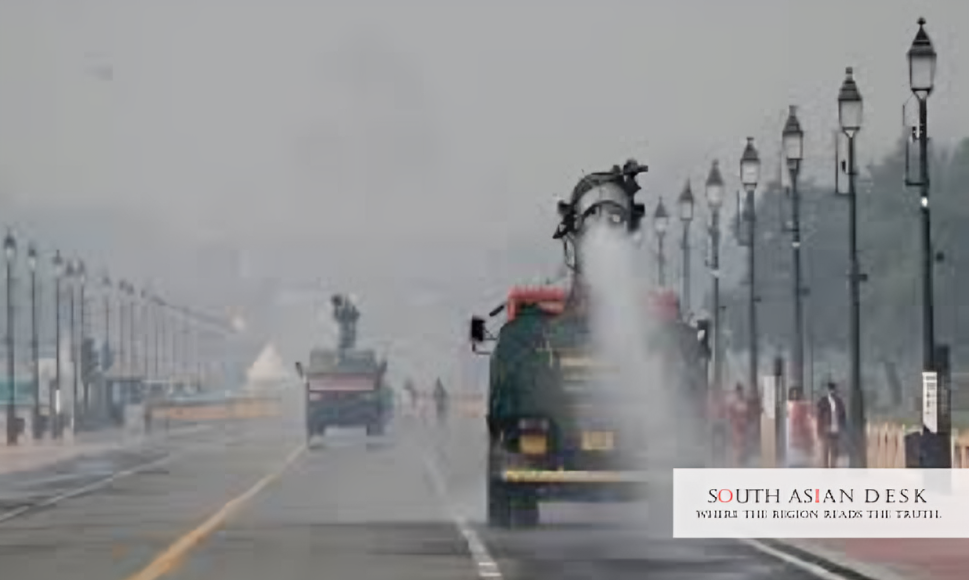
Delhi air quality deteriorates to the very poor category on Friday, December 26, 2025, with an AQI of 310 recorded at 8 AM, reversing a brief improvement to 234 the previous day, as per Central Pollution Control Board data.
This development underscores the persistent air pollution issues in South Asia, where seasonal weather patterns in densely populated regions like northern India trap pollutants, impacting public health and prompting regulatory actions across borders.
Delhi’s air quality has fluctuated sharply this week. On Thursday, December 25, 2025, the 24-hour average Delhi AQI stood at 234 in the poor category, down from 271 on Wednesday, December 24, 2025, and a marked drop from the severe 412 on Tuesday, December 23, 2025. Out of 40 monitoring stations, 10 reported moderate levels below 200, including Lodhi Road, IIT Delhi, Indira Gandhi International Airport, and Aya Nagar. Twenty-seven stations stayed in the poor range, while Jahangirpuri and Bawana hit very poor above 300.
The Commission for Air Quality Management revoked Stage IV of the Graded Response Action Plan on December 24, 2025, as Delhi AQI improved to 271, lifting strict curbs imposed when levels exceeded 450 on December 13, 2025.
Delhi AQI Contributors and Sources
Vehicular emissions led pollution sources on December 24, 2025, at 18.5 per cent, followed by industries in Delhi and nearby areas at 9.5 per cent, construction at 2.5 per cent, and waste burning at 1.6 per cent, according to the Decision Support System for Air Quality Management.
Neighbouring districts contributed significantly, with Jhajjar in Haryana at 17.6 per cent, Rohtak at 5.9 per cent, and Sonipat at 3.1 per cent. Northwest winds reached 10 kmph in the afternoon on December 25, 2025, aiding slight dispersion.
Delhi AQI classifications from the Central Pollution Control Board define 0-50 as good, 51-100 satisfactory, 101-200 moderate, 201-300 poor, 301-400 very poor, and 401-500 severe. Predominant pollutants include PM2.5 and PM10, with transport and regional inflows key factors.
Delhi Pollution Forecast and Weather Impact
The India Meteorological Department and Indian Institute of Tropical Meteorology predict ongoing challenges for Delhi air quality. On December 26, 2025, ventilation index stood at 2800 m²/s, unfavourable for pollutant dispersion due to wind speeds below 10 kmph and shallow fog.
Delhi pollution forecast indicates very poor conditions on December 27, 2025, with ventilation at 3300 m²/s, and similar on December 28, 2025, at 3200 m²/s. Partly cloudy skies and moderate fog at isolated places during mornings will persist, with winds from west to northwest.
Maximum temperature hit 22.6 degrees Celsius on December 24, 2025, 1.9 degrees above normal, while minimum was 6.5 degrees Celsius, slightly below. Relative humidity ranged from 63 per cent at 8:30 AM to 84 per cent at 5:30 PM. For December 26, 2025, minimum temperature is expected at 8 degrees Celsius, with moderate fog.
Delhi air quality deterioration aligns with winter patterns, where low winds and fog trap emissions. Authorities have stepped up monitoring, but no new curbs announced yet.
Background
Delhi air quality has worsened seasonally since November 2025, with severe episodes prompting Graded Response Action Plan stages. Stage IV, invoked on December 13, 2025, banned construction, restricted trucks, and shifted schools online when Delhi AQI breached 450. Revocation followed the drop to 271 on December 24, 2025.
Cross-border pollution from stubble burning in Punjab and Haryana earlier in the season added to local sources, though reduced this year. South Asian nations face similar issues, with Lahore and Dhaka often recording high AQI, prompting calls for regional cooperation.
Health impacts include respiratory issues, with hospitals reporting increased cases during poor Delhi AQI periods. The government promotes public transport and emission controls to mitigate.
What’s Next after Delhi Air Quality Deteriorates
Delhi pollution forecast suggests sustained very poor levels through December 28, 2025, potentially triggering Graded Response Action Plan Stage III if Delhi AQI exceeds 400. Officials monitor real-time data for decisions.
The Commission for Air Quality Management may convene if deterioration accelerates. Residents are advised to limit outdoor activities during high Delhi AQI.
Delhi air quality faces risks from colder weather ahead, requiring vigilant enforcement to prevent severe episodes.
Published in SouthAsianDesk, December 26th, 2025
Follow SouthAsianDesk on X, Instagram and Facebook for insights on business and current affairs from across South Asia.