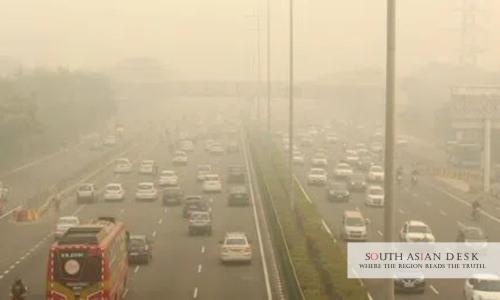
Delhi air quality remains poor November 1, 2025, with the Air Quality Index (AQI) climbing to 251 amid persistent smog. The Central Pollution Control Board (CPCB) recorded this level at 4pm, up from 218 the previous day. Causes include post-Diwali firecracker emissions and stagnant weather. Officials enforce vehicle bans to curb the rise. Residents face breathing difficulties as haze reduces visibility.
This surge in Delhi smog AQI 251 underscores a recurring environmental challenge. It affects not just the capital but neighbouring regions, straining public health systems across South Asia. Poor air quality exacerbates respiratory issues in densely populated urban centres, mirroring pollution woes in Lahore and Kathmandu. Governments in the region must coordinate to tackle transboundary smog, as wind patterns carry toxins beyond borders. The issue demands urgent policy action to safeguard vulnerable populations from long-term health risks.
Post-Diwali Delhi Pollution Persists Despite Measures
Delhi air quality remains poor November conditions stem from Diwali celebrations on October 20. Firecrackers released harmful particulates, pushing PM2.5 levels to 488 micrograms per cubic metre the next day. This marked the highest post-festival spike in five years, per CPCB data. Stubble burning in Punjab and Haryana dropped 77% this season, yet local emissions dominated. Calm winds below 1 metre per second trapped pollutants, forming an inversion layer.
The Commission for Air Quality Management (CAQM) invoked Stage 2 of the Graded Response Action Plan (GRAP) last week. This includes bans on non-essential construction and doubled parking fees by the New Delhi Municipal Council (NDMC). From November 1, non-Delhi-registered BS-III petrol and BS-IV diesel light motor vehicles face restrictions. CAQM also prohibited entry of all BS-III and lower-standard commercial goods vehicles into Delhi.
CPCB’s Sameer app tracks real-time data across 39 stations. At 4pm on November 1, Wazirpur reported the worst AQI at 333, in the ‘very poor’ category. Anand Vihar, Jahangirpuri and Patparganj hovered around 250-280, all ‘poor’. Lodhi Road and IGI Airport T3 stayed ‘moderate’ at under 200. Delhi smog AQI 251 reflects a citywide average, with 28 stations in ‘poor’ or worse.
Health experts warn of immediate risks. Fine particulates penetrate lungs, triggering asthma attacks and heart strain. Children and the elderly suffer most. Hospitals reported a 20% uptick in respiratory cases post-Diwali. The World Health Organisation sets PM2.5 limits at 5 micrograms per cubic metre annually; Delhi’s levels exceed this 50-fold.
Official Responses to Delhi Smog AQI 251
Authorities ramp up enforcement as post-Diwali Delhi pollution persists. CAQM issued directions on October 31 for strict vehicle compliance. “The ban on non-BS-VI commercial vehicles entering Delhi w.e.f. November 1 aims to reduce emissions,” stated a CAQM release. Fuel stations in Delhi and NCR districts will deny petrol and diesel to older vehicles from today.
Cloud seeding trials, costing INR 3 crore, paused due to low cloud moisture. Earlier attempts on October 29 failed to disperse smog. The Delhi government deployed 200 anti-smog guns and increased water sprinkling on roads. Public transport encourages odd-even vehicle rules if GRAP escalates to Stage 3.
CPCB’s daily bulletin confirms Delhi air quality remains poor November trends. On October 31 at 4pm, AQI stood at 218, driven by PM2.5 at 38% contribution. Forecasts predict ‘moderate’ conditions on November 2, with winds up to 10 km/h aiding dispersion. However, low temperatures around 19°C could prolong stagnation.
Background: Recurring Winter Smog Crisis
Delhi’s pollution peaks annually from October to February. Stubble burning contributes 20-30% in November, but 2025 saw fewer farm fires due to early monsoons and flood impacts. Vehicular exhaust accounts for 40%, industries 25% and dust 15%, per CPCB analysis.
Post-Diwali Delhi pollution persists because enforcement of green cracker bans faltered. The Supreme Court allowed ‘green’ variants for six hours, but sales of banned types persisted. This led to AQI jumps from 156 pre-festival to 488 post-Diwali. Historical data shows 2025 as the worst since 2021, with PM2.5 at 675 micrograms per cubic metre peak.
Regional cooperation lags. Smog drifts to Pakistan’s Punjab, prompting cross-border blame. South Asian cities like Mumbai and Dhaka face similar seasonal haze, but Delhi’s intensity stands out due to its 20 million residents.
Monitoring gaps compound issues. On Diwali night, only 12 of 39 stations functioned, masking true severity. Extrapolated data suggests AQI neared 400. CPCB vows to upgrade sensors for better accuracy.
What’s Next for Delhi’s Air Battle
As Delhi air quality remains poor November deepens, GRAP Stage 3 looms if AQI exceeds 300 for two days. This would ban non-essential diesel generators and intensify inspections. CAQM plans satellite tracking of stubble fires and incentives for crop residue management.
Meteorologists forecast partly cloudy skies with light rain possible by November 5, offering temporary relief. Long-term, the National Clean Air Programme targets 40% reduction by 2026 through electric vehicle adoption and green belts.
Residents adapt with N95 masks and indoor air purifiers. Schools may shift online if conditions worsen. International pressure mounts, with the UN urging India to phase out coal faster.
Delhi air quality remains poor November, but collective action could break the smog cycle. Officials and citizens must prioritise sustained reforms over seasonal fixes.
Published in SouthAsianDesk, November 1st, 2025
Follow SouthAsianDesk on X, Instagram, and Facebook for insights on business and current affairs from across South Asia.