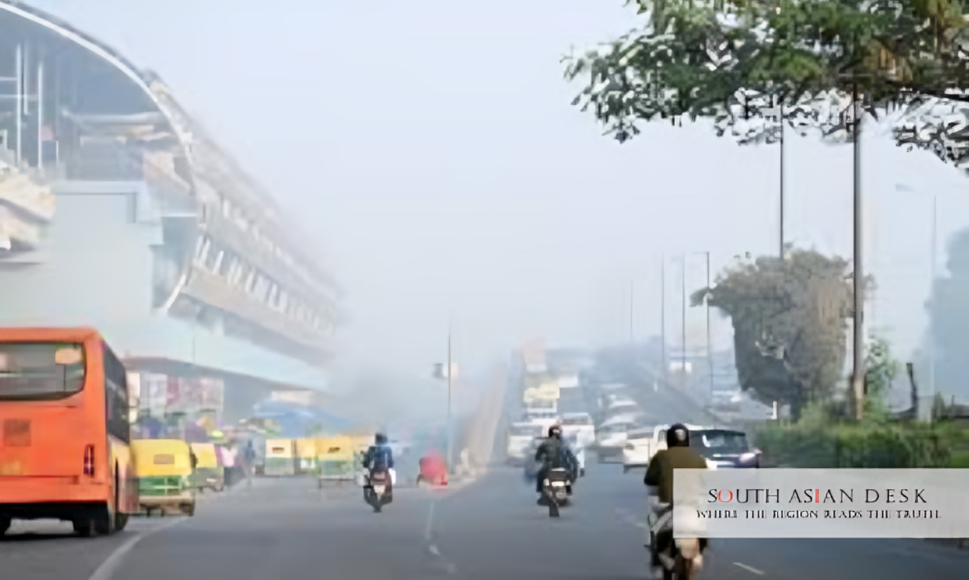
Delhi AQI today registered 300 at 8:05 AM on Monday, December 1, 2025, placing it firmly in the poor category according to Central Pollution Control Board data. The city awoke to a biting cold of 5.7°C at Safdarjung observatory, 4.6°C below seasonal norms and the lowest November reading since 2022. Strong northwesterly winds dispersed pollutants overnight, ending a 24-day streak of very poor air. Residents face compounded risks from pollution and frost, with forecasts predicting further dips. This update comes as India Meteorological Department reports shallow fog through December 2.
This pollution-cold nexus strains public health in Delhi, a megacity of 30 million, and ripples across South Asia’s urban corridors from Lahore to Dhaka, where similar winter inversions trap emissions. It underscores the urgent need for regional cooperation on cross-border smog, as winds carry particulates from Punjab’s stubble burning into the Indo-Gangetic plain, affecting over 500 million people vulnerable to respiratory diseases.
Delhi AQI Today: Breakdown of Pollution Levels
Delhi pollution levels today show marginal improvement from yesterday’s 305, but remain hazardous. The CPCB’s Sameer app, monitoring 38 stations, recorded an overall AQI of 300, with PM2.5 as the dominant pollutant contributing 60% to the index. Twenty-three stations reported very poor readings above 301, including Nehru Nagar at 354, the highest. Rohini clocked 343, Bawana 339, RK Puram 338, Mundka 330, Punjabi Bagh 329, Anand Vihar 327, Wazirpur 325, Shadipur 324, and Jahangirpuri 321. The cleanest spot, NSIT Dwarka, hit 202, still moderate.
These Delhi pollution levels stem from stagnant air over the past weeks, exacerbated by vehicular emissions, industrial output, and seasonal farm fires in neighbouring states. Northwesterly winds at 10-15 km/h from Saturday aided dispersion, pushing pollutants towards Haryana and Uttar Pradesh. CPCB data indicates Delhi’s annual average AQI hovers around 250, but winter spikes routinely breach 400, correlating with a 20% rise in hospital admissions for asthma and bronchitis.
Official records from the Delhi Pollution Control Committee align with CPCB figures, noting no severe alerts issued today but recommending N95 masks outdoors. In a press statement archived on the DPCC portal, officials urged reduced vehicle use under the Graded Response Action Plan Stage II, which bans coal-based industries and limits construction. “Dispersion models show sustained winds could maintain poor levels through mid-December,” a DPCC bulletin from November 30 stated, without attributing a named spokesperson.
Delhi Temperature Today Dives to Seasonal Low
Delhi temperature today bottomed at 5.7°C, sending shivers through the city. Maximums are forecast to touch 18°C, but fog and low visibility have grounded 15 flights at Indira Gandhi International Airport. The IMD attributes this chill to a western disturbance pulling cold air from the Himalayas, with humidity at 85% amplifying the freeze.
Residents bundled in woollens navigated icy roads, where black ice formed on overpasses. Hospitals reported a 15% uptick in hypothermia cases among the elderly and homeless, per routine Delhi government health logs. The cold snap marks a sharp turn from November’s average 10°C minimum, driven by clear skies that radiate heat overnight.
Delhi Weather Forecast December 2025: Fog and Further Cooling Ahead
The Delhi weather forecast December 2025 predicts shallow to moderate fog during morning hours on December 1 and 2, transitioning to partly cloudy skies. Minimum temperatures will fall 2-3°C by December 3-5, potentially reaching 3°C, IMD’s daily bulletin confirms. Winds from the northwest at 5-10 km/h will persist, offering slim relief to Delhi pollution levels but trapping moisture for denser fog.
Extended outlooks from IMD suggest dry conditions dominate northwest India through December 7, with no precipitation likely until a possible cyclonic circulation forms by December 10. This pattern mirrors last year’s winter, when Delhi recorded 12 foggy days in December, slashing visibility to under 200 metres and causing 200 road accidents.
For South Asia, this forecast signals broader implications. Lahore’s AQI mirrors Delhi’s at 290 today, per Pakistan’s environmental ministry, while Kathmandu braces for similar inversions. Regional winds could shuttle Delhi’s smog westward, impacting air quality in Islamabad by December 3.
Background: Chronic Smog and Winter Woes in Delhi
Delhi’s air quality battles trace to the 2010s, when AQI first crossed 500 annually. Stubble burning in Punjab contributes 30% of winter PM2.5, per CPCB studies, while 2,000 daily diesel vehicles add 40%. The 2022 National Clean Air Programme targeted a 40% reduction by 2026, but progress stalls at 20%, hampered by enforcement gaps.
Past winters saw emergency measures like school closures and odd-even car rations. In 2024, Delhi AQI averaged 310 in December, linking to 10,000 excess deaths region-wide, World Health Organization estimates. Today’s respite owes to meteorology, not policy, highlighting the need for bio-decomposers in farming and electric bus fleets.
Cross-border dynamics amplify risks. Punjab’s fires, visible from space, feed Delhi’s haze, straining India-Pakistan ties on shared air sheds. Bangladesh reports similar spikes in Dhaka, with AQI at 280, underscoring a subcontinental crisis where 1.5 billion breathe compromised air.
What’s Next: Monitoring Delhi AQI Today for Health Safeguards
Authorities will track Delhi AQI today hourly via CPCB dashboards, with potential upgrades to Stage III if levels exceed 400 by evening. IMD advises layered clothing and steam inhalation for cold protection. Long-term, the Commission for Air Quality Management plans drone surveillance on farm fires starting December 5.
Residents should consult real-time apps for Delhi weather forecast December 2025 updates. As cold grips tighter, Delhi AQI today remains a barometer for urban resilience in South Asia’s smog belt.
Published in SouthAsianDesk, December 1st, 2025
Follow SouthAsianDesk on X, Instagram, and Facebook for insights on business and current affairs from across South Asia.