New Delhi’s latest attempt to induce artificial rain through cloud seeding trial fails to produce any precipitation, despite firing 16 flares into overcast skies and spending nearly ₹2 crore. The trial, conducted by IIT Kanpur under the Delhi government’s oversight, targeted northwest areas amid rising pollution levels. Officials blame low moisture, but critics call it a costly publicity stunt. How will this setback affect the region’s air quality battle?
Cloud Seeding No Rain Delhi Pollution: Trial Details Emerge
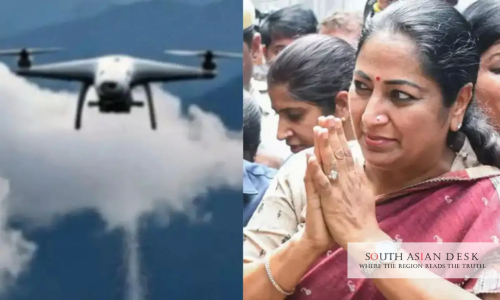
The Delhi cloud seeding trial took place over Burari, Mayur Vihar, and Karol Bagh on August 20, 2025. A single-propeller Cessna aircraft flew from Kanpur, releasing silver iodide and sodium chloride from 16 flares across two sorties at 12:15 pm and 3:55 pm. The goal was clear: trigger rain to wash away pollutants as winter smog loomed.
India Meteorological Department data showed moisture levels at just 10-15 per cent, far below the 50-60 per cent needed for success. No rain gauges recorded precipitation in Delhi proper. Trace amounts: 0.1 mm in Noida and 0.2 mm in Greater Noida appeared in model predictions from the Windy app, but experts dismissed these as unrelated to the seeding.
Delhi Environment Minister Manjinder Singh Sirsa defended the effort. “Delhi has taken an unprecedented, science-first step,” he said in a press statement. “Our focus is to assess how much rainfall can be triggered under Delhi’s real-life humidity conditions.” IIT Kanpur Director Manindra Agrawal added, “The moisture content was low. However, our team has collected data for better understanding.”
Artificial Rain Experiment Ineffective Delhi: Costs and Criticisms Mount
The artificial rain experiment in Delhi cost ₹1.9 crore for three sorties, part of a ₹3.21 crore budget approved by the Delhi Cabinet on May 7, 2025. Each trial runs about ₹64 lakh, covering aircraft operations and materials. The government signed a memorandum of understanding with IIT Kanpur in September 2024 for five initial tests, now expanded to nine or ten.
Pollution data offered mixed signals. Pre-seeding PM2.5 levels hit 221 micrograms per cubic metre in Mayur Vihar, 230 in Karol Bagh, and 229 in Burari. Post-first sortie, they dipped to 207, 206, and 203 respectively. PM10 levels fell from 207-209 to 163-177. IIT Kanpur’s report linked this to “denser moisture content created due to seeding particles” settling dust, despite negligible winds.
Opposition leaders pounced. Aam Aadmi Party’s Saurabh Bharadwaj quipped, “Will Lord Indra come down to clarify whether it is artificial rain or natural rain?” He accused the BJP-led government of timing the trial for publicity, noting IMD forecasts already predicted overcast skies without rain.
Experts echoed doubts. Ashwary Tiwari, an amateur meteorologist, criticised the reliance on Windy models. “It is a forecasting tool, not actual measurements from rain gauges,” he said. Shahzad Gani from IIT Delhi called cloud seeding “futile attempts.” “It can only work when rain-bearing clouds exist, rare during peak pollution weeks,” Gani stated. Globally, the technique lacks consensus, effective mainly for high-altitude snowpack, not urban warm-season rain.
Residents felt the pinch. Rajiv Kumar, a bakery owner in Burari, reported constant dust and throat irritation. “We sweep hourly, but vehicles kick it up again,” he said. Mitthun Kumar, a snack vendor nearby, added, “Pollution burns our lungs. This trial changed nothing.”
Why Delhi Cloud Seeding Trial Fails Matters for South Asia
Delhi’s air pollution crisis ripples across South Asia. The capital’s winter smog, worsened by stubble burning in Punjab and Haryana, drifts into Pakistan and Bangladesh, exacerbating respiratory illnesses region-wide. In 2024, Delhi’s AQI exceeded 400 for weeks, linking to 2 million premature deaths annually in India alone, per Lancet studies.
This cloud seeding no rain Delhi pollution episode highlights reliance on unproven tech amid stalled regional pacts like the India-Pakistan air quality dialogue. South Asian cities from Lahore to Kathmandu face similar haze, with economic losses topping USD 95 billion yearly. Failure here questions scalability for neighbours, pushing calls for stricter emission controls over experimental fixes.
Background: Delhi’s Long Fight Against Smog
Delhi has battled severe air pollution for decades. The 2024 winter saw AQI hit 500, prompting school closures and odd-even vehicle rules. Past efforts included water sprinkling and anti-smog towers, but none curbed root causes like vehicular emissions (40 per cent) and crop residue (30 per cent).
Cloud seeding dates back to 1957 in India, with IMD trials in Delhi showing inconclusive results. The current push stems from AAP proposals in 2023, deferred due to monsoons and permissions. The BJP government revived it post-2024 elections, tying it to the Graded Response Action Plan.
IMD forecasts for August 2025 predicted continued dry spells, with cirrus clouds unsuitable for seeding. “No rain-bearing systems expected,” an IMD bulletin noted on August 20.
What’s Next: More Trials Amid Doubts
Delhi plans 9-10 additional cloud seeding trials in coming weeks, weather permitting. Sirsa said, “We hope IIT Kanpur succeeds. If they do, we prepare a long-term plan until February.” Yet, IMD warns of fog and mist, not precipitation opportunities.
Critics urge focus on enforcement. “Reduce sources first,” Gani advised. Regional cooperation could intensify, with Punjab pledging zero stubble burning by 2026. For now, the Delhi cloud seeding trial fails to deliver, underscoring the urgency for proven strategies.
The artificial rain experiment ineffective Delhi leaves a ₹1.9 crore question mark, but data from these tests may yet inform future efforts against the unrelenting smog.
Published in SouthAsianDesk, October 29th, 2025
Follow SouthAsianDesk on X, Instagram, and Facebook for insights on business and current affairs from across South Asia.