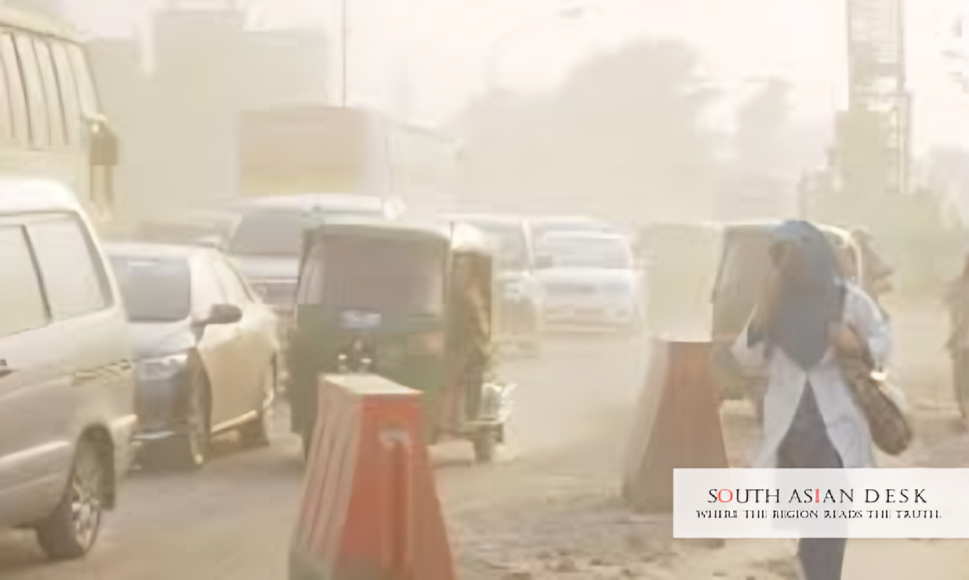
Dhaka air quality has plummeted to dangerous levels, with residents urged to limit exposure amid rising health concerns across South Asia.
Dhaka’s air quality reached a ‘very unhealthy’ Air Quality Index of 282 at 8:18 AM on Wednesday, 11 February 2026, placing the city second in global pollution rankings behind Delhi. This spike, driven by winter conditions and urban emissions, affects millions in the capital, where high particulate matter poses immediate respiratory risks.
Air pollution in Dhaka remains a persistent regional issue, mirroring challenges in neighbouring cities like Delhi and Kolkata. As South Asia’s urban centres grapple with similar seasonal deteriorations, Dhaka’s situation highlights the need for cross-border efforts to mitigate transboundary pollutants that exacerbate local air quality crises.
Current Dhaka AQI and Pollution Levels
Data from IQAir shows Dhaka AQI at 282, classified as ‘very unhealthy’ under the scale where 201-300 indicates serious health threats. This reading stems from elevated concentrations of key pollutants, including PM2.5 at around 198.5 µg/m³, far exceeding the World Health Organization’s annual guideline of 5 µg/m³ by nearly 40 times.
The Department of Environment’s National Air Quality Management Plan 2024-2030 reports annual average PM2.5 in Dhaka at 90-100 µg/m³, with population-weighted exposure in the Greater Dhaka Area at 84 µg/m³ in 2020. These figures align with IQAir’s historical data, where Dhaka’s 2019 annual PM2.5 averaged 83.3 µg/m³, peaking at 181.8 µg/m³ in January.
Dhaka pollution ranking on 11 February placed it second globally, after Delhi’s 326, followed by Kolkata at 193 and Karachi at 176. This positions Dhaka among the top 10 most polluted cities worldwide, a status it has held intermittently due to industrial and vehicular growth.
Causes of Air Pollution in Dhaka
Air pollution in Dhaka arises from multiple sources, as outlined in official government assessments. The National Air Quality Management Plan identifies households as the largest contributor at 28%, primarily from biomass cookstoves used by over 74% of the population for cooking. Power plants account for 24%, emitting sulphur dioxide and nitrogen oxides from high-sulphur fuel oil.
Brick kilns contribute 13%, operating seasonally and releasing particulate matter during the dry months from November to March, when Dhaka air quality typically worsens by 2-3 times the annual average. Open burning of municipal solid waste adds 11%, with 11% of population-weighted PM2.5 in Dhaka linked to this practice. Road dust and transport exhaust make up 8% and 4%, respectively, with heavy-duty diesel vehicles a key factor.
Transboundary pollution plays a role, with over 20% of ambient PM2.5 in Dhaka originating from neighbouring countries via westerly winds. Agriculture residue burning and ammonia from fertilizers form secondary particles, further degrading Dhaka AQI.
The plan notes that 65% of PM2.5 is primary emissions, while 35% forms secondarily from reactions involving sulphur dioxide, nitrogen oxides, and ammonia. In winter, stagnant air traps these pollutants, pushing Dhaka pollution ranking higher globally.
Health Impacts of Declining Dhaka Air Quality
Exposure to poor Dhaka air quality leads to severe health consequences, as per World Health Organization estimates cited in government documents. Air pollution causes about 7 million deaths worldwide annually, mainly from stroke, heart disease, chronic obstructive pulmonary disease, lung cancer, and acute respiratory infections.
In Bangladesh, the National Air Quality Management Plan states that air pollution resulted in 159,000 premature deaths and 2.5 billion days lived with illness in 2019. Household air pollution from solid fuels alone caused 69,000 deaths that year. The economic cost equates to 8.3% of GDP, reflecting lost productivity and healthcare burdens.
For Dhaka residents, ‘very unhealthy’ AQI levels mean increased risks for sensitive groups, including children, the elderly, and those with pre-existing conditions. IQAir recommends avoiding outdoor exercise, closing windows, wearing masks, and using air purifiers. Prolonged exposure can lead to premature births, low birth weights, and exacerbated respiratory issues.
Studies in the plan highlight that factories with air purifiers saw a 37% reduction in indoor PM2.5, from 68 µg/m³ to 25 µg/m³, boosting worker productivity by 27%. This underscores the direct link between air pollution in Dhaka and public health.
Background on Dhaka Pollution Trends
Dhaka has faced chronic air quality issues for decades, with PM2.5 levels 10-20 times above WHO guidelines across the country. The Department of Environment operates 16 continuous air monitoring stations, revealing higher pollution in western Bangladesh and around Dhaka.
Historical data from IQAir indicates Dhaka’s cleanest month as August at 31.3 µg/m³, contrasting with winter highs. The COVID-19 lockdown in 2020 reduced PM2.5 by 12.7% compared to 2018 in Dhaka, demonstrating the potential impact of emission controls.
Rapid urbanisation, with over 1.1 million motorcycles and 753,000 four-wheel vehicles in Dhaka by 2023, has intensified the problem. Uncollected waste, at 55% in urban areas, fuels open burning, releasing toxins that worsen Dhaka pollution ranking.
What’s Next for Improving Dhaka Air Quality
The government has outlined ambitious measures in the National Air Quality Management Plan 2024-2030 to address air pollution in Dhaka. Targets include reducing annual population-weighted PM2.5 by 30 µg/m³ in the Greater Dhaka Area and increasing good or moderate AQI days nationwide.
Key actions encompass enforcing stricter emission standards for power plants, promoting low-sulphur fuels, and transitioning to renewables. For industries, continuous emissions monitoring will be mandatory by 2030. Transport reforms involve upgrading to Euro 6 fuel quality, phasing out high-emission vehicles, and expanding metro rail lines.
A national clean cooking programme aims to shift 15 million households to LPG, electric, or solar stoves by 2030. Waste management will focus on reducing open burning through centralised collection and recycling. Fiscal tools, such as carbon taxes and incentives for electric vehicles, will support these efforts.
The plan projects an 8.8 benefit-cost ratio nationwide, emphasising health and productivity gains. Implementation includes expanding monitoring networks and public awareness campaigns to track Dhaka AQI improvements.
Efforts to enhance Dhaka air quality must continue, as forecasts from IQAir suggest gradual declines to 130-136 in coming days, but sustained action is essential to prevent future spikes.
Published in SouthAsianDesk, February 11th, 2026
Follow SouthAsianDesk on X, Instagram and Facebook for insights on business and current affairs from across South Asia.