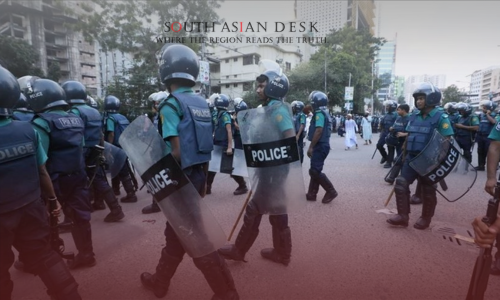
Dhaka Crackdown: The streets of Bangla’s capital, once alive with the fervent cries of students and citizens, now bear the weight of a sweeping crackdown. In the aftermath of the July-August 2024 Bangladesh uprising, authorities have arrested 5,079 individuals across the capital by August 5, 2025, in connection with violent clashes, killings, and attacks during the movement that toppled the Awami League government. The arrests, spanning 707 cases filed across 50 police stations, reflect a nation grappling with the scars of a turbulent chapter.
Post-Hasina Devastation
The uprising, a powerful surge of public dissent, forced the resignation and flight of former Prime Minister Sheikh Hasina. It left behind a trail of devastation, with approximately 1,400 lives lost and thousands injured, many at the hands of law enforcement and supporters of the ousted regime. The arrests include prominent figures, former ministers, lawmakers, and senior police officials, all accused of orchestrating or enabling the violence that shook the nation.
Among those detained are former Law Minister Anisul Huq, former private industry adviser Salman F Rahman, and former ministers Amir Hossain Amu and Dipu Moni. The crackdown also swept up two former Inspectors General of Police, Mohammad Shahidul Haque and Chowdhury Abdullah Al-Mamun, alongside 21 other serving and former police officials. These arrests signal a resolute push for accountability, as the nation seeks justice for the lives lost and the wounds inflicted during the unrest.
Cases Filed Details in Dhaka Crackdown
The cases, primarily charging murder, attempted murder, and abuse of power, are under active investigation, with authorities sifting through evidence to build a path toward justice. The scale of the arrests underscores the depth of public anger and the demand for reckoning after a movement that reshaped Bangladesh’s political landscape. Yet, the sheer volume of detentions raises questions about the capacity of the judicial system to ensure fair trials and due process for all.
For the families of the victims, the arrests offer a glimmer of hope, a step toward healing in a nation still reeling from the violence. The uprising, born from the courage of students and ordinary citizens, has left an indelible mark on Bangladesh, a reminder of the power of collective will and the heavy price it can exact. As Dhaka moves forward, the pursuit of justice remains a beacon for those who dream of a future free from oppression, united in the spirit of the Bangladesh uprising.
Published in SouthAsianDesk, August 9th, 2025
Follow SouthAsianDesk on X, Instagram, and Facebook for insights on business and current affairs from across South Asia.