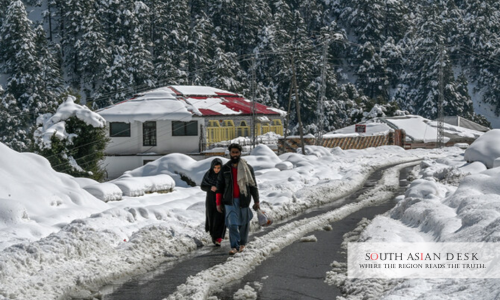
Early snowfall in Gilgit-Baltistan blanketed on Saturday, October 4, 2025, when three inches fell at Khunjerab Top. The event affected areas above 12,000 feet, including Babusar Top, amid a western disturbance. Officials from the Pakistan Meteorological Department forecast continued snow until October 7. Lower regions saw scattered rain. This marks the season’s first precipitation, offering relief from prolonged dry spells.
The early snowfall in Gilgit-Baltistan holds significance across South Asia. The region serves as Pakistan’s water tower, feeding the Indus River that irrigates 70% of the nation’s agriculture and generates 40% of its hydropower. Stable snow accumulation could mitigate flood risks and bolster food security for over 200 million people in downstream areas, including India and beyond, amid escalating climate volatility.
Impacts of Early Snowfall in Gilgit-Baltistan on Local Communities
Residents in Gilgit-Baltistan welcomed the early snowfall as temperatures plunged below freezing in upper zones. The precipitation disrupted daily life but provided a vital moisture boost to pastures and forests strained by summer heatwaves. In Diamer and Astore districts, farmers noted improved prospects for winter fodder crops, which had suffered from delayed rains in prior years.
The northern Pakistan early snow impact extended to travel. Tourist police closed Babusar Road at night due to icy conditions, stranding vehicles bound for Khyber Pakhtunkhwa. Similarly, Khunjerab Pass, the gateway to China, faced partial closures, delaying cargo trucks. Over 500 tourists visited Naran valley that weekend, capturing photos of fresh snow before advisories urged caution.
Khadim Hussain, Director of the Gilgit-Baltistan Environmental Protection Agency, described the event as a “welcome deviation.” He stated: “Climate change has severely affected the fragile ecosystem of Gilgit-Baltistan, home to over 8,000 glaciers and 30,000 glacial lakes.” Hussain emphasised unplanned development’s role in exacerbating vulnerabilities, including rapid tourism growth in green-belt areas.
Data from the National Disaster Management Authority projects light, patchy snow in Gilgit-Baltistan through October, linked to weak La Niña conditions and emerging western disturbances. This contrasts with the past decade’s trend, where snowfall often arrived in late December or March, leading to unstable ice layers prone to rapid melt.
Northern Pakistan Early Snow Impact on Tourism and Infrastructure
The early snowfall in Gilgit-Baltistan triggered immediate northern Pakistan early snow impact on key routes. Babusar Top, a vital link between Gilgit-Baltistan and Mansehra, received light snow, prompting night-time bans on heavy vehicles. The Pakistan Meteorological Department warned of potential landslides in vulnerable hilly areas of Gilgit-Baltistan and upper Khyber Pakhtunkhwa.
Tourism operators reported mixed effects. Hotels in Hunza valley filled to 80% capacity as visitors flocked to witness the rare October snow. One guide in Skardu said bookings surged by 30% overnight. However, flight delays at Gilgit airport affected 200 passengers on October 5, with fog reducing visibility to 500 metres.
Infrastructure held firm, but officials monitored the Karakoram Highway closely. The road, which carries PKR 1.2 billion in annual trade with China, saw minor slips near Attabad Lake. Engineers deployed 50 personnel for clearing operations, using salt and gravel to maintain access.
The Pakistan Meteorological Department issued a tourist forecast on October 3, predicting rain and snowfall in Gilgit from October 4 to 6. “Public, travellers and tourists are advised to avoid unusual exposure to vulnerable areas,” the department noted in its update.
Climate Concerns and the Broader Northern Pakistan Early Snow Impact
Gilgit-Baltistan’s ecosystem faces acute threats from shifting weather. Recent summers brought extreme heat, with Chilas hitting 48.5°C in July 2025, the highest since 1997. Such spikes accelerated glacier retreat, triggering over 50 deaths from flash floods and glacial lake outburst floods last year alone. Damages exceeded PKR 50 billion, wiping out agricultural land and homes.
The early snowfall offers a counterbalance. Experts predict it will compact into stable ice, reducing meltwater surges in spring 2026. The National Disaster Management Authority highlights reduced snow cover’s role in exposing glaciers to warmth, heightening GLOF risks. Northern areas like Astore and Nagar remain on medium alert for slope failures, given moist soils from recent monsoons.
Across northern Pakistan, the early snow impact influences hydropower. Tarbela and Mangla dams, reliant on Indus inflows, stand at 75% capacity post-monsoon. Early accumulation could add 10% to winter generation, averting shortages that cost the economy PKR 300 billion annually.
Local councils in Ghanche district initiated community drills on October 5, training 300 residents in avalanche response. “This snow reminds us of our dependence on these peaks,” said a village elder in Shigar.
Background: A History of Delayed Winters in Gilgit-Baltistan
Gilgit-Baltistan has endured erratic winters for over a decade. Satellite data shows average snowfall onset shifted by 20 days since 2010, correlating with a 1.2°C regional temperature rise. This delay disrupted pastoral economies, forcing herders to import hay at PKR 20 per kilogram.
Past events underscore the stakes. In 2022, absent early snow led to a 15% drop in spring river flows, slashing wheat yields by 8% in Punjab. The 2025 monsoon replenished reservoirs, but experts warn of recurring deficits without consistent precipitation.
The region’s 8,000 glaciers store 10% of the world’s ice outside polar caps, making early snowfall in Gilgit-Baltistan a bellwether for Himalayan health. Initiatives like the GB government’s glacier monitoring programme, launched in 2023, track melt rates using 50 automated stations.
What’s Next: Forecasts for Continued Early Snowfall in Gilgit-Baltistan
The Pakistan Meteorological Department anticipates widespread rain-thunderstorms in Gilgit-Baltistan until October 7, with isolated heavy falls and hail. High mountains face ongoing snowfall risks, potentially adding two inches by mid-week. Daytime temperatures will hover at 5°C, nights at -2°C.
Longer-term, the National Disaster Management Authority projects slightly below-average snow for October-December, urging enhanced monitoring for landslides in Diamer and Ghizer. Tourism boards plan virtual tours to sustain visitor interest without overloading routes.
As patterns stabilise, this early snowfall in Gilgit-Baltistan could signal adaptive resilience, fostering sustainable growth in northern Pakistan’s fragile highlands.
Published in SouthAsianDesk, October 5th, 2025
Follow SouthAsianDesk on X, Instagram, and Facebook for insights on business and current affairs from across South Asia.