A powerful 6.3-magnitude earthquake in Northern Afghanistan on Monday, 3 November 2025, at 0059 local time, killing at least 20 people and injuring 320 others near Mazar-i-Sharif in the Hindu Kush region, officials said. The quake, centred 22km west-southwest of the city at a depth of 28km, prompted urgent rescue operations amid fears of a rising toll.
This earthquake Northern Afghanistan November 2025 exacerbates Afghanistan’s chronic vulnerabilities, straining Taliban governance and international aid networks in a nation reeling from poverty, displacement, and prior disasters. For South Asia, it underscores shared seismic threats along the India-Eurasia plate boundary, potential refugee surges into Pakistan and India, and the need for regional cooperation on disaster resilience, as tremors ripple across borders.
Mazar-i-Sharif Quake Casualties 2025
The earthquake Northern Afghanistan November 2025 centred on Balkh province, home to Mazar-i-Sharif, Afghanistan’s fourth-largest city with 523,000 residents. Initial reports from the Taliban Ministry of Public Health tallied seven deaths and 150 injuries, but by midday Monday, spokesman Sharafat Zaman updated the figures to 20 fatalities and 320 wounded across Balkh and neighbouring Samangan province.
Zaman emphasised the preliminary nature of the data during a briefing. “More than 20 people were killed and around 320 were injured in the provinces of Balkh and Samangan,” he said. “This is a preliminary toll.” Breakdowns indicate four deaths in Balkh, per health department spokesman Kamal Khan Zadran, and five in Samangan, according to National Disaster Management Authority (NDMA) spokesman Mohammadullah Hamad, who noted 143 injuries there alone.
Residents described chaos as the ground heaved. Videos from Mazar-i-Sharif captured families fleeing modest homes into streets, where aftershocks rattled nerves. The United States Geological Survey (USGS) issued an orange alert via its Prompt Assessment of Global Earthquakes for Rapid Response (PAGER) system, estimating significant casualties and widespread disruption, often necessitating national-level intervention.
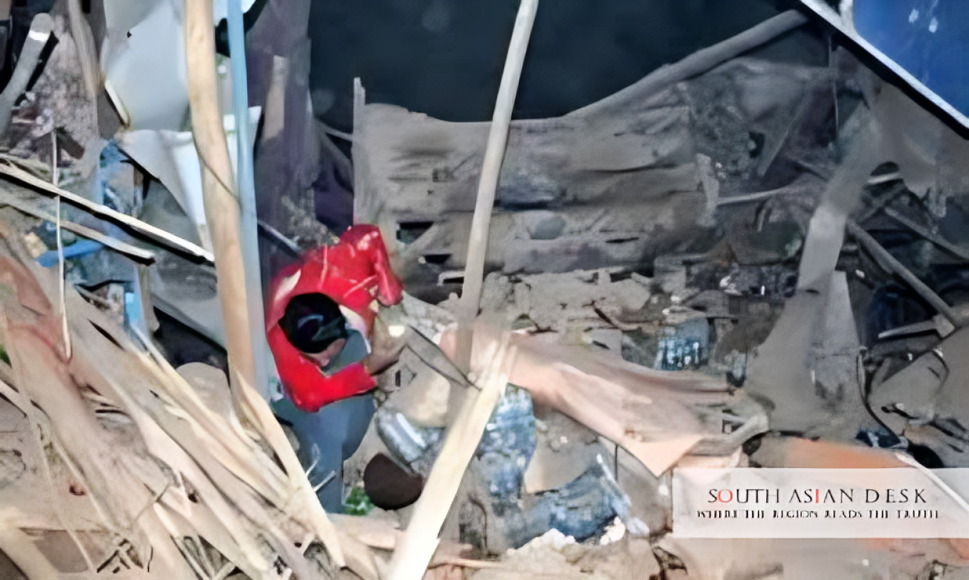
In Samangan, remote villages faced compounded risks from poor roads and shoddy construction. Hamad told reporters that rescue teams struggled with access, pulling survivors from collapsed structures. Social media footage, unverified but circulated widely, showed rescuers sifting rubble for trapped individuals, with cries echoing amid dust clouds.
Afghanistan Earthquake Death Toll Update
Authorities anticipate the Afghanistan earthquake death toll update will climb as assessments continue. By 1200 local time on Monday, the Ministry of Public Health reported all injured receiving care at facilities in Mazar-i-Sharif and provincial hospitals. NDMA’s Hamad warned of potential increases, citing shallow quake depth amplifying surface damage.
The toll reflects a rapid escalation from dawn reports. Early Monday, Balkh officials logged four deaths, including two children crushed in a home collapse. Samangan added five more, with 72 patients overwhelming Kunduz hospitals nearby. Zaman’s midday statement consolidated these into 20 confirmed fatalities, urging calm as teams deployed.
International monitors echoed concerns. The International Federation of Red Cross and Red Crescent Societies (IFRC) Secretary General Jagan Chapagain posted on X that “many casualties and widespread damage are feared.” He noted Afghan Red Crescent Society (ARCS) medical teams had reached sites, with IFRC poised to assist. “Our thoughts are with all those affected,” Chapagain added.
QLARM, an open-source loss estimation tool, projected 50 to 1,000 fatalities and 300 to 3,200 injuries based on the 6.4-magnitude reading (European-Mediterranean Seismological Centre variant). Such models highlight Afghanistan’s exposure, where 12 quakes exceeding magnitude 7.0 have struck the northeast since 1900.
Damage and Immediate Response for Earthquake In Northern Afghanistan
Infrastructure bore the quake’s brunt. In Mazar-i-Sharif, the iconic 15th-century Blue Mosque, Hazrat-i-Ali shrine, a UNESCO tentative list site suffered partial collapse. Balkh province spokesman Haji Zaid confirmed debris from one minaret scattered across grounds. “The earthquake destroyed part of the holy shrine,” Zaid said, as pilgrims and locals mourned the cultural loss.
Power outages hit nine provinces after lines from Uzbekistan severed, per defence ministry reports. Taliban military units arrived swiftly in Balkh and Samangan, ferrying wounded and distributing tents. ARCS volunteers joined, providing first aid and body recovery, as seen in handout images of medics amid wreckage.
The response tests Taliban capabilities three years post-takeover. Defence ministry teams coordinated with NDMA, airlifting supplies to isolated areas. Yet, rugged terrain and fuel shortages slowed efforts, echoing critiques of limited equipment.
Tremors reached Kabul, 420km south, and neighbours Tajikistan and Uzbekistan, but no cross-border casualties emerged. Pakistan’s meteorology department monitored for aftershocks, given proximity.
Background: A Seismic Hotspot in Crisis
Afghanistan’s location astride colliding tectonic plates fuels frequent quakes. The Hindu Kush marks the India-Eurasia boundary, spawning shallow events that devastate mud-brick homes prevalent in rural north.
This marks the third major tremor in 2025. On 31 August, a 6.0-magnitude quake in eastern Paktika killed over 2,200 and injured thousands, displacing 80,000. October’s aftershocks in Herat added to woes from 2023’s 6.3 event there, which claimed 1,500 lives.
Such disasters compound a humanitarian emergency. Over 24 million Afghans need aid amid drought, Taliban restrictions on women, and 1.3 million returnees from Pakistan since September 2023. Foreign aid, frozen post-2021, trickles via UN channels, leaving response gaps.
Earthquakes since Taliban rule have killed hundreds, destroying 100,000 homes. The 2022 Nangarhar 6.2 quake felled 1,000 structures, exposing building code lapses. Experts urge retrofitting, but funds lag.
In South Asia, parallels abound: Pakistan’s 2005 Kashmir quake (87,000 dead) and India’s 2015 Nepal event (9,000 dead) highlight regional perils. Enhanced early warning via USGS-India pacts could mitigate future risks.
What’s Next
Rescue operations persist through Monday evening, with NDMA promising a full damage survey by Tuesday. Aid appeals loom, as IFRC eyes scaling ARCS support with tents, food, and medical kits. Taliban officials plan provincial briefings, while UN agencies assess long-term shelter needs.
International donors, including Pakistan and India, may mobilise relief, building on August’s joint efforts. Aftershock forecasts predict minor tremors, urging vigilance. Reconstruction bids, focused on quake-resistant designs, face funding hurdles in sanctions-hit Afghanistan.
The earthquake Northern Afghanistan November 2025 serves as stark reminder: without bolstered resilience, seismic threats will exact heavier tolls in this fragile corner of South Asia.
Published in SouthAsianDesk, November 3rd, 2025
Follow SouthAsianDesk on X, Instagram, and Facebook for insights on business and current affairs from across South Asia.