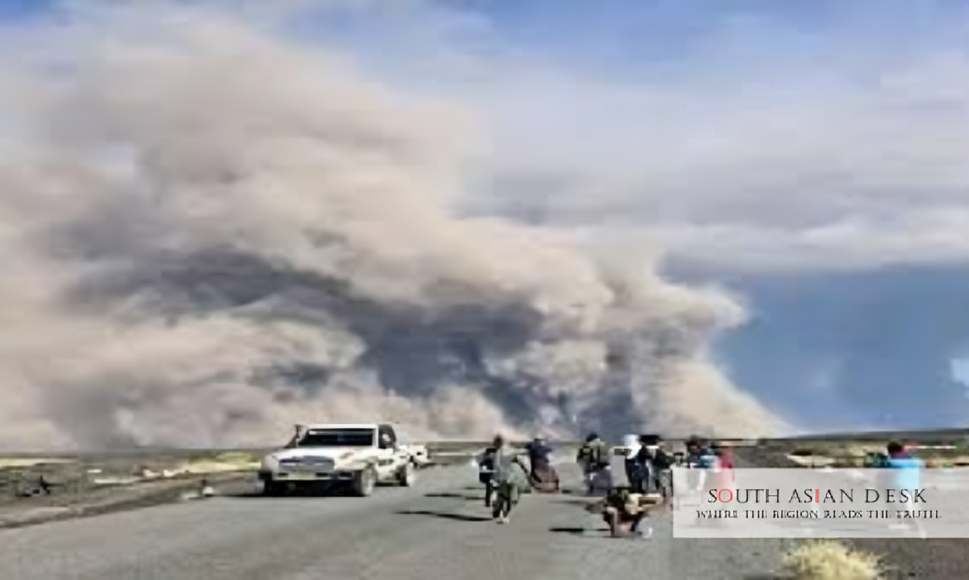
Ethiopia volcano eruption at ‘s Hayli Gubbi has led to widespread flight cancellations across Indian airlines, including Air India and Akasa Air, as ash clouds drift into the subcontinent, prompting safety advisories from aviation authorities on Tuesday.
The eruption’s ash plume, reaching Delhi and northern India, disrupts regional air travel at a time of high demand, affecting passengers and economies reliant on swift connectivity across South Asia, including routes to the Middle East and beyond.
Eruption Triggers Regional Aviation Alerts
The Hayli Gubbi volcano in Ethiopia erupted on Sunday, marking the first such event in recorded history. Ash plumes rose to 14 kilometres high, creating a hazard for aircraft engines and visibility. By Monday night, the Hayli Gubbi ash cloud Delhi had formed, entering Indian airspace from the west. This movement followed a path across Yemen and Oman, as tracked by aviation monitoring services.
On Tuesday morning, the ash covered parts of Pakistan and northern India. The India Meteorological Department noted the cloud’s influence over Gujarat, Delhi-NCR, Rajasthan, Punjab, and Haryana. Forecast models predicted the plume would drift towards China later that day. This Ethiopia volcano eruption flight disruptions India scenario unfolded rapidly, catching airlines off guard despite global monitoring.
Aviation bodies responded swiftly. The Directorate General of Civil Aviation issued guidelines for carriers. Pilots received instructions to reroute flights and adjust fuel loads. These measures aimed to prevent engine damage from ash ingestion, a known risk in volcanic events.
Airlines Grapple with Cancellations
Indian carriers faced immediate operational challenges. Air India reported multiple cancellations since Monday. The airline prioritised passenger safety amid the unfolding crisis.
Air India Akasa Flight Cancellations Volcanic Ash
Air India cancelled at least 11 flights over two days. On Tuesday, four domestic routes were affected. These included AI 2822 from Chennai to Mumbai, AI 2466 from Hyderabad to Delhi, and the round-trip AI 2444 and AI 2445 between Mumbai and Hyderabad. Another pair, AI 2471 and AI 2472, linked Mumbai and Kolkata.
Monday saw seven international flights grounded. Among them were AI 106 from Newark to Delhi and AI 102 from New York (JFK) to Delhi. Other impacted services were AI 2204 from Dubai to Hyderabad and AI 2290 from Doha to Mumbai. Air India conducted precautionary inspections on aircraft that traversed ash-affected zones. Engineers checked for residue on fuselages and engines.
Akasa Air also suspended operations to Middle East hubs. Flights to Jeddah, Kuwait, and Abu Dhabi were cancelled during this period. The airline cited volcanic ash risks as the primary concern. Passengers faced delays in rescheduling, with options for refunds or rerouting offered. These Air India Akasa flight cancellations volcanic ash incidents highlighted vulnerabilities in long-haul routes. Many flights to Europe and the US connect through Middle Eastern stops, amplifying the ripple effects.
Responses from Other Carriers
IndiGo monitored the situation closely from Monday evening. The airline coordinated with international bodies to track ash movement. Teams ensured compliance with safety protocols. No IndiGo flights were reported cancelled due to the ash, but vigilance remained high. Passengers received assurances of round-the-clock updates.
SpiceJet issued a similar statement. The carrier noted potential impacts on flights over the Arabian Peninsula. Operations to Dubai were under review. Customers were directed to the airline’s website for status checks. Safety teams liaised with authorities to map safe corridors. Collectively, these responses underscored a unified approach. Airlines emphasised preparedness to maintain reliability. The focus stayed on minimising disruptions for travellers.
Regulatory and Weather Guidance Shapes Operations
The DGCA advisory Ethiopia volcano provided clear directives. Airlines must avoid designated ash zones and flight levels. Crews were to incorporate the latest plume data into plans. This included extra fuel for detours and altitude changes. The India Meteorological Department offered real-time forecasts. On Tuesday, it confirmed the ash’s path away from India by 7.30 pm. Models showed the cloud shifting eastwards. This timeline aided in restoring normalcy.
Such advisories are standard in volcanic scenarios. They draw from global standards set by bodies like the International Civil Aviation Organisation. In this case, the DGCA advisory Ethiopia volcano ensured no risks were taken with passenger lives. Northern Indian airports felt the brunt. Delhi’s Indira Gandhi International saw delays in arrivals and departures. Ground crews prepared for potential visibility issues, though no major incidents occurred.
Passenger Impacts and Support Measures
Travellers across routes experienced uncertainty. Families en route to holidays or business meetings found alternatives scarce. Refunds processed quickly for many, but rebookings strained capacity.
Airlines extended support through helplines and apps. Air India offered vouchers for future travel. Akasa Air prioritised vulnerable passengers, such as those with medical needs. The Hayli Gubbi ash cloud Delhi directly affected capital-bound flights. Early morning services from southern cities faced scrutiny. By midday, some routes resumed under cleared paths.
Broader South Asian connectivity suffered. Pakistan’s airspace saw similar alerts, though details remained limited. Cross-border flights adjusted accordingly. This event recalled past disruptions, like the 2010 Eyjafjallajokull ash in Europe. Lessons from those informed current strategies, emphasising early detection.
Operational Challenges in Detail
Flight planning grew complex. Dispatchers consulted satellite imagery hourly. Routes skirting the plume added time and cost. Fuel surcharges loomed for affected tickets. Maintenance crews worked overtime. Post-flight washes removed fine ash particles. Sensors detected no major damage yet.
The eruption’s scale surprised experts. A dormant site awakening posed unique risks. Monitoring stations in the Horn of Africa ramped up observations. In India, the timing coincided with winter travel peaks. Festive returns amplified the stakes. Authorities urged calm, promising swift resolutions.
Background
The Hayli Gubbi volcano, located in Ethiopia, had lain dormant until this eruption on Sunday. It produced ash plumes reaching 14 km, unprecedented in records for the site. The cloud’s trajectory brought it into South Asian airspace via western approaches, first noted in Delhi on Monday night.
What’s Next
As the ash cloud disperses towards China by evening, the Ethiopia volcano eruption flight disruptions India should ease, allowing airlines to resume full schedules and reduce ongoing precautions.
Published in SouthAsianDesk, November 25th, 2025
Follow SouthAsianDesk on X, Instagram, and Facebook for insights on business and current affairs from across South Asia.