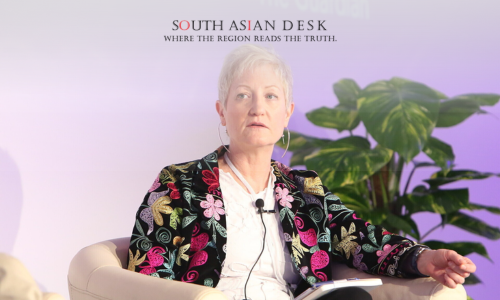
Pakistan must make tangible progress on human rights and labour reforms to meet EU trade obligations, says Ambassador Riina Kionka. European Union Ambassador to Pakistan, Dr. Riina Kionka, on Monday, August 25, 2025, urged Pakistan to demonstrate credible progress in implementing human rights and labor reforms to maintain its trade privileges under the EU’s Generalized Scheme of Preferences Plus (GSP+). Speaking at a press conference in Islamabad, she highlighted the need for active compliance with 27 international conventions. The call comes as Pakistan faces scrutiny over its human rights record and labour standards.
Why This Matters in South Asia
Pakistan’s GSP+ status, which grants duty-free access to EU markets, is critical for its economy, particularly the textile sector, which accounts for over 60% of its exports. Failure to meet EU standards could jeopard impact trade relations, affecting millions of livelihoods in South Asia’s second-largest economy. The EU’s emphasis on reforms also signals a broader push for sustainable development in the region, where labour rights remain a contentious issue.
European Union Ambassador Riina Kionka’s Stance on Human Rights Compliance
Ambassador Kionka stressed that Pakistan must uphold commitments under international conventions covering human rights, including freedom of expression and minority rights. The EU monitors compliance through regular assessments, with the next review scheduled for 2026. “Progress is measured not by promises but by tangible actions,” Kionka said, according to a statement from the EU Delegation to Pakistan.
Pakistan has faced criticism for its handling of minority rights and media freedoms. A 2024 report by Human Rights Watch noted ongoing challenges, including restrictions on press freedom and discrimination against religious minorities. Kionka urged the government to address these issues to strengthen its global standing.
Labour Standards and GSP+ Obligations
The EU’s GSP+ scheme requires adherence to labour conventions, including those on child labour, forced labour, and workplace safety. Kionka highlighted that Pakistan’s textile industry, a key beneficiary of GSP+, must improve working conditions. “Credible reforms in labour standards are non-negotiable for continued trade benefits,” she stated.
Data from the International Labour Organization indicates that Pakistan has made strides in reducing child labour, with the percentage of children aged five to 17 in employment dropping from 13% in 2010 to 10% in 2023. However, enforcement remains inconsistent, particularly in informal sectors.
Pakistan’s Response to EU Demands
The Pakistani government has acknowledged the need for reforms. In a statement on Monday, August 25, 2025, the Ministry of Commerce reaffirmed its commitment to meeting GSP+ requirements. “We are working closely with international partners to ensure compliance.” However, critics argue that progress has been slow, with bureaucratic hurdles and a lack of political will hampering implementation.
The EU’s call for reforms aligns with broader economic challenges in Pakistan. With a $7 billion IMF loan programme in place, the government is under pressure to implement structural changes across sectors, including agriculture and energy, as noted in a Dawn report on Tuesday, August 19, 2025.
Challenges and Opportunities
Pakistan’s ability to meet EU standards hinges on addressing systemic issues. Corruption and weak governance have long undermined reform efforts, according to Transparency International’s 2024 Corruption Perceptions Index, which ranks Pakistan 133 out of 180 countries. Strengthening institutional frameworks will be critical to achieving compliance.
On the other hand, successful reforms could enhance Pakistan’s global trade position. The EU remains one of Pakistan’s largest trading partners, with bilateral trade valued at €12.2 billion in 2024, per EU trade data. Continued access to GSP+ could boost economic growth and create jobs, particularly in rural areas.
Background
Pakistan has held GSP+ status since 2014, benefiting from preferential trade access to the EU. The scheme requires compliance with 27 international conventions, including eight on human rights, eight on labour rights, seven on environmental protection, and four on governance. The EU conducts biennial reviews to assess progress, with Pakistan’s last review in 2024 raising concerns about labour law enforcement and judicial independence.
What’s Next
The EU is expected to engage with Pakistani authorities in early 2026 to evaluate progress on human rights and labour reforms. Failure to demonstrate credible advancements could jeopardize EU-Pakistan trade relations, potentially leading to a suspension of GSP+ benefits. Ambassador Kionka’s call underscores the urgency for Pakistan to act swiftly to meet its international commitments.
Published in SouthAsianDesk, August 26th, 2025
Follow SouthAsianDesk on X, Instagram, and Facebook for insights on business and current affairs from across South Asia.