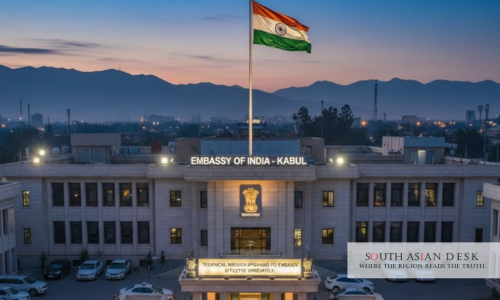
India will resume full embassy operations in Kabul soon, upgrading its technical mission established in 2022. External Affairs Minister S Jaishankar announced the move during talks with Taliban Foreign Minister Amir Khan Muttaqi in New Delhi on 10 October 2025. The upgrade follows reviews of staffing and security, aiming to enhance bilateral engagement.
Why This Matters in South Asia
India to resume full embassy operations in Kabul soon represents a pragmatic shift in New Delhi’s approach to post-2021 Afghanistan. The Taliban seized power in August 2021, prompting India to withdraw its full diplomatic staff for security reasons. Since then, India has provided over USD 125 million in humanitarian aid, including food, medicines, and winter supplies, while maintaining a technical team for limited functions. This reopening signals India’s recognition of the Taliban as a de facto authority, prioritising connectivity, trade, and counter-terrorism cooperation.
In South Asia, the move could counterbalance Pakistan’s influence in Kabul. Islamabad has deepened ties with the Taliban, hosting training and sheltering groups like the Tehrik-i-Taliban Pakistan (TTP). Analysts note that a robust Indian embassy may pressure Afghanistan to curb cross-border militancy affecting India, such as attacks by Pakistan-based Lashkar-e-Taiba. Enhanced India-Afghanistan links could stabilise trade routes like the Chabahar port project, benefiting landlocked Afghanistan and reducing reliance on Pakistani corridors. However, it risks escalating India-Pakistan tensions, as Islamabad views Indian presence in Kabul as encirclement. Overall, this diplomatic thaw fosters regional stability but demands careful navigation of proxy rivalries.
India Full Embassy Reopening in Kabul Under Taliban
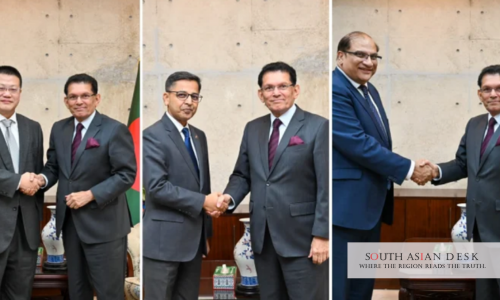
The announcement came amid Muttaqi’s landmark visit to India from 9 to 16 October 2025, the first by a senior Taliban official since 2021. During bilateral talks, Jaishankar confirmed the upgrade, stating, “India remains committed to a peaceful, inclusive, and sovereign Afghanistan.” The joint statement emphasised mutual interests in development, economic cooperation, and security.
Ministry of External Affairs (MEA) spokesperson Randhir Jaiswal elaborated in a 16 October 2025 briefing: “The technical mission in Kabul, operational since June 2022, will transition to a full embassy in the coming days. Functions, responsibilities, capacity, and staffing are under final review.” This follows India’s January 2025 aid shipment of 1,000 metric tonnes of wheat, underscoring sustained support despite non-recognition of the Taliban government.
Security assessments remain central. The embassy compound, damaged in past attacks like the 2018 rocket incident, will incorporate enhanced protocols. India coordinates with Afghan authorities for protection, drawing on intelligence shared via the technical team. The reopening aligns with broader India-Afghanistan diplomatic ties upgrade 2025, including virtual summits and trade delegations.
Timeline of Key Developments
- August 2021: India evacuates embassy staff post-Taliban takeover.
- June 2022: Technical team deploys for humanitarian coordination.
- January 2025: USD 10 million aid package announced.
- 10 October 2025: Jaishankar-Muttaqi meeting confirms upgrade.
- November 2025: Full operations expected post-review.
This sequence reflects gradual escalation from aid to diplomacy.
India-Afghanistan Diplomatic Ties Upgrade 2025
The 2025 upgrade builds on incremental steps. In a 7 November 2025 MEA briefing, Jaiswal noted: “We have upgraded our mission to embassy level. Regular operations will resume upon completing internal assessments.” The joint statement from the October talks outlined priorities: restoring air links, resuming scholarships for Afghan students, and joint ventures in agriculture and mining.
Trade volumes, stagnant at USD 1.5 billion pre-2021, could rebound. India pledges USD 50 million for infrastructure, including the Salma Dam rehabilitation. Cultural exchanges, halted since 2021, will restart with Bollywood film festivals in Kabul. On counter-terrorism, both sides agreed to dismantle safe havens for groups targeting India, per the statement.
Afghan officials reciprocate. Muttaqi, in a post-visit briefing, affirmed: “India’s partnership aids our sovereignty and development.” This mutual commitment counters Western isolation of the Taliban, positioning India as a key Asian stakeholder.
Challenges persist. Human rights concerns, particularly women’s education bans, drew muted Indian criticism during talks. New Delhi prioritises pragmatism, avoiding public confrontation to secure gains.
Impact of India Kabul Embassy on Pakistan Security
India full embassy reopening in Kabul Taliban context heightens scrutiny on trilateral dynamics. Pakistan fears Indian influence could embolden anti-Pakhtun factions or TTP, which launched 1,500 attacks in 2024 alone. Islamabad’s Durand Line tensions with Kabul, including 2025 border clashes, may intensify if Afghanistan leans towards India.
Strategic analysts highlight dual edges. A stronger Indian presence might stabilise Afghanistan, reducing refugee flows to Pakistan (over 600,000 since 2021). Yet, it challenges Rawalpindi’s “strategic depth” doctrine, viewing Kabul as a buffer. Recent Pakistani strikes on Afghan soil, killing 80 civilians in September 2025, underscore volatility.
India’s embassy could facilitate intelligence sharing on India-Pakistan border threats. Post-reopening, joint patrols along the Amu Darya might emerge, indirectly pressuring Pakistan to rein in militants. Economically, revived India-Afghanistan trade bypasses Wagah, eroding Pakistan’s transit fees worth PKR 5 billion annually.
For South Asia, balanced engagement is key. Afghanistan’s neutrality pledge in the joint statement aims to mitigate India-Pakistan friction, but enforcement remains uncertain.
Historical Context of Embassy Operations in Kabul
India’s Kabul mission dates to 1947, surviving Soviet invasion and civil war. Pre-2021, it hosted 150 staff and symbolised USD 3 billion investments in dams, roads, and parliament. The 2021 closure mirrored global retreats, but India’s technical team maintained a foothold, distributing 40,000 tonnes of aid by mid-2025.
This reopening echoes 2002’s post-Taliban revival, fostering growth until 2021. Lessons from past instability inform current caution, with phased staffing starting at 50 diplomats.
Background
India’s Afghanistan policy evolved from Cold War non-alignment to post-9/11 partnership. The 2011 strategic pact committed USD 2 billion in aid. Taliban 2021 return disrupted this, but New Delhi adapted via Dubai consulate and technical channels. The 2025 upgrade reflects global shifts, including US withdrawal and China’s Belt and Road extensions.
What’s Next
Post-reopening, India plans ambassadorial appointment by December 2025, followed by consular services resumption. Multilateral forums like SCO will host follow-up dialogues. Aid flows could double, targeting 500,000 beneficiaries. Monitoring Taliban inclusivity will shape pace, with reviews every quarter.
India to resume full embassy operations in Kabul soon promises deeper integration, fostering peace across borders while navigating enduring rivalries.
Published in SouthAsianDesk, November 9th, 2025
Follow SouthAsianDesk on X, Instagram, and Facebook for insights on business and current affairs from across South Asia.