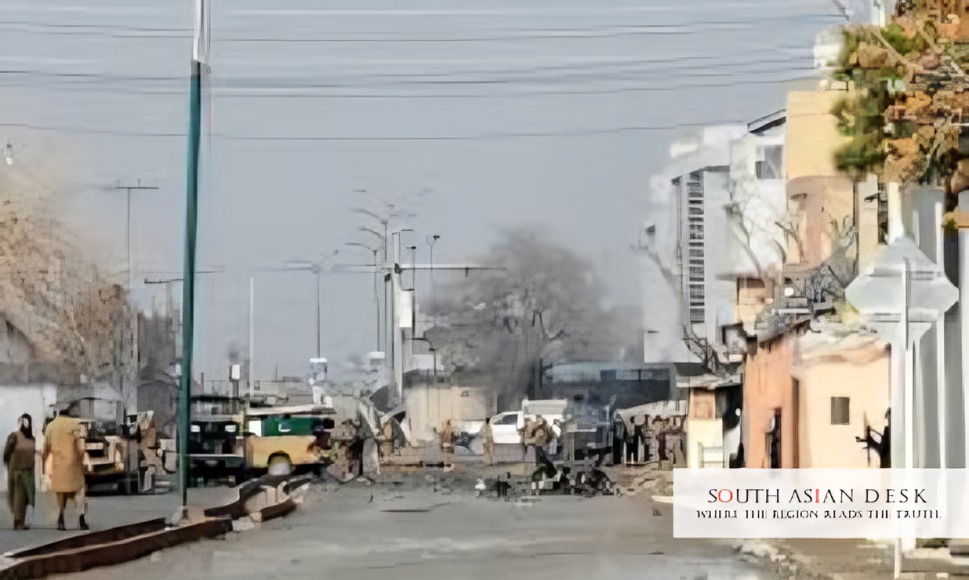
Women from Jutial colonies in Gilgit staged a sit-in and blocked the Shahrah-i-Quaid-i-Azam road on Monday against prolonged electricity outages and acute drinking water shortages.
GILGIT: Residents of Hussainabad Colony, Yasin Colony, Diamer Colony, Netco Colony and upper Jutial blocked the main thoroughfare in the heart of Gilgit city on Monday as part of the gb protesters block road action that brought traffic to a standstill for several hours. The demonstration, which began outside the Gilgit-Baltistan Supreme Appellate Court, highlighted the twin crises of gilgit power outage protest and gilgit water shortage protest that have left thousands without basic services.
A large number of women participated in the gilgit power outage protest, chanting slogans against the authorities for failing to provide electricity and clean drinking water. Traffic queues stretched across Shahrah-i-Quaid-i-Azam as commuters were stranded. The protest ended only after negotiations with GB Caretaker Home Minister Sajid Ali Baig and district administration officials.
Gilgit Jutial Load Shedding Triggers Resident Outrage
Protesters said residents in the affected colonies had received no water supply for the past 10 days, with upper Jutial facing complete suspension for several days. A women’s representative told reporters that the areas had been deprived of water for nearly two weeks. Previously, supply arrived every couple of days, allowing families to fill storage tanks, but that had stopped entirely.
The gilgit jutial load shedding has made the water crisis worse. Residents face up to 22 hours of electricity outages daily, rendering water pumps inoperative even when pipeline supply resumes. “Residents are also facing up to 22 hours of electricity load-shedding daily, preventing water pumps from operating even when water becomes available in the pipeline,” one protester stated.
The demonstrators criticised successive governments for poor governance and corruption, noting that billions of rupees are spent annually on the electricity sector without visible improvement. The gb protesters block road action underscored the immediate human cost: families unable to store water, students unable to study after dark, and businesses disrupted.
Gilgit Power Outage Protest Reflects Chronic Regional Crisis
The gilgit power outage protest is not isolated. Gilgit-Baltistan continues to grapple with chronic electricity shortfalls despite its vast hydropower potential. In December 2025, Federal Minister for Planning, Development and Special Initiatives Ahsan Iqbal reviewed progress on power projects in the region and directed fast-track implementation of a Rs24 billion solar initiative. He stated that the government was committed to resolving chronic electricity shortages and that 100 MW of additional generation capacity would be added to GB by June 2026
Official load-shedding schedules issued by the Water and Power Department Gilgit-Baltistan for January and early February 2026 confirm ongoing restrictions, though exact feeder-wise hours for Jutial remain under local verification. The department’s public updates on social media platforms indicate managed but persistent outages during the winter period.
Water supply infrastructure in Jutial has also faced repeated setbacks. In August 2025, glacial flood damage disrupted channels serving Danyor, Sultanabad and Jutial, leaving thousands short of potable water for extended periods. The current gilgit water shortage protest revives those concerns, as residents report the same colonies affected once again.
Background: Infrastructure Challenges in Gilgit-Baltistan
Gilgit-Baltistan’s mountainous terrain and dispersed settlements complicate service delivery. Hydropower stations exist, yet transmission losses and seasonal variations limit reliable supply. Federal and regional authorities have repeatedly announced initiatives, including solar expansion and grid improvements, yet ground realities in areas such as Jutial show gaps between policy and delivery.
The gb protesters block road incident mirrors earlier demonstrations. In late January 2026, residents of Ghizer district protested unequal power distribution, claiming government colonies received uninterrupted supply while ordinary households faced severe load-shedding. Such recurring actions reflect deep frustration over basic civic amenities in one of Pakistan’s most strategically important but infrastructurally challenged regions.
Concurrently, orphan students from Pakistan Baitul Mal Sweet Home staged a separate protest at Public Chowk over non-payment of school fees and proposed transfer from Police Public School to a government institution. Caretaker Home Minister Sajid Ali Baig visited that site as well and directed officials to ensure a permanent solution.
What’s Next
Following the gb protesters block road demonstration, the caretaker home minister and district administration have taken notice. Officials have assured protesters that immediate steps will be taken to restore water supply and review load-shedding schedules in the Jutial area. Residents, however, demand concrete timelines and long-term fixes rather than temporary relief.
The gilgit power outage protest and gilgit water shortage protest have once again placed the spotlight on governance delivery in Gilgit-Baltistan. As winter conditions persist, the coming days will test whether negotiated assurances translate into restored services or whether further gb protesters block road actions become necessary.
Published in SouthAsianDesk, February 17th, 2026
Follow SouthAsianDesk on X, Instagram and Facebook for insights on business and current affairs from across South Asia.