India seeks German role to accelerate EU free trade talks, aiming to strengthen economic ties amid global trade challenges.
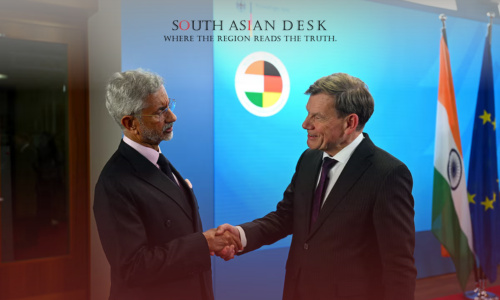
On Wednesday, 3 September 2025, in New Delhi, India’s External Affairs Minister S Jaishankar urged German Foreign Minister Johann Wadephul to expedite Ind-EU free trade agreement (FTA) negotiations, leveraging Germany’s influence to counter global trade barriers and boost bilateral trade.
The German role in India’s EU negotiations could reshape South Asia’s economic landscape, enhancing India’s trade links with Europe and encouraging regional players like Pakistan and Bangladesh to pursue similar agreements, fostering broader economic integration.
German Role in India EU Negotiations: Key Developments
During delegation-level talks, Jaishankar emphasized Germany’s critical influence within the EU, stating, “We count on your support to deepen our relationship with the European Union and expedite the FTA negotiation.” Wadephul, on a two-day visit after engagements in Bengaluru, responded, “If others set up trade barriers, we should respond by lowering them,” signaling Germany’s commitment to concluding the FTA by autumn 2025. According to the Ministry of External Affairs, these discussions were built on ongoing Brussels negotiations.
The FTA, resumed in 2021 after a 2013 pause, aims to double India-Germany bilateral trade from EUR 31 billion to EUR 62 billion, focusing on defence, security, and technology. India’s Commerce Minister Piyush Goyal, speaking on Tuesday, 2 September 2025, noted “significant progress” in Brussels, with EU Trade Commissioner Maros Sefcovic due in India on Thursday, 12 September 2025, to advance talks.
Challenges in the India-EU Trade Agreement
Negotiations face hurdles over EU demands for reduced tariffs on cars and dairy, alongside stricter climate and labour regulations. India prioritizes protecting its agriculture sector, which employs 60% of its workforce, compared to Germany’s 2%. India also resists rigid green rules and seeks control over legal dispute mechanisms. Despite these, both sides aim to conclude by late 2025, driven by the German role in India’s EU negotiations.
Impact of US Tariffs on India-EU Trade
Global trade tensions, particularly US tariffs impacting Indian exports, have accelerated India’s pivot to Europe. The FTA could mitigate export losses by diversifying markets, with India targeting Europe, Latin America, and Southeast Asia. Germany, as the EU’s economic powerhouse, is pivotal in aligning interests, especially in defence and technology via the India-EU Trade and Technology Council (TTC).
India-Germany Bilateral Trade Growth
Bilateral ties are strengthening, with 2024 marking 50 years of India-Germany science and technology cooperation. Wadhphul’s visit included discussions on defence partnerships, with Germany eyeing India’s growing defence market. The TTC, launched in 2022, supports collaboration in semiconductors and green technology, aligning with FTA goals. India’s push for “Make in India” complements Germany’s interest in co-production, potentially boosting sectors like automotive and electronics.
Background
India-EU FTA talks, initiated in 2007, stalled in 2013 over tariff and regulatory disputes but resumed in 2021 amid global trade shifts. Germany, a key EU member, has consistently supported deeper economic ties, with bilateral trade growing steadily. The 2025 talks reflect India’s strategy to counter US trade barriers and diversify export markets.
What’s Next
As EU Trade Commissioner Sefcovic arrives on 12 September 2025, the German role in India EU negotiations will be critical in resolving tariff and regulatory disputes, potentially setting a precedent for South Asian trade agreements by late 2025.
Published in SouthAsianDesk, September 4th, 2025
Follow SouthAsianDesk on X, Instagram, and Facebook for insights on business and current affairs from across South Asia.