Relief intensifies in remote Chipurson Valley after a 5.8-magnitude quake struck northern Pakistan on Monday, claiming lives and displacing hundreds amid freezing temperatures.
A 5.8-magnitude Gilgit-Baltistan earthquake struck at 11:21 AM on Monday, January 19, 2026, with its epicentre near Barishal in north-western Kashmir. The tremor killed two people, injured four others and caused widespread GB quake damage in Chipurson Valley, Upper Hunza. Officials launched Hunza earthquake relief operations as landslides blocked roads.
The Gilgit-Baltistan earthquake highlights vulnerabilities in South Asia’s mountainous regions where seismic activity often triggers landslides and isolates communities. With winter conditions exacerbating risks for displaced families, the event underscores the need for robust disaster preparedness in Pakistan’s northern territories prone to such hazards.
Chipurson Valley Quake Impacts
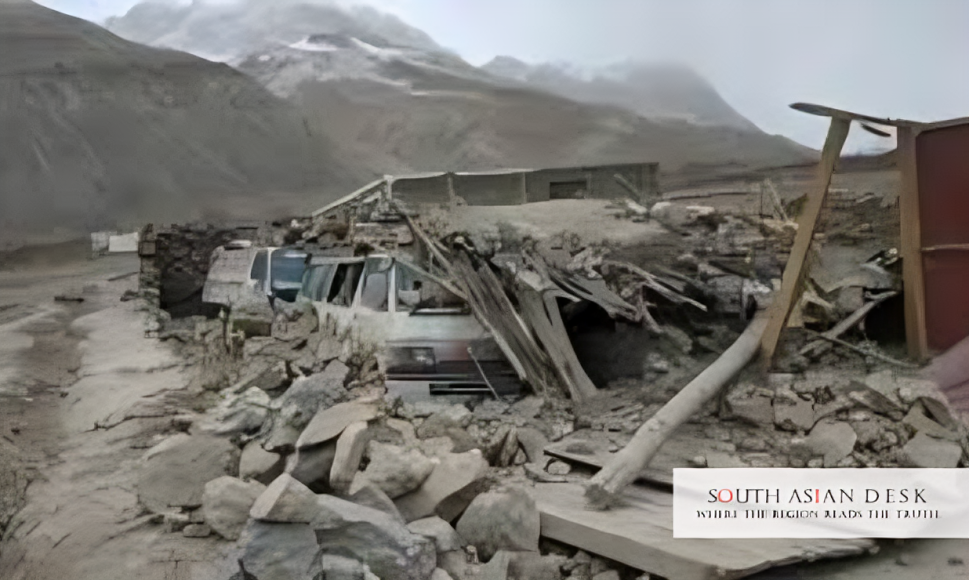
The Chipurson Valley quake affected remote areas near the Pakistan-China border close to Khunjerab Pass. Reports indicate over 300 houses partially or fully damaged along with cattle sheds and public infrastructure. Landslides triggered by the Gilgit-Baltistan earthquake blocked the main valley road at multiple points disrupting access for hours.
Hunza Deputy Commissioner Nizamuddin stated road access was blocked and large cracks appeared in homes roads and water channels supplying power houses. Rescue 1122 confirmed Chipurson as the worst-hit zone where dozens of structures collapsed. Local residents reported survival challenges for children elderly people women and patients in sub-zero temperatures.
The GB quake damage extended to Ghizer district’s Ishkoman Valley where one fatality occurred due to a landslide near Barswat Lake. Tremors were felt across Gilgit Nagar Ghizer and Diamer districts as well as in Khyber Pakhtunkhwa and Islamabad. The Pakistan Meteorological Department recorded the depth at 10 kilometres classifying it as shallow which amplified surface effects.
Hunza Earthquake Relief Efforts
Hunza earthquake relief mobilised swiftly with the Gilgit-Baltistan Disaster Management Authority dispatching tents food packs kerosene heaters blankets warm clothes and shawls. These supplies followed instructions from caretaker Chief Minister retired Justice Yar Muhammad.
Non-governmental organisations and community groups from Karimabad Gulmit and nearby areas collected firewood food and tents. The Aga Khan Development Network conducted a helicopter mission on Tuesday January 20 2026 to assess damage and evacuate two injured women from Zoodkhun village. The mission led by Chief Executive Officer Nusrat Nasab evaluated structural risks landslide threats and immediate needs while coordinating with local volunteers.
Over 200 families relocated to tents amid freezing weather. Political leaders urged the government to declare Chipurson a calamity-hit area for expedited aid. Rescue teams monitored aftershocks and cleared debris to restore connectivity.
Background
Gilgit-Baltistan lies in a seismically active zone along the Himalayan belt where tectonic plates collide. Past events like the 2005 Kashmir earthquake killed thousands and devastated infrastructure. The region’s rugged terrain and harsh winters compound recovery challenges. Recent underground tremors in Chipurson Valley preceded this quake signalling ongoing geological instability.
Official data from the Pakistan Meteorological Department shows the Gilgit-Baltistan earthquake registered 5.8 on the Richter scale with coordinates at 36.72°N 74.44°E. The United States Geological Survey reported a similar magnitude of 5.6 at 35 kilometres depth.
What’s Next
Authorities plan further assessments to quantify GB quake damage and prioritise reconstruction. The Government is providing assistance to residents as soon as possible. Helicopter deployments may continue for medical evacuations and supply drops until roads fully reopen. Long-term measures could include seismic-resistant building codes and early warning systems to mitigate future Gilgit-Baltistan earthquake risks.
The Gilgit-Baltistan earthquake serves as a reminder of the region’s exposure to natural disasters with relief efforts expected to evolve based on community feedback and ongoing monitoring.
Published in SouthAsianDesk, January 22nd, 2026
Follow SouthAsianDesk on X, Instagram and Facebook for insights on business and current affairs from across South Asia.