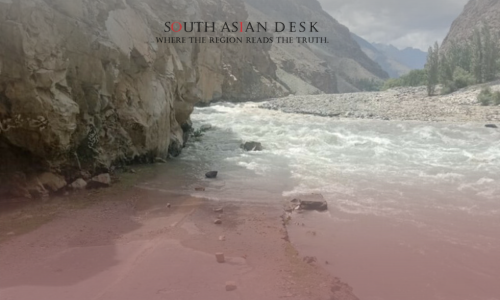
The Gilgit-Chitral road, a critical route linking Gilgit-Baltistan (GB) to Chitral, remains submerged and inaccessible five days after it was hit by flash floods in the Ghizer district, local officials confirmed Tuesday.
Since June 2025, Pakistan has been battling severe weather conditions — including cloudbursts, glacial lake outburst floods (GLOFs), and intense monsoon rains, which have led to widespread infrastructure damage and multiple casualties. The northern GB region remains among the worst affected.
Details of Gilgit-Chitral Road Blockade
According to Ghufranullah Baig, Deputy Director of the Disaster Management Authority in Ghizer, the flooding at Gopis Khatam caused stones and debris to block the river channel. This forced the water to divert onto the road, submerging a 2,000-foot stretch and severing inter-provincial connectivity between GB and Chitral. “Heavy machinery is in use, but restoration could take a few more days due to the rocky terrain and the difficulty in transporting equipment,” Baig explained.
Efforts are also underway to establish alternative access routes, though rising water levels and blocked pathways have slowed progress.
PM on Gilgit Floods Efforts
Meanwhile, Prime Minister Shehbaz Sharif, during a one-day visit to GB on Monday, announced a Rs4 billion package for damage assessment and infrastructure reconstruction following the floods. He also met with flood-affected communities and distributed relief funds.
The latest floods come just weeks after deadly landslides in Babusar on July 21 killed at least 10 tourists, with 10–15 more reportedly still missing. A glacier burst in Bagrot Valley last Friday left one person dead and another injured. Additionally, cloudburst-induced floods last Thursday in Ghizer and Hunza destroyed an irrigation channel in Ghalapan village, threatening water supply to over 50,000 trees.
Ongoing Situation
The situation highlights Pakistan’s growing vulnerability to climate-driven disasters, especially in its mountainous northern regions, and raises urgent questions about the resilience of its infrastructure.
Published in SouthAsianDesk, August 5th, 2025
Follow SouthAsianDesk on X, Instagram, and Facebook for insights on business and current affairs from across South Asia.