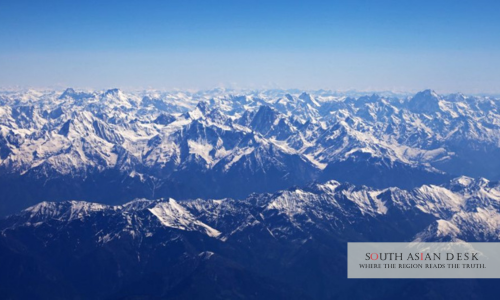
Himalayas climate change experience warming 50% Faster Than Global Average: Study Warns of Himalayan Impacts, High-elevation regions across the world, including the Himalayas, are undergoing rapid environmental shifts as temperatures rise at an alarming pace. Researchers have uncovered that these mountain areas are heating up nearly 50 percent faster than the global average since 1950, a trend driven by elevation-dependent warming. This phenomenon, where climate changes intensify at higher altitudes, poses significant risks to ecosystems and human populations reliant on these fragile zones.
Enhanced Mountain Warming in High-Elevation Regions
The findings emerge from a comprehensive analysis of global datasets and case studies spanning various mountain ranges. Lead researcher Nick Pepin from the University of Portsmouth’s Institute of the Earth and Environment highlighted the parallels between these upland areas and polar regions. “Mountains share many characteristics with Arctic regions and are experiencing similarly rapid changes,” Pepin stated. He noted that both environments are losing snow and ice at accelerated rates while witnessing profound ecosystem shifts. However, what remains underappreciated is the escalating intensity of climate change as elevations increase.
Global Evidence of Enhanced Mountain Warming
Globally, mountains have shown enhanced warming of 0.21 degrees Celsius per century compared to lowlands between 1980 and 2020. This elevation-dependent warming manifests across historical timescales, with variations influenced by factors such as time of day, season, and location. Accompanying this heat surge is an enhanced mountain drying of 11.5 millimeters per century and accelerated snow melt of 25.6 millimeters per century over the same period. These metrics underscore the disproportionate burden on high-elevation warming, particularly in regions like High-Mountains Asia.
Himalayas Climate Change Impacts: Glacier Melt Acceleration and Snow Loss Mountains
In the Himalayas, the effects of this mountain warming are starkly evident. The range’s ice and snow reserves are diminishing more swiftly than previously anticipated, exacerbating glacier melt acceleration. Aerosols from lowland sources, such as those emitted in densely populated areas of India and China, play a critical role by depositing on snow and ice surfaces, hastening their loss. Surface albedo—the measure of radiation reflected by these surfaces—along with specific humidity and aerosol levels in the atmosphere, further fuel this elevation-dependent climate change. Not all peaks are equally vulnerable; intermediate elevations, where snowlines are retreating upward, exhibit the most pronounced changes due to snow loss mountains.
Regional Variations in Enhanced Mountain Warming
The study, involving collaborators from India’s Uttaranchal and Jawaharlal Nehru universities, examined data from diverse locales including the Alps, Tibetan Plateau, and High-Mountains Asia. It reveals that while the highest summits may not always warm the fastest, the overall pattern points to intensified Himalayan climate change. Pepin emphasized regional variations, explaining that “as you go higher into the mountains, the rate of climate change can become even more intense.” This aligns with observations of enhanced mountain warming across these terrains.
Water Security Risks Under Himalayas Climate Change
The consequences extend far beyond the peaks, threatening water security for over one billion people worldwide who depend on mountain snow and glaciers. In China and India, communities draw vital supplies from Himalayan sources, making Himalayan ice decrease a pressing concern. As temperatures climb, the transition from snowfall to rainfall becomes more common, heightening flood risks Himalayas. “The Himalayan ice is decreasing more rapidly than we thought,” Pepin warned. “When you transition from snowfall to rain because it has become warmer, you’re more likely to get devastating floods. Hazardous events also become more extreme.”
Ecosystem Shifts in Mountains Driven by Enhanced Mountain Warming
Ecosystem shifts mountains are equally alarming. Vegetation and wildlife are migrating upslope in search of cooler refuges, a response to the relentless advance of warming. Trees and animals ascend higher, but this upward chase has limits. “As temperatures rise, trees and animals are moving higher up the mountains, chasing cooler conditions,” Pepin observed. “But eventually, in some cases, they’ll run out of mountain and be pushed off the top. With nowhere left to go, species may be lost and ecosystems fundamentally changed.” Such displacements could lead to biodiversity declines and irreversible alterations in high-altitude habitats.
Climate Models and Future Himalayas Climate Change Trends
Looking ahead, climate models project a sustained warming trajectory of 0.13 degrees Celsius per century in mountain regions through the twenty-first century. While temperature increases appear consistent, precipitation patterns remain uncertain, adding layers of unpredictability to climate change impacts mountains. Aerosol effects mountains, particularly from industrial and urban emissions, continue to amplify these trends, underscoring the need for targeted mitigation in source regions.
Global Mountain Study: Snow Loss Mountains & Glacier Retreat Implications
This global mountain study illuminates the urgency of addressing elevation-dependent warming, especially in vulnerable areas like the Tibetan Plateau warming zones and Alps climate trends. The accelerated pace of change in these environments demands coordinated efforts to safeguard water resources and biodiversity. As snow loss mountains and glacier retreat persist, the ripple effects on downstream populations grow ever more pronounced.
Summary: Himalayas Climate Change and Enhanced Mountain Warming
The research, published in Nature Reviews Earth and Environment, synthesizes decades of observations to paint a clear picture of high-elevation warming. It calls attention to the interconnected vulnerabilities of mountain systems, where local actions in lowlands can influence distant peaks. For the Himalayas, this means intensified monitoring of ice dynamics and ecosystem health to anticipate and mitigate emerging threats.
In summary, the evidence points to a world where mountains bear the brunt of global warming, with the Himalayas at the forefront. Enhanced mountain warming not only alters landscapes but also endangers lives and livelihoods tied to these vital water towers. As the planet warms, the pace in these elevated realms serves as a harbinger of broader environmental upheaval.
cooperation, with the Joint Steering Committee energy poised to guide further strides. As grids interconnect, so do economies, promising shared prosperity ‘through sustainable flows. ‘
Published in SouthAsianDesk, November 28th, 2025
Follow SouthAsianDesk on X, Instagram, and Facebook for insights on business and current affairs from across South Asia.