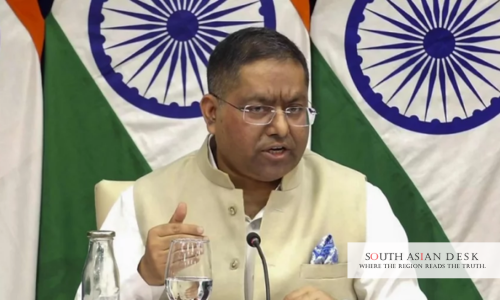
New Delhi — Hindu killing in Bangladesh has once again drawn sharp condemnation from India. The Ministry of External Affairs expressed grave concern on Friday over continued violence against religious minorities. Spokesperson Randhir Jaiswal highlighted a series of gruesome incidents targeting Hindus, Christians, and Buddhists.
India is concerned over alleged violence against the Hindu population in Bangladesh as extremist elements exploit tensions. Jaiswal described the situation as deeply worrisome. He urged Bangladeshi authorities to conduct fair, transparent, and expeditious investigations.
Recent cases include mob lynchings in Mymensingh and Rajbari districts. Perpetrators must face exemplary punishment. Minority violence in Bangladesh, along with other recent events, has resulted in the two countries’ bilateral relations remaining strained by these events.
India Concerned Hindu Bangladesh: Diplomatic Statement Details
This concern follows a string of violent episodes in 2025. Jaiswal noted unremitting hostility against minority communities. He said such acts cannot be accepted or dismissed.
The ministry spokesperson referenced specific killings. One victim worked as a garment worker accused of blasphemy. Another incident involved a minority member in a separate district.
Bangladesh Hindu attack 2025 contributes to over 2,900 documented cases since the interim government took charge. Rights organisations compiled these figures from field reports.
Jaiswal emphasised protection responsibilities. Authorities must safeguard the lives and property of all citizens, regardless of their faith. Minority violence Bangladesh and India discussions underscore shared regional stakes.
Bangladesh Hindu Attack 2025: Key Incidents Examined
Bangladesh Hindu attack 2025 gained attention through the lynching of Dipu Chandra Das. The incident occurred in Bhaluka Upazila, Mymensingh District. A mob attacked the garment worker over alleged social media remarks.
Witnesses reported a brutal assault. The crowd beat Das severely before hanging his body and setting it ablaze. Police recovered charred remains. Family members identified the victim.
Another case involved Amrit Mondal in the Rajbari district. Local authorities initially described the killing as non-communal. Community representatives disputed this characterisation and demanded an independent probe.
These attacks followed unrest triggered by a protest leader’s death in custody. Demonstrations spread across several districts. Minority neighbourhoods faced heightened risks during the chaos.
Hindu killing in Bangladesh is often linked to blasphemy accusations or local disputes. Social media posts frequently spark outrage. Rapid mobilisation leads to mob justice.
Minority Violence Bangladesh India: Broader Patterns
Minority violence Bangladesh and India concerns extend beyond isolated cases. Reports document vandalism of temples, homes, and businesses. Land grabbing allegations feature prominently in rural areas.
Hindus in Bangladesh represent the largest minority community affected. Hindus constitute approximately 8 percent of the population. Historical coexistence faces periodic challenges during political transitions.
The 2024 change in government intensified scrutiny. Initial months saw spikes in reported incidents. Rights groups recorded 258 communal attacks in the first half of 2025 alone.
Factors include political vacuum, economic frustration, and extremist mobilisation. Social media amplifies rumours quickly. Local administration struggles with rapid response.
Bangladeshi officials repeatedly condemned violence. Security forces received orders for heightened vigilance. Special patrols are deployed in sensitive areas.
Background: Historical and Political Context
Minority protection issues predate recent changes. Periodic communal tensions marked previous decades. Major spikes occurred during election periods or periods of political crisis.
The shared 4,000-kilometre border amplifies India’s interest. Cross-border family ties and cultural connections persist. Migration flows influence domestic sentiments.
India provided substantial development assistance historically. Infrastructure projects and trade agreements strengthened economic links. Security cooperation addressed mutual threats.
Post-2024 developments altered dynamics. Diplomatic engagements continued at various levels. Concerns about minority treatment were frequently discussed.
Interim Chief Adviser Muhammad Yunus pledged inclusive governance. Reforms targeted law enforcement and judicial processes. Community representation initiatives launched to rebuild trust.
International organisations monitored closely. United Nations human rights mechanisms reviewed reports. Amnesty International and Human Rights Watch issued detailed assessments.
Community Responses and Ground Realities
Minority leaders organised peace committees. Interfaith dialogues aimed at reducing mistrust. Local administrations facilitated meetings between communities.
Victims’ families sought justice through the courts. Legal aid groups assisted in filing cases. Compensation schemes are activated for affected households.
Educational institutions in minority areas faced disruptions. Parents reported fear among children. Temporary closures occurred in some districts.
Economic impacts emerged clearly. Small businesses owned by minorities suffered looting. Recovery efforts required community support and government aid.
What’s Next: Monitoring and Diplomatic Engagement
Investigations into recent cases continue. Forensic reports and witness statements guide proceedings. Courts scheduled hearings for arrested suspects.
The international community closely monitors developments. Diplomatic channels remain active for updates and assurances.
The 2025 Bangladesh Hindu attack incidents may influence future bilateral talks. High-level visits planned for early 2026 could address outstanding issues.
Minority violence Bangladesh and India cooperation is essential for regional stability. Joint mechanisms are proposed for information sharing and the exchange of best practices.
Authorities reinforced security measures ahead of festivals. Additional personnel deployed to protect religious sites. Community policing models expanded.
Rights defenders advocate systemic reforms. Training programmes for law enforcement focus on impartiality. Judicial backlog reduction initiatives are underway.
International donors linked assistance to governance improvements. Rule of law indicators guide funding decisions. Capacity building targets minority protection.
Hindu killing in Bangladesh underscores the fragility during transitions. Sustained efforts are required to restore confidence.
Minority violence in Bangladesh and India tests diplomatic maturity. Constructive engagement offers a path forward.
The 2025 Bangladesh Hindu attack cases serve as a litmus test. Transparent justice delivery is crucial for credibility.
India is concerned that Hindu Bangladesh reflects a genuine regional interest. Shared prosperity depends on inclusive societies.
Hindu killing in Bangladesh demands collective vigilance. Long-term harmony benefits all stakeholders in South Asia.
Published in SouthAsianDesk, December 27th, 2025
Follow SouthAsianDesk on X, Instagram and Facebook for insights on business and current affairs from across South Asia.