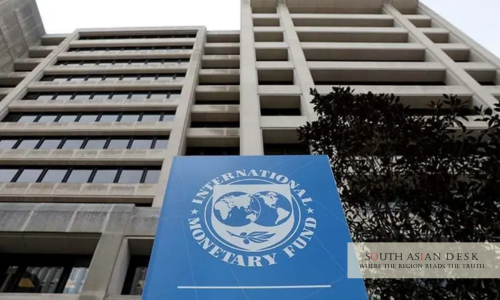
Pakistan stands on the brink of securing vital financial support as the IMF Executive Board prepares to approve the $1.2 billion IMF Pakistan loan. This tranche could bolster the nation’s economy amid ongoing recovery efforts from devastating floods.
IMF Executive Board Pakistan Meeting Set for Key Decision
The International Monetary Fund (IMF) Executive Board will convene on Sunday, December 8, 2025, to discuss the IMF’s $1.2 billion loan to Pakistan. Approval would release approximately $1 billion under the Extended Fund Facility (EFF) and $200 million via the Resilience and Sustainability Facility (RSF). Funds might reach Pakistan’s coffers as early as Monday, December 9, 2025, if the board endorses the staff-level agreement forged in October 2025.
This IMF Executive Board meeting for Pakistan follows intensive negotiations between IMF teams and Pakistani officials. Discussions took place in Karachi, Islamabad, and Washington from September 24 to October 8, 2025. Mission chief Iva Petrova led the IMF side, focusing on fiscal targets, monetary policies, and structural overhauls. The board’s nod hinges on Pakistan’s adherence to these benchmarks.
Pakistan’s government views the impending disbursement as a lifeline. Finance Minister Muhammad Aurangzeb highlighted progress in key areas. “The Governance and Corruption Diagnostic Assessment (GCDA) is not criticism but a catalyst for accelerating long-overdue reforms,” Aurangzeb stated in recent remarks. He noted that many recommendations, including those on taxation and governance, were already underway. The GCDA, released just ahead of the meeting, outlines a 15-point agenda aimed at curbing corruption and enhancing transparency. Implementing these measures could lift Pakistan’s economic growth by 5 to 6.5 percent over the next five years, according to IMF estimates.
The IMF Pakistan tranche for December 2025 forms part of a broader $7 billion EFF programme launched in 2024. This marks the second review under the 37-month arrangement. Earlier, in May 2025, the board approved $1 billion, elevating total EFF payouts to $2.1 billion. The RSF component, approved alongside in May, totals $1.4 billion over 28 months. These inflows have aided fiscal consolidation, with Pakistan achieving a primary surplus of 2.0 percent of GDP in the first half of fiscal year 2025. The target stands at 2.1 percent by year-end.
Inflation has eased to historic lows of 0.3 percent in April 2025, enabling the State Bank of Pakistan (SBP) to slash its policy rate by 1,100 basis points since June 2025. SBP’s tight monetary stance has anchored expectations, the IMF noted. External buffers have strengthened, reducing immediate balance-of-payments risks.
Pakistan IMF Climate Loan Approval Targets Flood Resilience
A core element of the IMF Pakistan $1.2 billion loan is the Pakistan IMF climate loan approval under the RSF. This $200 million slice addresses vulnerabilities exposed by recent floods. Torrential rains in late 2025 ravaged agriculture, infrastructure, and livelihoods across Punjab and Sindh provinces. Damage estimates run into billions of US dollars, exacerbating food insecurity and displacement for millions.
The RSF supports five priority areas. First, it bolsters resilience to natural disasters through improved public investment at the federal and provincial levels. Second, it promotes efficient water resource use via better pricing mechanisms. Third, it enhances coordination for disaster response and financing between governments. Fourth, it upgrades climate risk disclosure by banks and corporations. Fifth, it aids mitigation efforts to cut macro-critical risks.
IMF mission chief Iva Petrova emphasised these reforms in the October 2025 end-of-mission statement. “The authorities’ programme prioritises resilience to natural disasters and strengthens public investment processes,” she said. Petrova added that discussions advanced on sustaining fiscal consolidation while aiding flood recovery. The IMF team expressed sympathy for the flood victims and praised the Pakistani authorities for the fruitful talks.
Pakistan’s climate challenges amplify the need for this approval. The country ranks among the top ten globally in terms of climate vulnerability, according to World Bank data. Floods in 2022 displaced 33 million people; events in 2025 are expected to have a more severe impact on urban centers. The Pakistan IMF climate loan approval could fund early warning systems and water management infrastructure, which are critical for agriculture, as it employs 42 percent of the workforce.
Broader structural reforms underpin the IMF Pakistan tranche for December 2025. These include trimming state-owned enterprises, ensuring the viability of the energy sector, fostering competition, and upgrading public services. Energy tariffs undergo regular adjustments to curb circular debt, which stood at PKR 683 billion as of February 2025, according to official figures. Revenue mobilisation efforts aim to expand the tax base and enhance compliance.
The IMF’s $1.2 billion loan to Pakistan is also tied to anti-corruption drives. The GCDA identifies systemic weaknesses in fiscal governance, market regulation, financial oversight, anti-money laundering measures, and the rule of law. It urges swift action on the 15-point plan to boost integrity. Finance Minister Aurangzeb affirmed commitment: “The government is implementing remaining recommendations as part of broader institutional reforms.”
Economic Stakes in South Asia’s Fragile Landscape
This IMF Executive Board Pakistan meeting carries weight beyond borders. In South Asia, Pakistan’s stability has a significant impact on regional trade, remittances, and security. The IMF’s $1.2 billion loan to Pakistan could ease pressures on the rupee, stabilize imports, and curb inflation spillovers to neighboring countries like India and Afghanistan. Remittances, which amount to $30 billion annually, serve as a buffer; fresh funds may sustain this flow.
Floods underscore shared vulnerabilities. South Asia lost $150 billion to climate-related disasters from 2010 to 2020, according to UN estimates. Pakistan’s RSF reforms could serve as a model for resilience for Bangladesh and Nepal, both of which are prone to flooding. Yet, delays in disbursement risk amplifying debt distress; Pakistan’s external debt nears $130 billion.
Investor sentiment hinges on the outcome. Approval signals global confidence in Islamabad’s agenda, potentially drawing foreign direct investment. Stock markets in Karachi rose 2 percent on December 5, 2025, anticipating the green light. Opposition voices, however, decry the GCDA for exposing scandals and demanding probes.
Data from the SBP shows reserves at $10.5 billion as of November 2025, up from $9 billion before the EFF. GDP growth projections remain at 2.7 percent for 2025, with consumer prices expected to rise by 4.5 percent. These metrics reflect “strong progress” in fiscal consolidation and disinflation, as per IMF assessments.
The IMF Pakistan tranche for December 2025 arrives amid global headwinds. US tariff hikes announced in April 2025, including 29 percent on Pakistani textiles, dent exports. Tight global financing adds urgency. Pakistan’s programme implementation remains “broadly aligned,” the IMF stated in October 2025.
Background: Pakistan’s IMF Journey
Pakistan has engaged the IMF 24 times since 1958, seeking balance-of-payments aid. The current EFF, approved in 2024, addresses structural deficits amid high debt and low reserves. Prior programmes faltered on reforms; this one emphasises governance.
The RSF, a 2023 IMF innovation, targets climate action in vulnerable economies. Pakistan’s $1.4 billion access, disbursed in phases, marks the largest yet. May 2025’s first review unlocked $1 billion EFF plus initial RSF flows, aiding post-flood rebuilding.
Recent missions underscore continuity. A May 2025 visit by Nathan Porter reviewed FY2026 budgets, reaffirming fiscal targets. A February 2025 scoping mission laid the groundwork for the GCDA. These efforts build toward sustainable growth.
Official tallies from the National Disaster Management Authority indicate losses exceeding $5 billion, although updated assessments are pending.
What’s Next for the IMF Pakistan $1.2 Billion Loan
Post-approval, Pakistan must accelerate reforms. Energy viability demands tariff hikes and cost cuts; state enterprises face privatisation. Climate pillars require provincial buy-in for water pricing.
The board’s decision could unlock further tranches in 2026, totalling $3 billion more under EFF and RSF. Islamabad is expected to present its FY2026 budget in June 2026, aiming to strike a balance between consolidation and social spending. The SBP policy remains data-dependent, with an eye on inflation at 1-1.5 percent in December 2025.
Regional watchers anticipate ripple effects. Enhanced buffers might stabilise Afghan trade routes. Yet, sustained implementation is what ultimately determines long-term viability. As Finance Minister Aurangzeb put it, this tranche reinforces the reform path.
The IMF’s $1.2 billion loan to Pakistan underscores a pivotal moment: bridging the crisis and resilience in South Asia’s economic mosaic.
Published in SouthAsianDesk, December 6th, 2025
Follow SouthAsianDesk on X, Instagram, and Facebook for insights on business and current affairs from across South Asia.