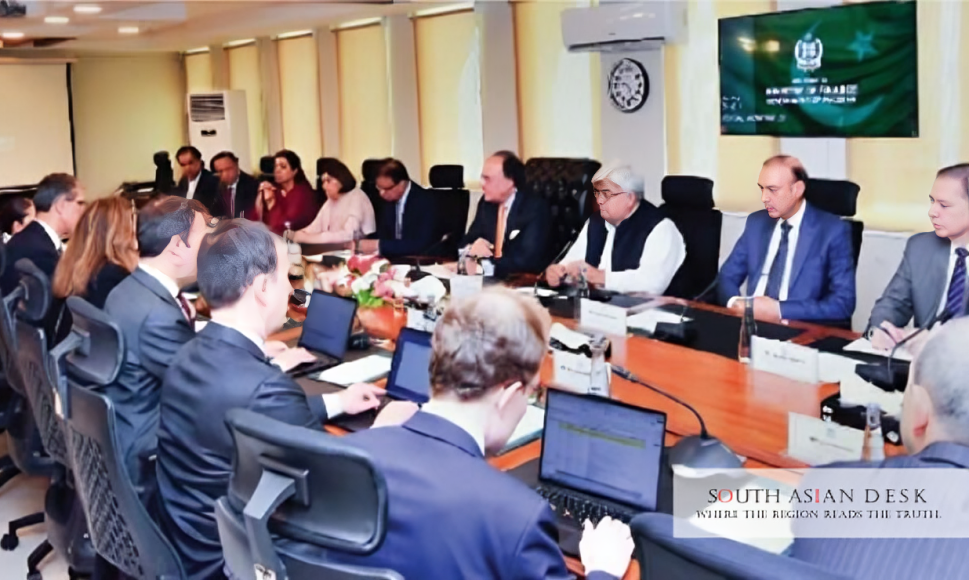
The IMF Pakistan review started in Islamabad on Tuesday, September 30, 2025, at 4:35 PM. Mission chief Iva Petrova leads the team. They assess Pakistan’s progress under the $7 billion Extended Fund Facility (EFF). A PKR 1.2 trillion revenue shortfall marks the fiscal year ended June 2025. This review covers performance to end-June 2025 and up to December 2025. Success could unlock a $1 billion tranche.
This IMF Pakistan review matters deeply for South Asia. Pakistan’s economy anchors regional trade and remittances. Shortfalls risk higher borrowing costs across borders. Delays in reforms could slow growth in neighbouring nations reliant on Pakistani stability. Floods add pressure, testing resilience in a climate-vulnerable region.
IMF Pakistan Review Spotlights Fiscal Challenges
The IMF team met Pakistan’s economic squad headed by Finance Minister Muhammad Aurangzeb. Discussions centre on the EFF and a parallel $1.1 billion Resilience and Sustainability Facility (RSF). Officials report most quantitative targets met. Power sector benchmarks cleared with ease. Yet indicative goals and structural reforms lag.
Revenue gaps dominate the IMF Pakistan review. Collections missed by PKR 1.2 trillion last fiscal year. This equals nearly 1% of GDP. Similar shortfalls hit the first two months of FY2026. Federal Board of Revenue (FBR) officials eye offsets. Higher inflation in Q2 may help. Recoveries from litigation cases could add gains.
Pakistan IMF revenue shortfall September 2025 emerges starkly in early data. July-August collections trail targets. Provisional figures show August at PKR 886 billion against PKR 951 billion aimed. This leaves a PKR 65 billion gap for the month. Quarter target stands at PKR 3.08 trillion. Projections dip below PKR 2.95 trillion. Officials briefed the IMF on these trends.
Government pushes enforcement. A 10% tax on solar panel imports targets PKR 190 billion extra. Broader base expansion aids. Yet floods in Punjab and Sindh disrupt. They hit agricultural income tax rollout set for September-October.
Reform Delays Cloud IMF Pakistan Review Outlook
Structural benchmarks falter in the IMF Pakistan review. Brownfield petroleum refinery policy stalls. Announced two years ago, it promised $6 billion in upgrades. Tax exemptions denied under IMF rules. This squeezes cash flows for refineries. Officials call it a “simple distortion” fixable by dialogue.
Governance lags too. Corruption diagnostic report stays unpublished. This blocks the action plan. State-owned enterprises law on governance sees no advance. Petroleum Division highlights environmental risks from old refineries. Harmful by-products pose health threats and worsen climate woes.
Agricultural income tax laws passed on time across provinces. Implementation falters amid floods. Collections face uncertainty. Natural disaster budget of PKR 390 billion partly used last year. PKR 130 billion cleared old dues. Current year estimates PKR 100 billion need but allocates none.
Pakistan seeks IMF relaxations. Primary surplus and deficit targets eyed for flood spending. No new taxes or cuts wanted. Review sticks to pre-flood goals. Later adjustments possible with verified losses.
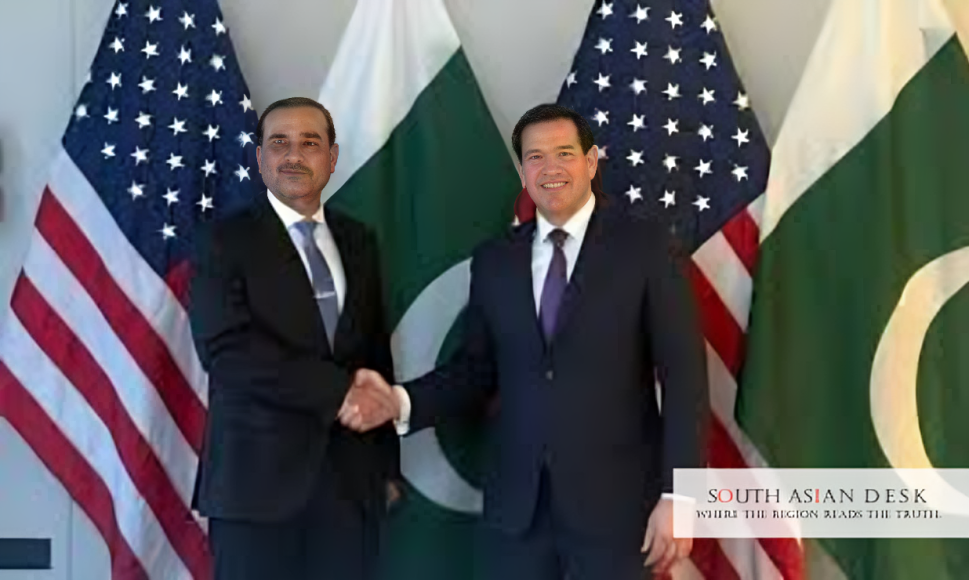
Finance Minister Aurangzeb briefed German Ambassador Ina Lepel on the IMF Pakistan review. He noted progress on quantitative and structural benchmarks. This came in a September 29, 2025, meeting. He stressed private sector-led growth. Ambassador pledged support for investment.
Background: Path to the Current IMF Pakistan Review
Pakistan secured the 37-month EFF in September 2024. It aims at resilience and growth. First review completed in May 2025. Board approved $1 billion then. Economic recovery continued. Growth softened in FY25 first half. Financial conditions improved.
IMF praised strong implementation. Yet challenges persist. Inflation eases but floods strike. FY25 fiscal deficit narrowed to 5.6% of GDP per estimates. Revenues rose 14% projected. New taxes broaden base.
Power sector circular debt resolved with PKR 1,225 billion in September 25 press release. This boosts fiscal discipline. Investor confidence grows.
Pakistan IMF revenue shortfall September 2025 ties to broader trends. Last year saw 25.9% tax growth in first half FY25. Direct taxes up 29.4%. Sales tax rose 25.3%. Imports contributed less.
What’s Next for Pakistan IMF Revenue Shortfall September 2025
Mission stays two weeks. Wrap-up by October 8, 2025. Board approval could follow by late October. $1 billion (SDR 760 million) disbursement possible.
Government eyes offsets. Q2 inflation and litigation wins key. Flood impact assessment vital for waivers. Private investment push continues. German ties strengthen for trade. Refinery talks resume. Governance report release planned. SOE reforms advance. Agricultural collections monitored post-floods.
The IMF Pakistan review outcome shapes fiscal path. Success bolsters reserves. Failure risks tighter terms. Pakistan commits to dialogue. Sustainable growth hinges on closing gaps. In conclusion, the IMF Pakistan review underscores urgency. Pakistan IMF revenue shortfall September 2025 demands swift action. Reforms must accelerate for regional stability.
Published in SouthAsianDesk, September 30th, 2025
Follow SouthAsianDesk on X, Instagram, and Facebook for insights on business and current affairs from across South Asia.